Air Fryer Salmon
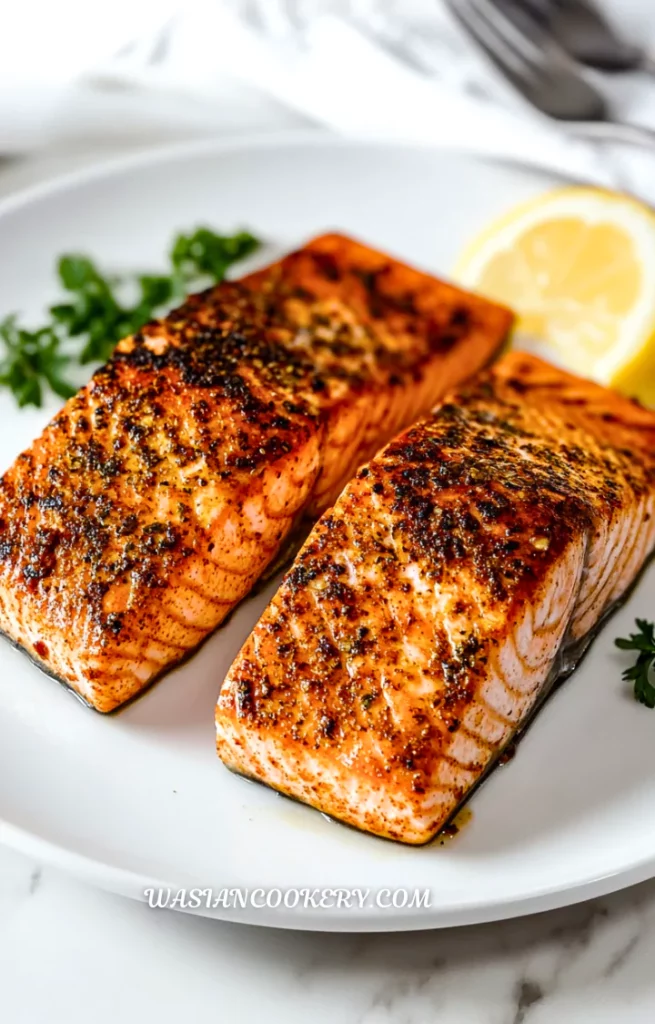
In my kitchen, air fryer salmon is a simple way to make a satisfying dinner from two fillets and everyday seasonings. Garlic, paprika, and lemon give the fish a savory, bright coating, while the short cooking time keeps the meal easy to manage.
I prefer to enjoy it with roasted vegetables and a side of quinoa. You can also flake the salmon into salads or wraps, or serve it with creamy potatoes for a more comforting meal. The same gentle seasoning works with plenty of different sides.
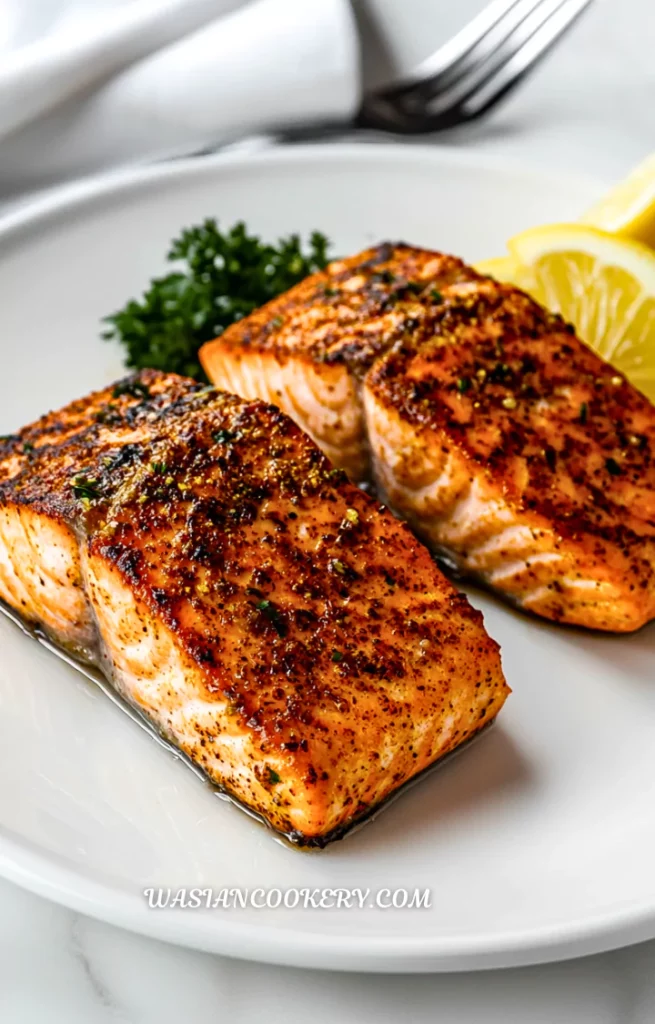
This recipe uses two 6-ounce fillets and takes about 22 minutes once the fish is thawed. Thickness matters more than an exact timer, so check the center with a thermometer. Expect lightly browned edges and tender flakes; skin cooked against the basket may not become evenly crisp.
Why This Dish Is Great
- Two individual portions are easy to season and serve without cutting up a whole side of salmon.
- Garlic powder, onion powder, and paprika make a flavorful coating from familiar pantry ingredients.
- Lemon juice balances the fish’s richness, with extra wedges available for anyone who wants more brightness.
- The air fryer heats a small cooking space, making it useful for a dinner for two.
- The optional cayenne adds heat, but leaving it out still gives you a full, savory flavor.
- Properly chilled leftovers can become a fresh lunch with greens, grains, or a simple wrap.
What Is the Best Main Ingredient?
Choose salmon fillets of similar thickness so they cook at a similar pace. Center-cut pieces are often more even than a thick piece paired with a thin tail. Skin-on fillets have a sturdy underside for lifting, but skinless pieces also work when you handle them gently. Choose a 6-ounce fillet for each portion.
Fresh salmon should smell mild and be kept cold. Frozen fillets are useful too: remove vacuum-packed fish from its sealed packaging before thawing, place it in a covered dish, and thaw in the refrigerator at 40°F or below. Follow any stricter package directions. Do not thaw on the counter, and plan to cook fresh or thawed salmon promptly, within 1–2 days.
Ingredients
- 2 salmon fillets (6 oz each)
- 1 tbsp olive oil
- 1 tsp garlic powder
- ½ tsp paprika
- ½ tsp salt
- ½ tsp black pepper
- ½ tsp onion powder
- ¼ tsp cayenne pepper (optional, for spice)
- 1 tbsp lemon juice
- Fresh parsley (for garnish)
- Lemon wedges (for serving)
Sweet paprika gives a mild red coating, while smoked paprika creates a smokier variation. Use garlic and onion powders without added salt so the measured salt remains predictable. The oil is divided between the underside and seasoning mixture; that still uses only the measured tablespoon for the entire recipe.
Kitchen Equipment You Will Need
As an Amazon Associate I earn from qualifying purchases.
- Air fryer
- Paper towels
- Fish bone tweezers
- Mixing bowl
- Measuring spoons
- Mixing spoon
- Knife
- Cutting board
- Basting brush
- Instant-read food thermometer
- Silicone fish spatula
- Fork
- Oven mitts
- Serving plates
- Shallow food storage containers
- Freezer bags
- Cheese grater
How To Make Air Fryer Salmon
Step 1
Start with two fully thawed salmon fillets, 6 ounces each. Pat the surfaces dry with paper towels. Check for pin bones and remove any you find with fish-bone tweezers. Prepare the parsley and lemon wedges on a clean cutting board before handling raw fish, and wash hands and tools after raw-fish contact.
Step 2
Use part of the measured tablespoon of olive oil to lightly coat the underside of each fillet. In a small bowl, mix the remaining oil with the garlic powder, paprika, salt, black pepper, onion powder, and optional cayenne. Spread the mixture over the tops and sides, then drizzle with the measured tablespoon of lemon juice.
Step 3
Set the air fryer to 375°F (190°C) and preheat for 3 minutes, or follow your model's instructions. Install its basket and crisper plate correctly and leave them unlined. Preparation and preheating together take about 10 minutes; thawing is extra.
Step 4
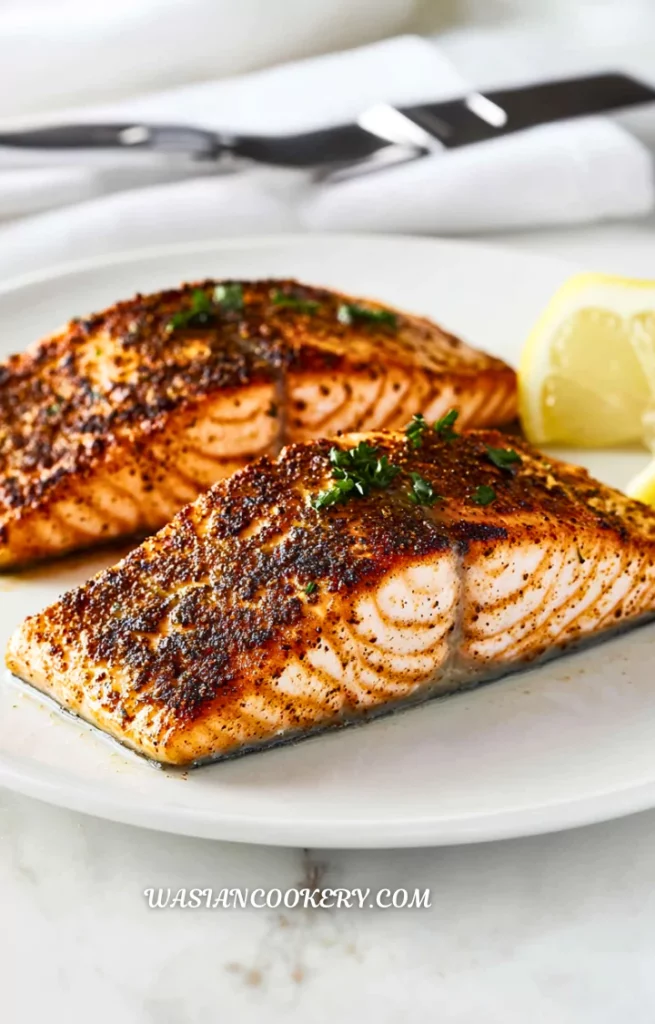
Place the salmon skin-side down in a single layer with space between the fillets. For skinless fish, put the flatter side down. Air fry for 8–10 minutes, checking at 8 minutes. Insert a food thermometer from the side into the thickest center and cook until it reaches 145°F (63°C). If needed, continue in 1-minute increments. The flesh should separate easily with a fork. No flipping is needed; cook separate batches if both pieces cannot fit comfortably.
Step 5
Use a silicone fish spatula to lift the cooked fillets onto clean serving plates. Let them stand for 2 minutes while you finish plating, then garnish with parsley and lemon wedges. The 22-minute total allows 10 minutes preparation/preheating, 10 minutes cooking, and 2 minutes standing. Thicker fillets or a second batch need additional time.
Notes
- Dry the salmon before seasoning. A wet surface makes the coating slide off and slows the light browning you want around the edges.
- Use similar pieces when possible. If one fillet is much thinner, check it first and remove it as soon as it reaches the safe temperature.
- Leave visible space between the fillets. Overlapping fish blocks airflow and makes the thick centers harder to cook evenly.
- Keep the basket unlined for this method. Never preheat with loose paper or foil, and follow the manufacturer’s rules for any accessories.
- Measure temperature in the thickest center. Avoid touching the hot basket with the probe, which can give a misleadingly high reading.
- Lift gently from underneath. A broad silicone spatula supports the fillet better than squeezing flaky fish with tongs.
- Serve the lemon wedges separately. Each person can add a fresh squeeze without soaking the whole surface before it reaches the table.
Ingredients You Can Add
- Honey: Brush a little over the cooked salmon for a sweet finish without burning a sugary coating.
- Soy sauce: A small drizzle adds savory depth; taste before adding because the base recipe already includes salt.
- Cajun seasoning: Use a salt-free blend for a little extra heat and spice without adding more salt.
- Parmesan cheese: Sprinkle finely grated cheese over the hot fillets for a savory finish that needs no extra cooking.
- Dijon mustard: Mix a small amount into the seasoning coating if you enjoy a sharper flavor with lemon.
- Fresh dill: Add after cooking alongside the parsley to keep its soft, fresh flavor.
What To Serve With Air Fryer Salmon
For a comforting dinner, serve the salmon with Texas Roadhouse mashed potatoes and steamed asparagus. Finish the potatoes before starting the fish so you can enjoy the salmon soon after its short standing time.
A fresh side such as tomato cucumber salad gives a nice contrast to the rich fish. Keep the salad chilled and add it to the plate at serving time. A little quinoa or rice can round out the meal.
For a lighter plate, pair the fillets with Greek pasta salad. You can also use properly chilled leftover salmon in greens or wraps. Remove any skin and check for stray bones before gently separating the fish into large flakes.
Variations and Swaps
- Garlic butter salmon: Finish the hot fish with a little softened garlic butter, allowing it to melt over the cooked surface.
- Teriyaki salmon: Brush with prepared teriyaki sauce after cooking. Use a clean sauce portion that has not touched raw fish.
- Spicy Cajun salmon: Add salt-free Cajun seasoning and keep the optional cayenne only if you want a hotter result.
- Honey glazed salmon: Mix a small spoonful of honey with a few drops of soy sauce and brush over the finished fillets.
- Lemon herb salmon: Add dill and parsley at the table. Keeping delicate herbs out of the cooking cycle preserves their fresh flavor.
- Parmesan salmon: Scatter finely grated Parmesan over the fish just after lifting it from the basket for a savory topping.
- Lime salmon: Replace the measured tablespoon of lemon juice with the same amount of lime juice and offer lime wedges alongside.
- Skinless salmon: Follow the same temperature guidance, oil the underside with part of the measured oil, and lift carefully with the spatula.
Storage
Place leftover cooked salmon in shallow covered containers and refrigerate within 2 hours, or within 1 hour when the surrounding temperature is above 90°F. Keep at 40°F or below and use within 3 days. You can eat properly chilled leftovers cold in salads; keep them refrigerated until you assemble the meal rather than leaving them out while preparing other dishes.
For longer storage, freeze portions in freezer bags for up to 2 months for best quality. Thaw in the refrigerator before using. To reheat, air fry at 350°F (175°C), begin checking after 3–4 minutes, and continue until the center reaches 165°F. The time depends on thickness and starting temperature. Reheat only what you need, since repeated heating dries the fish, and add fresh lemon after warming.
FAQ
Can I cook this salmon directly from frozen?
This timing is for fully thawed fillets. Frozen portions need a different schedule, and simply adding a few minutes is unreliable when thickness varies. Thaw for this recipe, or follow a package method written specifically for cooking from frozen.
Do I need to flip the salmon?
No. Leave it skin-side down, or flat-side down if skinless, and let the circulating hot air cook it. Turning a nearly cooked fillet can break it apart without improving the center’s doneness.
How do I know when the salmon is ready?
Check for 145°F in the thickest center before taking it out. The flesh should also separate readily with a fork. A browned top alone does not tell you whether the middle is safely cooked.
How can I prevent sticking?
Pat the fish dry and coat its underside with some of the measured olive oil. Use a clean, intact basket coating and follow the appliance’s care instructions. Slip a silicone spatula underneath carefully instead of tugging at the top.
Why did the salmon become dry?
It may have cooked longer than needed, or a thin fillet may have finished before a thicker one. Check each piece early and remove it when done. Do not wait for deeply crisp skin if the center has already reached temperature.
Can I season the fish ahead of time?
You can measure the dry spices ahead and keep the fish chilled separately. Add the oil, seasoning, and lemon shortly before cooking. This recipe needs no extended marinade, and extra time in acidic juice can change the surface texture.
Short Description
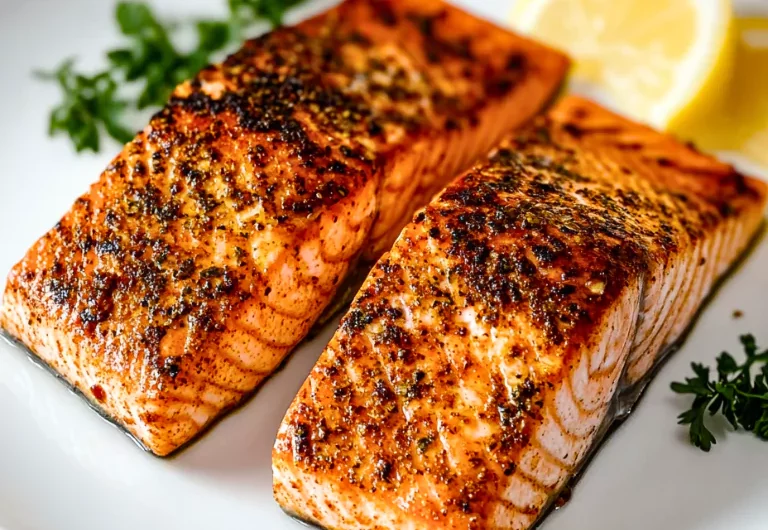
Air fryer salmon with garlic, paprika, and lemon makes an easy dinner for two. Use evenly sized thawed fillets, leave room in the basket, and check the thickest center for doneness.
Air Fryer Salmon
Course: MainCuisine: AmericanDifficulty: Easy2
servings10
minutes10
minutes22
minutesAir fryer salmon with garlic, paprika, and lemon makes an easy dinner for two. Use evenly sized thawed fillets, leave room in the basket, and check the thickest center for doneness.
Ingredients
2 salmon fillets (6 oz each)
1 tbsp olive oil
1 tsp garlic powder
½ tsp paprika
½ tsp salt
½ tsp black pepper
½ tsp onion powder
¼ tsp cayenne pepper (optional, for spice)
1 tbsp lemon juice
Fresh parsley (for garnish)
Lemon wedges (for serving)
Directions
- Start with two fully thawed salmon fillets, 6 ounces each. Pat the surfaces dry with paper towels. Check for pin bones and remove any you find with fish-bone tweezers. Prepare the parsley and lemon wedges on a clean cutting board before handling raw fish, and wash hands and tools after raw-fish contact.
- Use part of the measured tablespoon of olive oil to lightly coat the underside of each fillet. In a small bowl, mix the remaining oil with the garlic powder, paprika, salt, black pepper, onion powder, and optional cayenne. Spread the mixture over the tops and sides, then drizzle with the measured tablespoon of lemon juice.
- Set the air fryer to 375°F (190°C) and preheat for 3 minutes, or follow your model’s instructions. Install its basket and crisper plate correctly and leave them unlined. Preparation and preheating together take about 10 minutes; thawing is extra.
- Place the salmon skin-side down in a single layer with space between the fillets. For skinless fish, put the flatter side down. Air fry for 8–10 minutes, checking at 8 minutes. Insert a food thermometer from the side into the thickest center and cook until it reaches 145°F (63°C). If needed, continue in 1-minute increments. The flesh should separate easily with a fork. No flipping is needed; cook separate batches if both pieces cannot fit comfortably.
- Use a silicone fish spatula to lift the cooked fillets onto clean serving plates. Let them stand for 2 minutes while you finish plating, then garnish with parsley and lemon wedges. The 22-minute total allows 10 minutes preparation/preheating, 10 minutes cooking, and 2 minutes standing. Thicker fillets or a second batch need additional time.
Notes
- Timing allows one batch: 10 minutes preparation/preheating, 10 minutes cooking, and 2 minutes standing. Thawing, thicker pieces, and additional batches take longer.
- Use raw thawed fillets; remove vacuum packaging before refrigerator thawing. Cook the thickest center to 145°F before removing from the air fryer.
- Refrigerate leftovers within 2 hours, or 1 hour above 90°F, and use within 3 days. Reheat leftovers to 165°F.