Creamy Cajun Shrimp Pasta Recipe
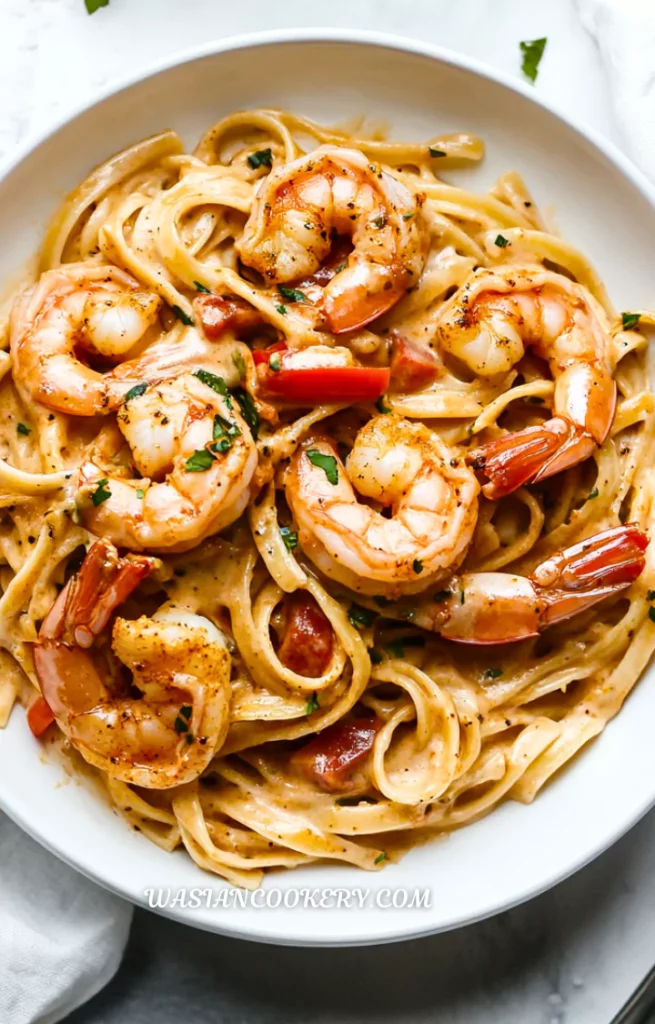
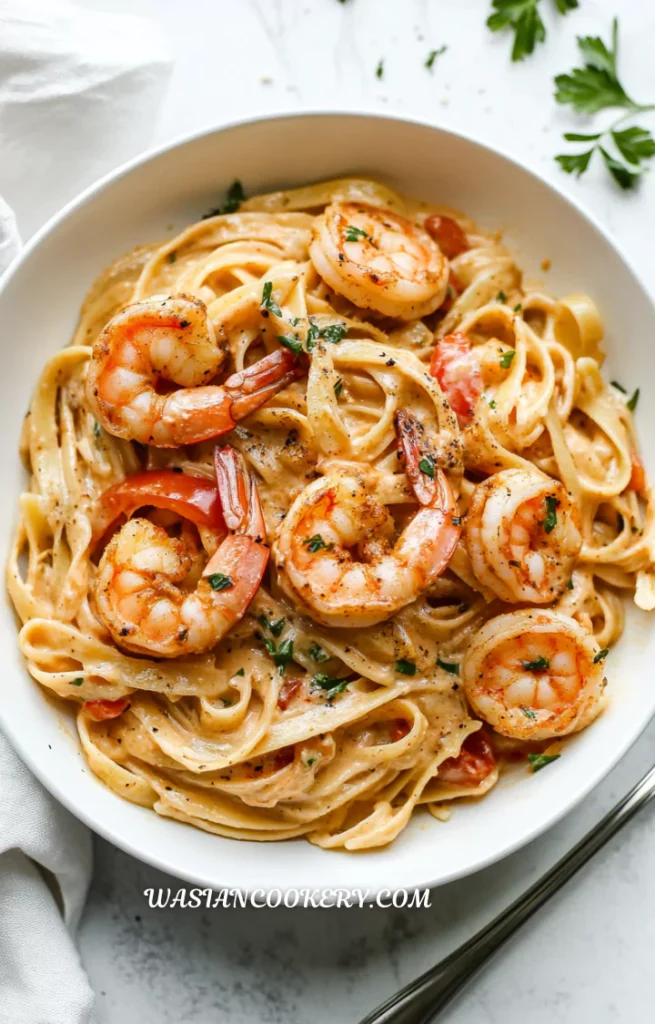
I love a bowl of Creamy Cajun Shrimp Pasta when I want a rich sauce with a little peppery heat. The shrimp, sweet red pepper, and Parmesan give the dish plenty of flavor without a complicated cooking method.
Fettuccine makes long, creamy forkfuls, while penne catches sauce inside its tubes. Both work with the same ingredient amounts. A little reserved pasta water helps the cream sauce coat the noodles instead of sitting heavily at the bottom of the pan.
The main trick is to cook the shrimp separately and add them back near the end. That gives the onion and pepper time to soften while keeping the seafood out of a long simmer. Have the ingredients ready before you start, and the final tossing comes together smoothly.
Why This Dish Is Great
- A balanced sauce: Heavy cream softens the heat of the seasoning, and Parmesan adds a savory finish without a separate flour-thickened base.
- Two pasta choices: The original fettuccine or penne options let you choose the shape you enjoy while keeping the rest of the method the same.
- Quick shrimp cooking: Small batches give the shrimp room in the pan. Once cooked, they wait on a clean plate while the sauce comes together.
- Everyday vegetables: Onion, bell pepper, and garlic form a simple base, adding sweetness and texture under the cream and spices.
- An adjustable finish: Reserved pasta water loosens a thick sauce a little at a time, which is helpful when the pasta absorbs liquid quickly.
Choosing Shrimp And Cajun Seasoning
Use the listed pound of peeled and deveined raw shrimp, thawed before cooking. Medium to large shrimp are convenient because they are easy to turn and check. Remove the tails if you want the whole bowl to be easy to eat with a fork.
Cajun seasoning blends vary in salt and heat. The base recipe uses 2 tablespoons, divided equally between shrimp and sauce. Choose a mild or salt-free blend if you prefer more control, then add salt only after tasting the completed sauce. Pat the shrimp dry so their seasoning stays on the surface.
Ingredients
- 8 oz (225g) fettuccine or penne pasta
- 1 lb (450g) shrimp, peeled and deveined
- 2 tbsp Cajun seasoning
- 2 tbsp olive oil
- 1 tbsp butter
- 3 garlic cloves, minced
- 1 small onion, finely chopped
- 1 red bell pepper, sliced
- 1 cup heavy cream
- ½ cup grated Parmesan cheese
- Salt and pepper to taste
- Fresh parsley for garnish (optional)
Set aside 1 tablespoon Cajun seasoning for the shrimp and 1 tablespoon for the sauce. Divide the 2 tablespoons olive oil between two shrimp batches. The 1 tablespoon butter cooks the vegetables. All ½ cup Parmesan goes into the sauce; extra cheese at the table remains an optional garnish.
Kitchen Equipment You Will Need
As an Amazon Associate I earn from qualifying purchases.
- Large pasta pot
- Large skillet
- Colander
- Kitchen tongs
- Chef knife
- Cutting board
- Measuring cups
- Measuring spoons
- Cheese grater
- Mixing bowl
- Silicone spatula
- Instant-read thermometer
- Shallow storage containers
How To Make Creamy Cajun Shrimp Pasta
Allow about 45 minutes with thawed, peeled shrimp: 15 minutes preparation and 30 minutes cooking. Start heating the pasta water during preparation, and cook the pasta while the skillet steps proceed. The cooking allowance includes two shrimp batches, vegetables, sauce, and final tossing. Thawing and extra batches take longer.
Step 1:
Start a large pot of water heating while you chop the small onion, slice the red bell pepper, mince the 3 garlic cloves, and finely grate the ½ cup Parmesan. Cook the 8 ounces fettuccine or penne in salted boiling water according to its package, stopping at al dente. Time it to finish near the sauce; the skillet steps can run while the pasta boils. Before draining, reserve ½ cup pasta water in a heatproof measuring cup. Do not rinse the drained pasta.
Step 2:
Pat the 1 pound thawed, peeled, deveined shrimp dry and toss with 1 tablespoon of the Cajun seasoning. Heat a large skillet over medium heat for about 2 minutes. Use 1 tablespoon olive oil for each of two shrimp batches, keeping them in a single layer. Cook about 2–3 minutes per side, checking early, until the thickest shrimp reach 145°F and the flesh is firm, pearly, and opaque. Insert a thin thermometer probe into the thickest part from the side. Transfer each cooked batch to a clean plate with clean tongs.
Step 3:
Reduce the heat to medium-low. Add the 1 tablespoon butter to the same skillet, followed by the chopped onion and sliced red pepper. Cook about 5–6 minutes, stirring, until softened. Add all 3 minced garlic cloves and stir for about 30 seconds until fragrant. Lower the heat if the garlic or seasoning starts to darken too quickly.
Step 4:
Pour in the 1 cup heavy cream and stir in the remaining 1 tablespoon Cajun seasoning. Bring to a gentle simmer for about 3 minutes, stirring, until slightly thickened; do not boil hard. Turn the heat to its lowest setting and gradually stir in all ½ cup grated Parmesan until smooth, about 1 minute. Taste with a clean spoon and add salt and black pepper only as needed.
Step 5:
Add the drained pasta and toss to coat. Add a little of the reserved ½ cup pasta water at a time until the sauce clings smoothly; you may not need it all. Fold in the fully cooked shrimp and any juices from their clean plate, and warm gently for about 1–2 minutes. Avoid a long simmer after the shrimp return.
Step 6:
Divide among four bowls and serve promptly while the sauce is loose and creamy. Add the optional fresh parsley, and offer extra Parmesan only if desired. The measured ½ cup cheese is already in the sauce.
Notes
- Thaw first: Frozen shrimp release extra water and cook unevenly in this method. Thaw in the refrigerator overnight, then drain and dry before seasoning.
- Read the spice label: Some blends already contain plenty of salt. Wait until the cheese is melted into the sauce before deciding whether it needs more.
- Avoid crowding: The two batches leave space for moisture to evaporate. More crowded pans need extra batches rather than higher heat alone.
- Grate finely: Small Parmesan shreds melt more easily. Stir them in gradually on the lowest heat so they do not gather in a clump.
- Save water before draining: Put the heatproof measuring cup beside the colander as a reminder. Plain hot water can loosen sauce but lacks the pasta starch.
- Keep the sauce loose: Pasta continues absorbing liquid after tossing. Stop when the sauce looks slightly looser than you want it at the table.
- Serve promptly: Set out bowls before the final toss. Holding everything over heat while you arrange the table can tighten the sauce and toughen the shrimp.
Ingredients You Can Add
- Sun-dried tomatoes: Drain and chop them before stirring into the vegetables. Their concentrated flavor works well against the creamy sauce.
- Spinach: Fold clean leaves into the vegetables near the end of their cooking time so they wilt before the cream goes in.
- Mushrooms: Cook sliced mushrooms with the vegetables until their moisture evaporates. Allow additional time so the sauce does not become watery.
- Lemon zest: Scatter a little finely grated zest over individual bowls for citrus aroma without pouring extra acidic liquid into the dairy sauce.
- Red pepper flakes: Add a small pinch for extra heat, especially with a mild Cajun blend. Keep it optional at the table.
- Bacon bits: Use fully cooked bacon bits as the original optional crunchy topping. Add them at serving time so they do not soften in the sauce.
What To Serve
Slices of homemade Jimmy Johns bread are useful for the sauce left in the bowl. Prepare and cool the bread earlier, then serve it alongside the freshly tossed pasta.
A crisp tomato cucumber salad provides a cool contrast to the warm cream sauce. Keep the salad on separate plates so its dressing does not thin the pasta sauce.
For a drink, make Cracker Barrel peach tea ahead and chill it before dinner. Sparkling water with lemon is another simple choice, and steamed broccoli or green beans can round out the plate.
Recipe Variations And Swaps
- Different pasta: Linguine is an original alternative to fettuccine or penne. Follow its own cooking time and keep the same dry pasta amount.
- Chicken: Replace shrimp with chicken cut into even pieces and cook to 165°F before removing. This changes the cooking time; return it to the finished sauce.
- Dairy-free: Use a suitable dairy-free butter alternative and plain dairy-free cream or coconut milk, then omit Parmesan. Coconut milk changes the flavor, and the sauce may be thinner.
- Sausage: Add sliced fully cooked andouille or smoked sausage, browned and heated according to its package. Cook it separately so the shrimp still have room.
- Greek yogurt: For the original tangy variation, stir a little plain Greek yogurt into the finished sauce off heat. Let bubbling stop first and avoid boiling afterward.
- Vegetable version: Replace shrimp with zucchini, mushrooms, or eggplant. Cook the vegetables until tender and let excess moisture evaporate before adding the sauce.
- White wine: Add the original optional splash after the vegetables, with the pan briefly off the burner. Return to heat and reduce before adding cream; allow extra cooking time.
- Gluten-free: Choose suitable gluten-free pasta and check the seasoning and other packaged ingredients. Follow the pasta label carefully because some shapes soften quickly.
How To Store
Refrigerate leftovers in shallow covered containers at 40°F or below within 2 hours, or within 1 hour above 90°F. Use within 3 days. Do not leave the full skillet on the counter until completely cold; divide the leftovers so they cool more quickly in the refrigerator.
Reheat a portion gently in a covered skillet with a little water or cream, stirring until the center reaches 165°F. The pasta may soften and the shrimp may become firmer. Freezing is possible, but the cream sauce can separate and lose its smooth texture, so refrigeration suits this dish better for a short wait.
FAQ
Can I make it milder?
Choose a mild Cajun blend for the listed amount, or use less as an optional adjustment. Taste the sauce after adding Parmesan before adding more seasoning or salt.
Can I use cooked shrimp?
Yes, but follow the package reheating instructions and skip the raw-shrimp cooking step. For refrigerated leftover shrimp, reheat to 165°F; expect a firmer texture.
Why did my sauce turn grainy?
High heat or adding cheese all at once can make it clump. Use finely grated Parmesan, lower the heat, and stir it in gradually after the cream has gently simmered.
Why is the sauce too thick?
Pasta absorbs sauce as it sits. Add reserved hot pasta water a little at a time and toss gently until the noodles move freely and remain coated.
Can I thaw shrimp quickly?
Seal them in a leakproof bag and submerge in cold water, changing the water as needed to keep it cold, then cook immediately. Do not thaw on the counter.
Can I prepare anything ahead?
Chop the vegetables and grate the cheese ahead, then refrigerate separately. Keep raw shrimp covered and separate from ready-to-eat ingredients; cook the pasta and finish the sauce near serving time.
Short Description
Creamy Cajun Shrimp Pasta combines seasoned shrimp, onion, red bell pepper, and pasta in a smooth Parmesan cream sauce with optional fresh parsley.
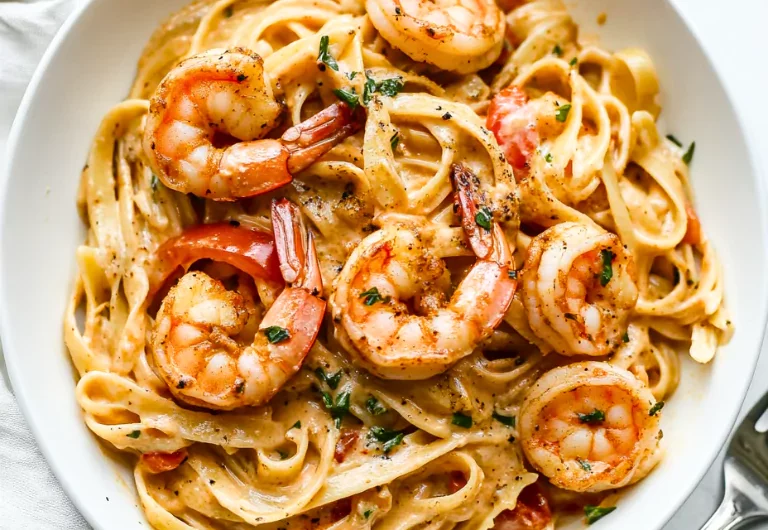
Creamy Cajun Shrimp Pasta
Course: DinnerCuisine: AmericanDifficulty: Easy4
servings15
minutes30
minutes45
minutesCreamy Cajun Shrimp Pasta combines seasoned shrimp, onion, red bell pepper, and pasta in a smooth Parmesan cream sauce with optional fresh parsley.
Ingredients
8 oz (225g) fettuccine or penne pasta
1 lb (450g) shrimp, peeled and deveined
2 tbsp Cajun seasoning
2 tbsp olive oil
1 tbsp butter
3 garlic cloves, minced
1 small onion, finely chopped
1 red bell pepper, sliced
1 cup heavy cream
½ cup grated Parmesan cheese
Salt and pepper to taste
Fresh parsley for garnish (optional)
Directions
- Start a large pot of water heating while you chop the small onion, slice the red bell pepper, mince the 3 garlic cloves, and finely grate the ½ cup Parmesan. Cook the 8 ounces fettuccine or penne in salted boiling water according to its package, stopping at al dente. Time it to finish near the sauce; the skillet steps can run while the pasta boils. Before draining, reserve ½ cup pasta water in a heatproof measuring cup. Do not rinse the drained pasta.
- Pat the 1 pound thawed, peeled, deveined shrimp dry and toss with 1 tablespoon of the Cajun seasoning. Heat a large skillet over medium heat for about 2 minutes. Use 1 tablespoon olive oil for each of two shrimp batches, keeping them in a single layer. Cook about 2–3 minutes per side, checking early, until the thickest shrimp reach 145°F and the flesh is firm, pearly, and opaque. Insert a thin thermometer probe into the thickest part from the side. Transfer each cooked batch to a clean plate with clean tongs.
- Reduce the heat to medium-low. Add the 1 tablespoon butter to the same skillet, followed by the chopped onion and sliced red pepper. Cook about 5–6 minutes, stirring, until softened. Add all 3 minced garlic cloves and stir for about 30 seconds until fragrant. Lower the heat if the garlic or seasoning starts to darken too quickly.
- Pour in the 1 cup heavy cream and stir in the remaining 1 tablespoon Cajun seasoning. Bring to a gentle simmer for about 3 minutes, stirring, until slightly thickened; do not boil hard. Turn the heat to its lowest setting and gradually stir in all ½ cup grated Parmesan until smooth, about 1 minute. Taste with a clean spoon and add salt and black pepper only as needed.
- Add the drained pasta and toss to coat. Add a little of the reserved ½ cup pasta water at a time until the sauce clings smoothly; you may not need it all. Fold in the fully cooked shrimp and any juices from their clean plate, and warm gently for about 1–2 minutes. Avoid a long simmer after the shrimp return.
- Divide among four bowls and serve promptly while the sauce is loose and creamy. Add the optional fresh parsley, and offer extra Parmesan only if desired. The measured ½ cup cheese is already in the sauce.
Notes
- Four servings. About 45 minutes includes 15 minutes prep and 30 minutes cooking, with pasta-water heating during prep and pasta boiling alongside the skillet work. The schedule includes two shrimp batches; thawing or extra batches add time.
- Divide the 2 tablespoons Cajun seasoning equally between shrimp and sauce. Divide the 2 tablespoons olive oil between the two shrimp batches. Use the 1 tablespoon butter for vegetables and all ½ cup Parmesan in the sauce.
- Cook raw shrimp to 145°F, then remove while making the sauce. Keep raw-seafood utensils away from the clean cooked-shrimp plate. Add cheese over low heat and avoid boiling the finished sauce.
- Reserve ½ cup pasta water before draining and use only as needed. Refrigerate leftovers at 40°F or below within 2 hours, or 1 hour above 90°F. Use within 3 days and reheat to 165°F.