Texas Roadhouse Salmon Recipe
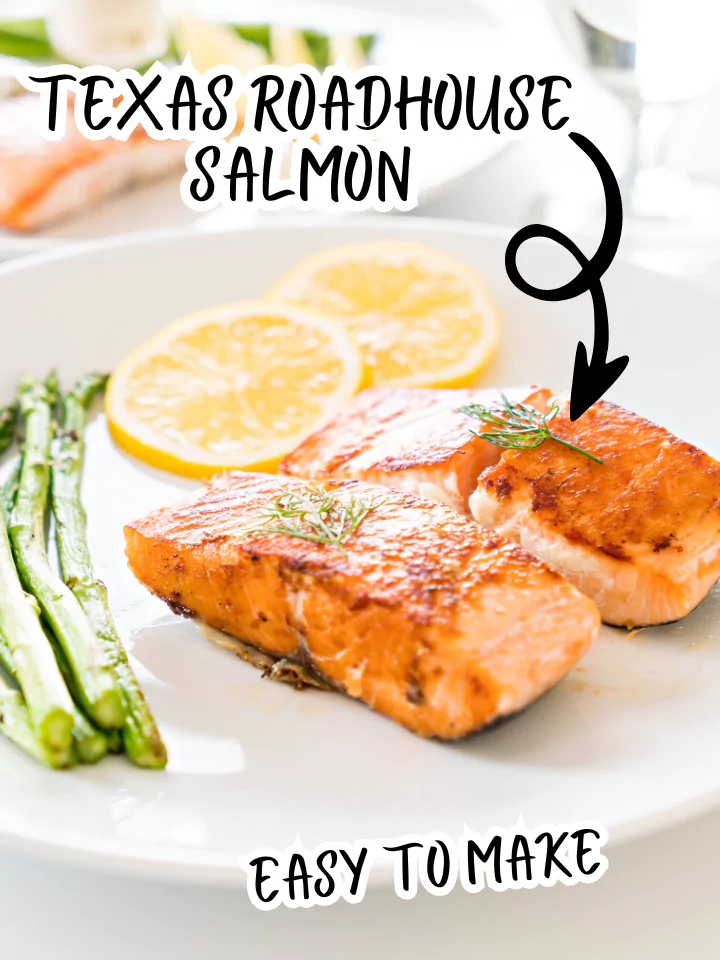
In my kitchen, this Texas Roadhouse Salmon is a simple, restaurant-inspired skillet dinner. Skin-on fillets are seasoned with salt and pepper, seared in olive oil or butter, and served with lemon.
The method focuses on dry fish, a hot pan, and a careful turn. A food thermometer makes it easier to finish thicker fillets without relying on surface color alone.
Allow about 20 minutes for one batch, including preparation. Pair the salmon with vegetables or potatoes, and have the sides ready before the fish goes into the skillet.
About This Version
This is a homemade interpretation of a restaurant-style salmon dinner. It uses the short ingredient list below and a stovetop method; it does not claim to reproduce an official Texas Roadhouse recipe or sauce.
Ingredients
- 4 salmon fillets, skin-on, about 6 ounces each
- Salt and freshly ground black pepper, to taste
- 2 tablespoons olive oil or butter
- Fresh herbs (such as dill, parsley, or thyme), optional for garnish
- Lemon wedges, for serving
Choose fillets of similar thickness so they finish at roughly the same time. The recipe serves 4, with one approximately 6-ounce fillet per person. The olive oil and butter are alternatives; use 2 tablespoons of whichever you choose.
Choose the Fillets and Finishing Flavors
Look at the shape of each portion as well as its weight. A broad, thin tail piece and a compact, thick center piece can both weigh about six ounces but cook at different speeds. Similar center-cut portions make the timing easier to coordinate. If your pieces differ, keep track of the thinner ones and check each fillet individually instead of assuming the whole pan finishes together.
Olive oil keeps the flavor simple, while butter gives a richer finish. Choose one of the listed options before heating the skillet because the method uses different starting heat for each. There is no need to combine both or add another measure of fat. Spread the chosen fat across the cooking surface so each fillet has contact with it.
For the optional herbs, dill adds a distinct, fresh flavor, parsley is a gentler choice, and thyme has a more savory character. Chop or pick the leaves before cooking the fish. Start with a light scattering so the garnish supports the salmon rather than covering it. Cut the lemon into wedges that diners can squeeze easily, checking for visible seeds as you go.
Kitchen Equipment You Will Need
As an Amazon Associate I earn from qualifying purchases.
How to Make Texas Roadhouse Salmon
A large skillet gives the fillets room to sear. Use a fish spatula for turning and an instant-read thermometer to check the center.
Prepare the Salmon:
Pat the 4 salmon fillets dry on both sides with paper towels. If using frozen fish, thaw it in the refrigerator first and follow any package instructions for removing vacuum packaging before thawing.
Season both sides with salt and freshly ground black pepper to taste. Set out clean serving plates, lemon wedges, and the optional herbs before heating the pan.
Heat the Skillet:
Heat a large, heavy skillet over medium-high heat for the olive oil option, or medium heat for butter. Add the 2 tablespoons olive oil or butter. The oil should shimmer; butter should foam without turning dark. Reduce the heat if either begins to smoke.
Sear the Salmon:
Carefully lower the fillets into the skillet skin-side down, laying them away from you to limit splashes. Leave space between them. If they do not fit comfortably, cook in batches and divide the listed fat between batches.
Cook without moving the fillets for about 4 to 6 minutes, until the skin is crisp and releases with gentle pressure from a spatula. Reduce the heat if the skin browns too quickly.
Flip and Finish Cooking:
Slide a wide spatula under each fillet and turn it carefully. Avoid repeatedly flipping or pressing the fish.
Cook the second side for about 2 to 4 minutes, then check the thickest part with a food thermometer. Continue over gentler heat as needed until each fillet reaches 145°F (63°C). The flesh should be opaque and separate easily; thickness and temperature take priority over the clock.
Serve:
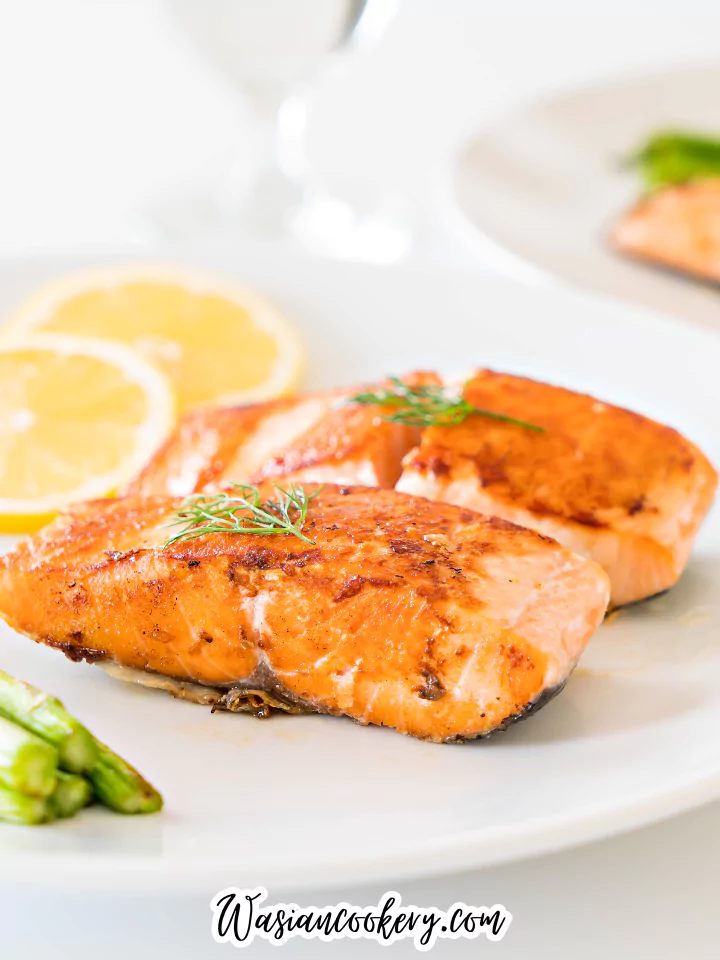
Transfer the fully cooked salmon to clean plates, skin-side up if you want to keep the skin crisp. Do not return it to the plate that held the raw fish.
Add the optional fresh herbs and serve with lemon wedges. Squeeze the lemon over the fish just before eating.
Serving and Timing:
Serve warm with vegetables, potatoes, or a salad. Allow about 10 minutes for preparation and about 10 minutes for cooking one uncrowded batch, or roughly 20 minutes total. Extra batches or thick fillets take longer.
Refrigerate any leftovers in a shallow covered container within 2 hours, or within 1 hour if the temperature is above 90°F (32°C).
Tips for a Crisp Skin and Tender Center
Dry the surface: Moisture on the fish makes it harder to form a crisp crust. Blot both sides just before seasoning.
Choose the heat for the fat: Butter browns faster than olive oil, so start it over medium heat. A smoking skillet is too hot for this method; lower the heat before adding the fish.
Give each fillet room: Crowding lowers the pan temperature. For a smaller skillet, use two batches and divide the listed oil or butter between them rather than adding unmeasured extra fat.
Check the thickest point: Insert the thermometer from the side into the center when practical. Cook the fish to 145°F. A crisp surface does not confirm the center is ready.
Use the First Side to Judge the Pan
The fillets should sizzle when they meet the skillet, but the sound alone does not tell you whether the heat is right. Watch the edges of the skin and the condition of the fat. A steady sear needs occasional heat adjustments, especially on a burner that holds heat after the setting changes. Follow the smoke and browning cues in the method rather than leaving the knob untouched.
When it is time to turn, slide the spatula far enough underneath to support the center of the fillet. Lifting only one edge can bend the fish and separate its flakes. If the skin still grips the pan, ease it free gradually rather than pulling upward. Turn once, lower the fillet gently, and allow the second side to finish without pressing on it.
Have the serving plates ready before that turn so the cooked fish can leave the skillet as soon as it reaches the stated temperature. Arrange the sides with room for the salmon instead of balancing the fish on a wet salad. For the crispest presentation, keep the skin facing upward and let diners add lemon to the flesh at the table.
What to Serve with Salmon
For a hearty plate, add Texas Roadhouse Mashed Potatoes. Spicy Korean Cucumber Salad brings a cool, tangy contrast. If you want a different crisp salmon preparation another night, try Salmon Tempura.
Storage and Reheating
Refrigerate cooked salmon at 40°F (4°C) or below and use it within 3 to 4 days. Keep it covered so it does not dry out.
Reheat leftovers gently in a covered skillet or oven until the center reaches 165°F (74°C). The skin will soften during storage; avoid prolonged reheating in an attempt to recreate the original crust.
Keep the Short Ingredient List Working for You
A marinade is not needed for this version. The salt, pepper, cooking fat, and lemon are meant to leave the salmon’s own flavor clear. If serving a sauce alongside it, put the sauce in a separate bowl so diners can choose their amount without covering every fillet’s crisp surface.
FAQ
Can I use frozen salmon?
Yes, after thawing it in the refrigerator. This timing is for thawed fillets. Follow the package instructions, including any direction to remove vacuum packaging before thawing, and dry the fish well.
Why is the salmon sticking?
It may need more time to form a crust, or the pan may be too cool. Ease a spatula under one edge; if the skin tears, wait briefly and try again. Reduce the heat if the skin is getting dark while the center is still undercooked.
Do I need to remove the skin?
No. The recipe is written for skin-on fillets. Serve the skin crisp-side up, or leave it on the plate if you prefer not to eat it.
Is 20 minutes always enough?
It is an estimate for one batch of similarly sized fillets. Very thick pieces and a crowded pan can take longer. Cook to the temperature in the instructions rather than stopping when the timer rings.
Texas Roadhouse Salmon Recipe
Course: MainCuisine: AmericanDifficulty: Easy4
servings10
minutes10
minutes20
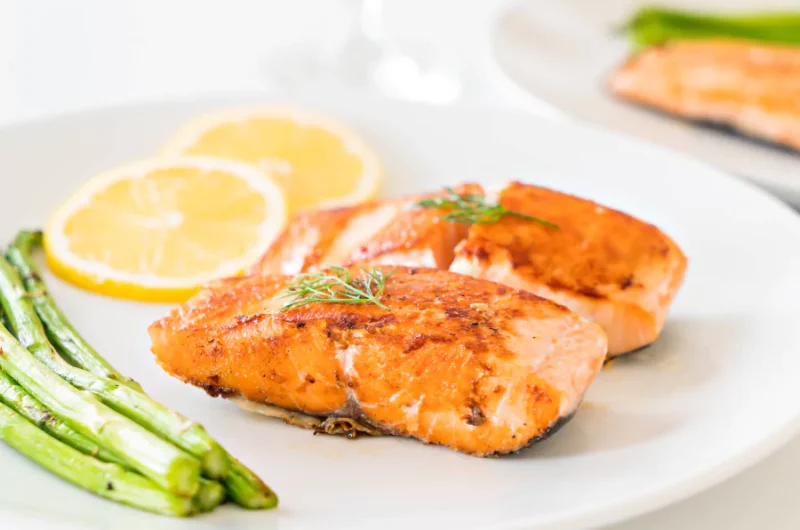
minutesSkin-on salmon seared in a skillet with olive oil or butter, salt, pepper, and lemon. This homemade restaurant-inspired version takes about 20 minutes for one batch.
Ingredients
4 salmon fillets, skin-on, about 6 ounces each
Salt and freshly ground black pepper, to taste
2 tablespoons olive oil or butter
Fresh herbs (such as dill, parsley, or thyme), optional for garnish
Lemon wedges, for serving
Directions
- Prepare the Salmon:
- Pat the 4 salmon fillets dry on both sides with paper towels. If using frozen fish, thaw it in the refrigerator first and follow any package instructions for removing vacuum packaging before thawing.
- Season both sides with salt and freshly ground black pepper to taste. Set out clean serving plates, lemon wedges, and the optional herbs before heating the pan.
- Heat the Skillet:
- Heat a large, heavy skillet over medium-high heat for the olive oil option, or medium heat for butter. Add the 2 tablespoons olive oil or butter. The oil should shimmer; butter should foam without turning dark. Reduce the heat if either begins to smoke.
- Sear the Salmon:
- Carefully lower the fillets into the skillet skin-side down, laying them away from you to limit splashes. Leave space between them. If they do not fit comfortably, cook in batches and divide the listed fat between batches.
- Cook without moving the fillets for about 4 to 6 minutes, until the skin is crisp and releases with gentle pressure from a spatula. Reduce the heat if the skin browns too quickly.
- Flip and Finish Cooking:
- Slide a wide spatula under each fillet and turn it carefully. Avoid repeatedly flipping or pressing the fish.
- Cook the second side for about 2 to 4 minutes, then check the thickest part with a food thermometer. Continue over gentler heat as needed until each fillet reaches 145°F (63°C). The flesh should be opaque and separate easily; thickness and temperature take priority over the clock.
- Serve:
- Transfer the fully cooked salmon to clean plates, skin-side up if you want to keep the skin crisp. Do not return it to the plate that held the raw fish.
- Add the optional fresh herbs and serve with lemon wedges. Squeeze the lemon over the fish just before eating.
- Serving and Timing:
- Serve warm with vegetables, potatoes, or a salad. Allow about 10 minutes for preparation and about 10 minutes for cooking one uncrowded batch, or roughly 20 minutes total. Extra batches or thick fillets take longer.
- Refrigerate any leftovers in a shallow covered container within 2 hours, or within 1 hour if the temperature is above 90°F (32°C).