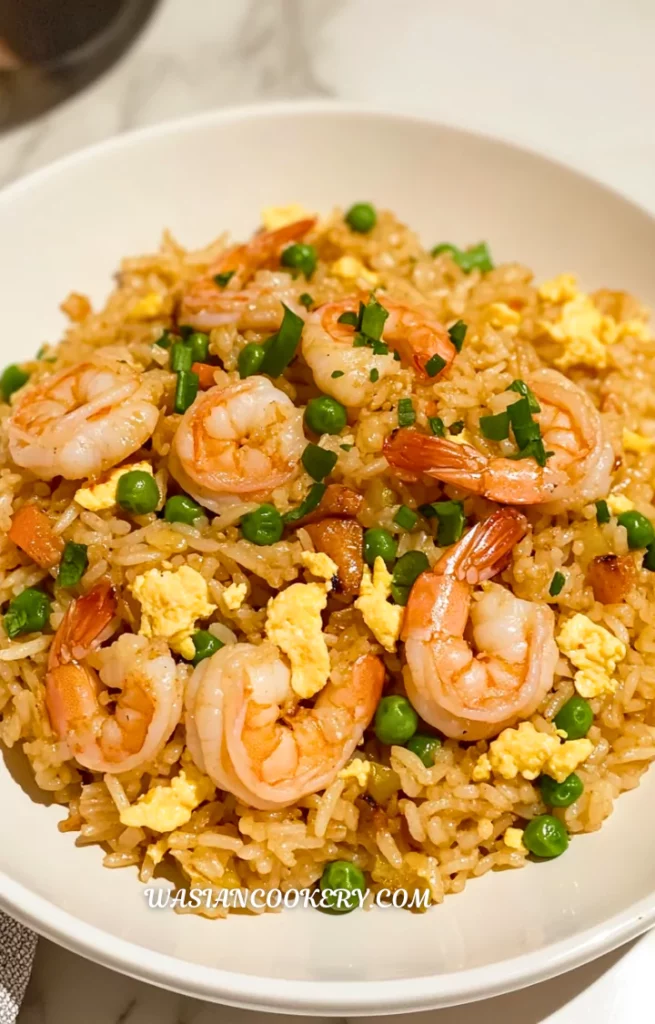
Shrimp Fried Rice
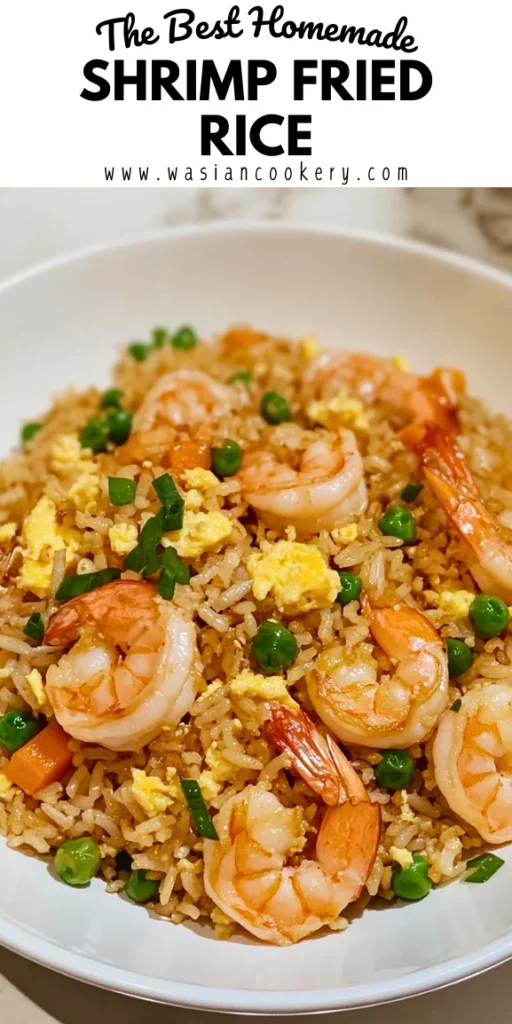
I love Shrimp Fried Rice for a quick meal with tender shrimp, soft egg, and plenty of little vegetables. Garlic and ginger give the pan a lovely aroma, while soy sauce and sesame oil bring everything together. It is a useful way to turn safely refrigerated rice into something different.
My favorite way to enjoy it is with a simple vegetable side and a little chili sauce. The green onions add freshness at the end, and the optional pepper flakes let you make the rice as mild or spicy as you like. Keep the toppings ready before you start cooking.
This recipe makes two modest servings with exactly one cup of cooked jasmine rice. Allow about thirty minutes when the shrimp are thawed and the rice is already chilled. Starting with dry rice adds its cooking and cooling time, so prepare that ingredient ahead and refrigerate it promptly.
Why This Dish Is Great
- A small, useful batch: The recipe uses half a pound of shrimp and one cup of cooked rice, ideal when you have a little rice left over.
- Familiar vegetables: Frozen peas and carrots save chopping and add color without a separate vegetable pan.
- Separate cooking: Taking out the shrimp and egg while the vegetables cook helps keep their textures pleasant.
- Simple seasoning: Garlic, ginger, soy sauce, and sesame oil provide plenty of flavor without a complicated sauce.
- Flexible serving: Enjoy it in two bowls for a light meal or serve smaller portions alongside another dish.
- Easy heat control: The red pepper flakes are optional, so each person can add them at the table.
What Is the Best Shrimp to Use?
Choose raw shrimp that are peeled and deveined, with tails removed for easy eating. Medium shrimp fit neatly on a spoon with the rice, but larger ones also work. Select similar sizes so they finish at roughly the same time. Frozen shrimp are convenient; thaw them in the refrigerator and pat away excess surface moisture.
Cold jasmine rice separates more easily than a fresh, steamy mound. Measure it after cooking: the one-cup amount is not a dry-rice measurement. Use rice that was cooled quickly in a shallow container and kept at 40°F or colder. Never leave a pot on the counter overnight to make day-old rice.
Ingredients
- 1 cup cooked jasmine rice (preferably day-old)
- ½ lb shrimp, peeled and deveined
- 1 tbsp soy sauce
- 1 tsp sesame oil
- 1 tbsp vegetable oil
- 1 egg, lightly beaten
- ½ cup frozen peas and carrots
- ½ small onion, finely chopped
- 2 cloves garlic, minced
- ½ tsp ginger, minced
- ½ tsp salt (or to taste)
- ¼ tsp black pepper
- 2 green onions, chopped (for garnish)
- ½ tsp red pepper flakes (optional for spice)
The tablespoon of vegetable oil is divided into three teaspoons for the shrimp, egg, and vegetables. The sesame oil is a separate measured ingredient that goes in with the soy sauce. Keep the original salt amount as a guide or season to taste, as listed, because soy sauces vary in saltiness.
Kitchen Equipment You Will Need
As an Amazon Associate I earn from qualifying purchases.
- Large skillet or wok
- Spatula
- Knife
- Cutting board
- Measuring cups
- Measuring spoons
- Small mixing bowl
- Fork
- Food thermometer
- Clean plate
- Paper towels
- Shallow airtight containers
- Serving bowls
- Saucepan with lid
How To Make Shrimp Fried Rice
Step 1
Measure 1 cup already-cooked, refrigerated jasmine rice and gently loosen the clumps. Thaw frozen shrimp overnight in the refrigerator, then pat dry with paper towels. Chop the onion, garlic, ginger, and green onions. Beat the egg in a small bowl. Keep raw shrimp and its utensils separate from the ready-to-eat ingredients.
Step 2
Heat 1 teaspoon of the measured vegetable oil in a large skillet or wok over medium-high heat. Add the shrimp in one layer with some of the listed salt and pepper. Cook for about 2–3 minutes per side, checking earlier for small shrimp. Remove to a clean plate once the flesh is opaque and the thickest part reaches 145°F.
Step 3
Add a second teaspoon of the measured vegetable oil. Pour in the beaten egg and scramble for about 1 minute, until fully set with no runny egg. Transfer to the clean plate with the cooked shrimp. Adjust the heat if the egg browns before it sets.
Step 4
Add the final teaspoon of vegetable oil, keeping the recipe total at 1 tablespoon. Cook the chopped onion for about 2 minutes until it starts to soften. Add the garlic and ginger and stir for about 30 seconds, just until fragrant rather than browned.
Step 5
Add the frozen peas and carrots. Stir-fry for about 2–3 minutes, or until hot and tender, following any longer cooking requirement on their package. Let excess moisture evaporate before adding the rice.
Step 6
Add the cold rice and spread it across the pan. Stir-fry for about 2–3 minutes, gently separating clumps with the spatula. Fold the vegetables through the rice so the grains heat evenly without being crushed.
Step 7
Drizzle over the measured soy sauce and sesame oil and stir to coat evenly. Add the remaining black pepper. Because the salt is listed as an amount or to taste, check the cooked mixture before adding any remaining salt.
Step 8
Return the cooked shrimp and scrambled egg. Toss for another 1–2 minutes, or as needed until the rice and mixture reach 165°F throughout. Check several places with a clean thermometer. Avoid leaving the shrimp over the heat after the rice is thoroughly hot.
Step 9
Take the pan off the heat. Scatter over the chopped green onions and optional red pepper flakes, then serve promptly. Plan on about 10 minutes preparation and 20 minutes cooking, or 30 minutes total, with chilled cooked rice and thawed shrimp ready.
Notes
- Prepare every ingredient first. Once the pan is hot, there is little time to stop and mince garlic or look for a measuring spoon.
- Use medium-high heat that suits your pan. A steady sizzle is helpful; smoking oil and scorched garlic are signs to lower the heat.
- Break up cold rice gently before it goes in. Pressing hard on soft grains in the pan can make the finished rice pasty.
- Check shrimp early if they are small. Opaque flesh and a 145°F reading are more useful than a rigid cooking time or color alone.
- Let moisture from the frozen vegetables cook away. A wet pan steams the rice and makes it harder to keep the grains separate.
- Keep the sesame oil for the seasoning stage. Its flavor is most noticeable when it is not used for the initial shrimp sear.
- If making a larger quantity, cook in batches and divide the measured oil between them. Crowding a small skillet makes everything wet and extends cooking.
Ingredients You Can Add
- Mushrooms: Sauté small pieces until their moisture evaporates before mixing them into the rice. A modest amount adds an earthy flavor.
- Pineapple: Small, well-drained pieces add sweetness. Heat them with the vegetables so extra juice can evaporate.
- Red bell pepper: Dice it finely and soften it with the onion for a little crunch and bright color.
- Oyster sauce: A little adds a deeper savory taste, but also salt. Taste a finished portion before adding extra seasoning.
- Fresh chili: Finely chopped chili gives a sharper heat than the optional flakes. Keep it separate for diners who prefer mild rice.
- Cashews: Add ready-to-eat roasted cashews just before serving so they keep their crunch. Check for nut allergies when sharing.
What To Serve With Shrimp Fried Rice
Serve the rice fresh from the pan in warmed or room-temperature bowls. A side of steamed broccoli or other plain vegetables balances the seasoned grains. For a cool, crunchy contrast, try spicy Korean cucumber salad, with the chili adjusted to your taste.
A little chili sauce is enough when you want extra heat. For a sweeter flavor on a different evening, serve a small spoonful of teriyaki sauce alongside. Taste first because the fried rice already contains soy sauce and does not need a heavy coating.
If you enjoy fruit with savory rice, pineapple fried rice is another meal to try. This smaller shrimp version is especially handy for using a single cup of cooked rice. Keep any additional side dish simple so the stir-fry can be eaten while hot.
Variations and Swaps
- Garlic butter finish: Stir a little melted garlic butter into a serving at the table for richness. This is an optional addition to the base recipe.
- Spicy rice: Use the listed pepper flakes or offer chili sauce alongside, adding a little at a time.
- Brown rice: Substitute the same measured volume of already-cooked, chilled brown rice. Its grains will be a little chewier.
- Lemon garlic flavor: A squeeze of lemon over the finished bowl gives the shrimp a bright finish without wetting the pan.
- More vegetables: Add cooked zucchini, baby corn, or spinach in a modest quantity. Drain excess liquid before combining.
- Egg-free bowl: Omit the egg if needed, checking sauces and other additions for relevant allergens. The finished texture and yield will differ.
- Gluten-free option: Choose clearly labeled gluten-free tamari and check every sauce or topping. Ordinary soy sauce often contains wheat.
- Pre-cooked shrimp: Skip the raw-shrimp searing stage and add them near the end. Heat the completed mixture to 165°F, allowing extra time as needed.
Storage
Refrigerate leftovers promptly in shallow airtight containers, within two hours of cooking or within one hour above 90°F. Keep them at 40°F or below. Use within three days of the rice’s original cooking date, allowing less time if it was already stored before frying. Frying does not give old rice a fresh storage period; discard rice left out too long.
Freeze promptly in small portions for up to two months for best quality and thaw in the refrigerator. Reheat only the portion you need in a skillet over moderate heat, stirring often, until every part reaches 165°F. If the rice is dry, add a small splash of water to the rice mixture, not to a pan of hot oil. Avoid repeatedly warming and cooling the whole batch.
FAQ
Can I use rice cooked today?
Yes, once it has been cooled promptly and chilled. Cook it according to its package, spread it in a shallow container, and refrigerate promptly rather than leaving it on the counter to dry. Allow extra time beyond the thirty-minute recipe estimate.
Why is my fried rice mushy?
Warm, wet rice, undrained additions, or an overcrowded pan can cause this. Use chilled grains, let vegetable moisture evaporate, and fold gently. Extra sauce will make wet rice softer rather than help it fry.
Do I need to thaw frozen shrimp?
Yes, thaw them in the refrigerator for this method. Frozen shrimp release extra water and need different timing. Keep thawed shrimp cold until preparation, then pat them dry and cook promptly.
How can I tell when the shrimp are done?
The flesh should be firm and opaque, and the thickest part should reach 145°F. Insert a thin thermometer probe from the side when possible. Small shrimp may finish before the stated time, so begin checking early.
Why does this use only one cup of rice?
That is the original cooked-rice quantity for two modest servings, with shrimp, egg, and vegetables filling out the bowls. Do not replace it with one cup of dry rice. For a bigger meal, scale all ingredients evenly and allow extra pan time.
Can I prepare the ingredients ahead?
Yes. Chop vegetables and keep them refrigerated, with the raw shrimp in its own covered container. Cooked rice must be cooled promptly and kept cold. Measure the sauces shortly before cooking and bring everything together only when the pan is ready.
Short Description
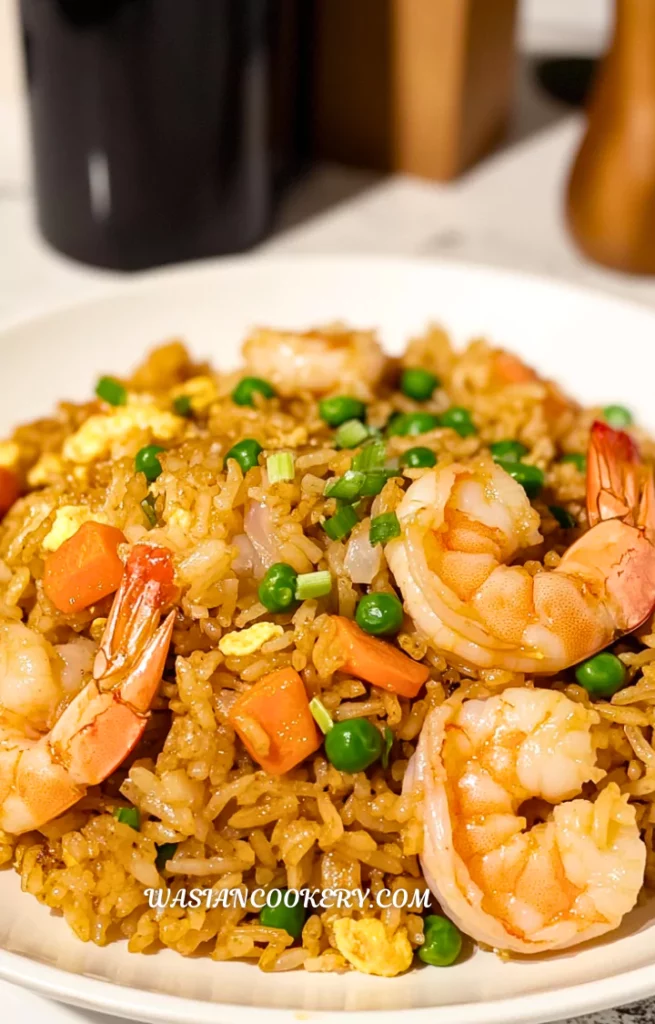
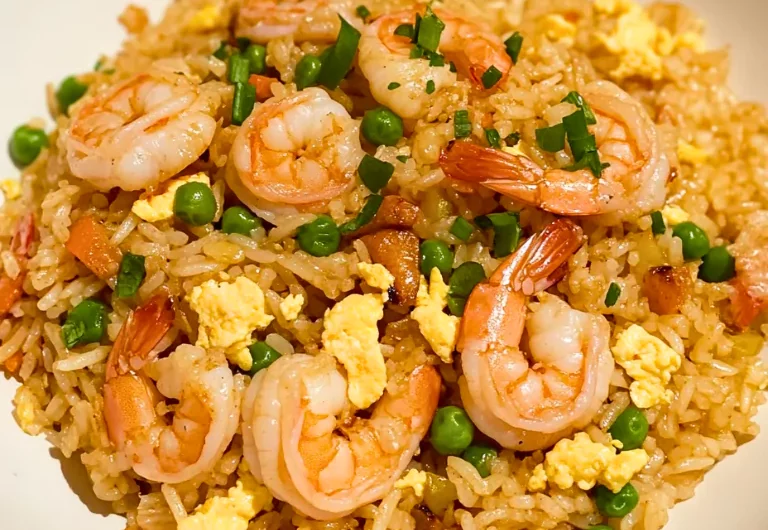
Shrimp fried rice with jasmine rice, scrambled egg, peas, carrots, garlic, and ginger, finished with soy sauce, sesame oil, and green onions.
Shrimp Fried Rice
Course: MainCuisine: ChineseDifficulty: Easy2
servings10
minutes20
minutes30
minutesShrimp fried rice with jasmine rice, scrambled egg, peas, carrots, garlic, and ginger, finished with soy sauce, sesame oil, and green onions.
Ingredients
1 cup cooked jasmine rice (preferably day-old)
½ lb shrimp, peeled and deveined
1 tbsp soy sauce
1 tsp sesame oil
1 tbsp vegetable oil
1 egg, lightly beaten
½ cup frozen peas and carrots
½ small onion, finely chopped
2 cloves garlic, minced
½ tsp ginger, minced
½ tsp salt (or to taste)
¼ tsp black pepper
2 green onions, chopped (for garnish)
½ tsp red pepper flakes (optional for spice)
Directions
- Measure 1 cup already-cooked, refrigerated jasmine rice and gently loosen the clumps. Thaw frozen shrimp overnight in the refrigerator, then pat dry with paper towels. Chop the onion, garlic, ginger, and green onions. Beat the egg in a small bowl. Keep raw shrimp and its utensils separate from the ready-to-eat ingredients.
- Heat 1 teaspoon of the measured vegetable oil in a large skillet or wok over medium-high heat. Add the shrimp in one layer with some of the listed salt and pepper. Cook for about 2–3 minutes per side, checking earlier for small shrimp. Remove to a clean plate once the flesh is opaque and the thickest part reaches 145°F.
- Add a second teaspoon of the measured vegetable oil. Pour in the beaten egg and scramble for about 1 minute, until fully set with no runny egg. Transfer to the clean plate with the cooked shrimp. Adjust the heat if the egg browns before it sets.
- Add the final teaspoon of vegetable oil, keeping the recipe total at 1 tablespoon. Cook the chopped onion for about 2 minutes until it starts to soften. Add the garlic and ginger and stir for about 30 seconds, just until fragrant rather than browned.
- Add the frozen peas and carrots. Stir-fry for about 2–3 minutes, or until hot and tender, following any longer cooking requirement on their package. Let excess moisture evaporate before adding the rice.
- Add the cold rice and spread it across the pan. Stir-fry for about 2–3 minutes, gently separating clumps with the spatula. Fold the vegetables through the rice so the grains heat evenly without being crushed.
- Drizzle over the measured soy sauce and sesame oil and stir to coat evenly. Add the remaining black pepper. Because the salt is listed as an amount or to taste, check the cooked mixture before adding any remaining salt.
- Return the cooked shrimp and scrambled egg. Toss for another 1–2 minutes, or as needed until the rice and mixture reach 165°F throughout. Check several places with a clean thermometer. Avoid leaving the shrimp over the heat after the rice is thoroughly hot.
- Take the pan off the heat. Scatter over the chopped green onions and optional red pepper flakes, then serve promptly. Plan on about 10 minutes preparation and 20 minutes cooking, or 30 minutes total, with chilled cooked rice and thawed shrimp ready.
Notes
- Use exactly 1 cup cooked, chilled rice; cooking and chilling dry rice takes additional time.
- Divide the 1 tablespoon vegetable oil into three teaspoons; add the separate sesame oil with the sauce.
- Cook raw shrimp to 145°F and heat the rice mixture to 165°F. Refrigerate promptly in shallow containers.