German Pancake Recipe
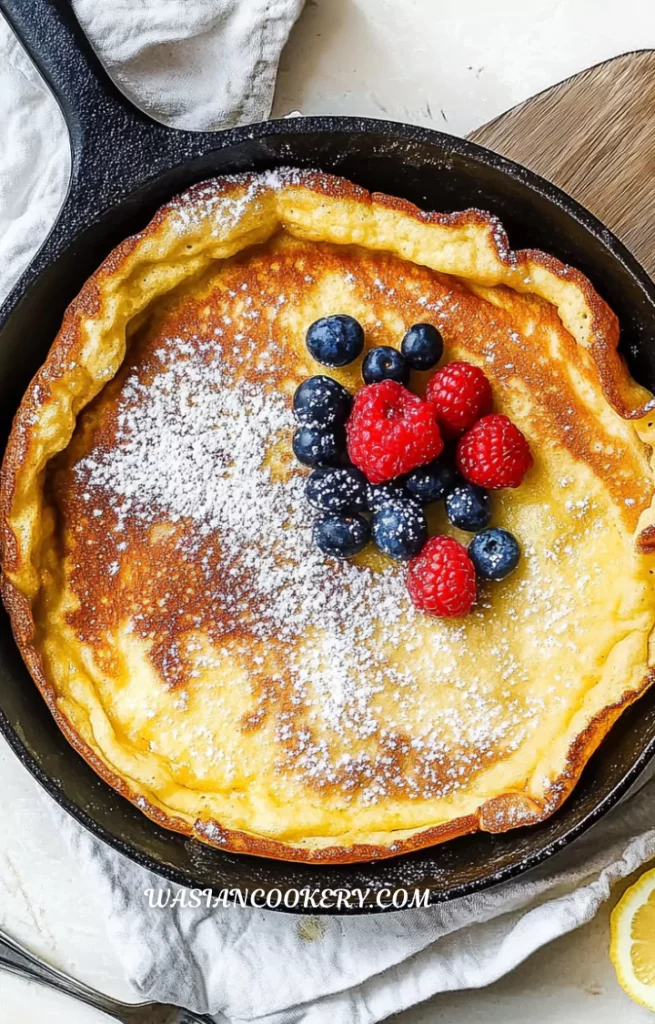
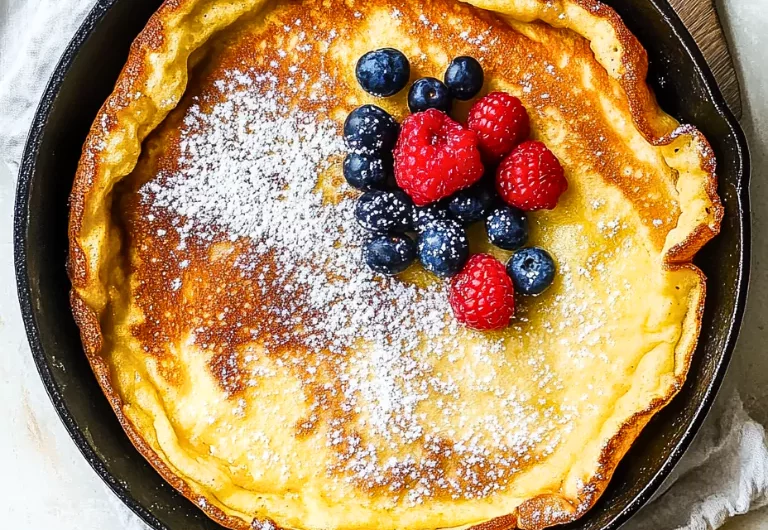
I love how a German pancake rises around the edges of a hot skillet. The middle stays soft and eggy, while the browned edges have a little crispness. A small amount of sugar and vanilla makes it lovely with lemon, berries, or a spoonful of jam.
Also called a Dutch baby, this is one large oven pancake that you cut into portions. The thin batter needs no baking powder. A properly heated skillet and oven help it puff, and the butter gives the bottom and edges their rich flavor.
This recipe makes four modest portions from a 10-inch skillet. Allow about 45 minutes, including preheating the pan, mixing and resting the batter, baking, and a brief pause before serving. Set out toppings while it bakes because the tall edges begin to settle once it leaves the oven.
Why This Dish Is Great
- The batter uses everyday ingredients in small amounts. Eggs, flour, milk, and butter make the base, with sugar and vanilla adding gentle sweetness.
- One pancake serves the table at once, so you do not have to cook and flip a long stack while early batches cool.
- A blender smooths the batter quickly. A bowl and whisk also work when you take a moment to break up the flour lumps.
- The crisp edges and soft middle give each portion two textures. Serve it promptly to enjoy that contrast while the outside is still crisp.
- Toppings are flexible. You can keep the pancake plain and let each person add fruit, syrup, or powdered sugar to their own plate.
- The same skillet heats and bakes the pancake. It also makes an attractive serving dish, provided everyone remembers that its handle remains very hot.
Choosing The Best Eggs And Milk
Use large eggs so the balance with the measured flour and milk stays close to the recipe. Eggs give the pancake its structure and soft center. This is an eggier dish than a regular fluffy pancake, so expect a tender, slightly custardy bite once the batter is fully cooked.
Whole milk gives a rounded flavor, although a lower-fat milk can work with a small change in richness. There is no need for a long room-temperature wait. Mix the batter smoothly and use its brief rest while the oven heats. Keep eggs and milk refrigerated until preparation.
Ingredients
- 3 large eggs
- ½ cup all-purpose flour
- ½ cup milk (whole milk preferred)
- 1 tablespoon granulated sugar
- ½ teaspoon vanilla extract
- ¼ teaspoon salt
- 2 tablespoons unsalted butter
- Optional toppings: powdered sugar, lemon juice, fresh fruit, syrup
Kitchen Equipment You Will Need
As an Amazon Associate I earn from qualifying purchases.
- 10-inch cast-iron skillet
- Small skillet
- Blender
- Mixing bowl
- Whisk
- Measuring cups
- Measuring spoons
- Rubber spatula
- Oven mitts
- Heatproof trivet
- Food thermometer
- Serving spatula
- Kitchen knife
- Microplane zester
How To Make German Pancake
Step 1
Place a 10-inch cast-iron skillet on the middle oven rack, leaving space above for the pancake to rise. Preheat the oven and empty skillet to 425°F (220°C). Allow about 20 minutes for the oven and pan to heat fully; prepare and rest the batter during that time. Use a skillet whose handle is also safe at this temperature.
Step 2
Combine the 3 eggs, ½ cup flour, ½ cup milk, sugar, vanilla, and salt in a blender. Blend for 20–30 seconds until smooth, scraping down any flour if needed. Let the batter rest for 5–10 minutes while the oven finishes heating, then stir briefly if it has separated. Do not add the butter to the batter.
Step 3
Using dry oven mitts, carefully remove the hot skillet and set it on a heatproof surface. Add all 2 tablespoons butter and swirl to coat the bottom and lower sides. The butter should melt and foam; work promptly so it does not burn.
Step 4
Pour all the batter into the hot buttered skillet and immediately return it to the oven. Leave the oven door closed while the pancake begins to rise. Keep your oven mitts nearby and treat the skillet handle as hot throughout baking and serving.
Step 5
Bake for about 18–20 minutes, until the edges are puffed and deeply golden and the center is set without liquid batter. Check the thickest part of the eggy center with a food thermometer; it should reach 160°F. Continue baking if needed to reach that temperature and a set center, even if the edges have already puffed.
Step 6
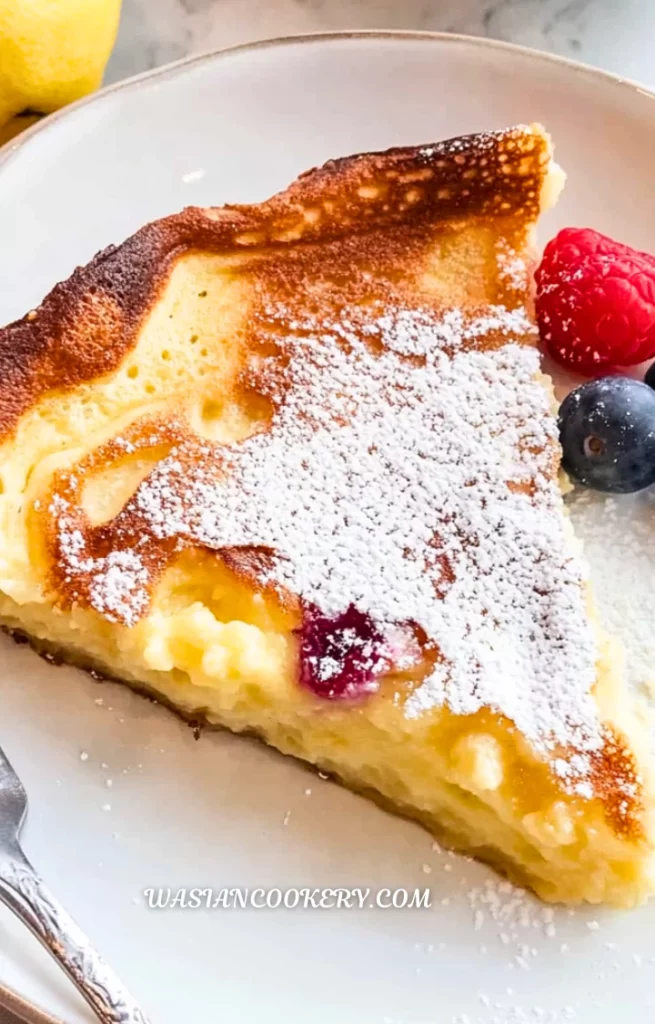
Remove the skillet carefully and let the pancake stand for about 2 minutes, then cut into four portions and serve warm. Add the optional powdered sugar, lemon juice, fruit, or syrup at the table. The pancake settles as it cools. Plan about 45 minutes total: 20 minutes preparation including preheating and batter rest, about 20 minutes baking, and about 5 minutes for transfers, toppings, and the brief standing time.
Notes
- Use the specified skillet size for the main recipe. A much wider pan spreads the batter thinner, while a smaller one makes a deeper center.
- Spoon flour into the cup and level it. Packing the flour can make the batter heavier and change the way the pancake rises.
- Blend only until smooth. If flour sticks above the batter line, stop and scrape it down rather than leaving dry pockets in the mixture.
- Have the batter beside the oven before removing the pan. The buttering and pouring stage goes quickly, and the skillet should stay hot.
- Keep the oven door closed during the early bake. Watch through the window if you can, then open it near the end to check doneness.
- Do not judge by height alone. Some pancakes rise unevenly; the important finish is browned edges and a center that is set and fully cooked.
- A falling center is normal after baking. Put wet toppings on individual portions so the remaining edges keep their texture as long as possible.
Ingredients You Can Add
- Cinnamon or nutmeg: A light pinch in the batter adds warmth. Keep it subtle so it does not drown out the vanilla.
- Maple syrup or honey: Drizzle over individual portions after baking. Start with a little because the batter already contains a tablespoon of sugar.
- Fresh berries: Add washed, well-drained berries after baking for bright flavor without weighing down the batter while it tries to rise.
- Jam or preserves: Spoon a small dollop into the center of a plated portion. A thick jam stays more neatly in place than a runny sauce.
- Chocolate chips: Scatter them onto the hot cooked pancake so they soften. Adding them at the end keeps the base batter unchanged.
- Sliced bananas or apples: Fresh banana slices work as a topping. Cook apple slices separately until tender before serving them over the pancake.
What To Serve With German Pancake
Lemon juice and powdered sugar make a simple finish. For a fruitier topping, serve a little Peach Jam alongside fresh berries or sliced peaches. Let everyone dress their portion after you cut the pancake.
A small side of breakfast sausage, crisp bacon, or a vegetable sausage works with the lightly sweet pancake. For a larger brunch table, Blueberry Pancakes offer a familiar stovetop option for guests who enjoy a thicker, fluffy pancake.
Keep drinks easy with coffee, tea, orange juice, or sparkling water with lemon. If you need something you can bake ahead, Pound Cake can be sliced before the pancake goes into the oven, leaving the last few minutes free for serving.
Recipe Variations And Swaps
- Savory version: Omit the sugar and vanilla, and top the baked pancake with cooked mushrooms, spinach, or cheese. Drain cooked vegetables well before adding them.
- Apple and cinnamon: Serve tender cooked apple slices over the pancake and finish with cinnamon. Cooking fruit separately protects the simple batter from extra juice.
- Lemon zest: Stir finely grated lemon zest into the batter. It adds fragrance while keeping the liquid amount the same.
- Berry bake: Scatter a handful of washed, well-drained berries over the batter just before baking. Added fruit may reduce the puff and lengthen baking; continue until the center is set and reaches 160°F.
- Chocolate finish: Drizzle melted chocolate over warm slices. This keeps the flour balance intact instead of adding unmeasured cocoa to the batter.
- Dairy-free option: Use an unsweetened milk alternative and a plant-based butter suitable for baking. Flavor and browning can differ from the dairy version.
- Gluten-free option: A baking blend intended to replace all-purpose flour by volume is a possible swap. Expect a different texture and puff; single flours behave differently.
- Extra-crisp serving: Cut and plate promptly after the short standing time, then add toppings at the table. Leaving the whole pancake under wet fruit softens the edges.
How To Store
Refrigerate leftover slices in a covered shallow container within 2 hours, or within 1 hour in temperatures above 90°F. They do not need to cool completely on the counter first. Use within 2 days for the best texture, and store syrup and fresh toppings separately.
For longer storage, wrap cooled slices and freeze in an airtight container for up to 1 month. Thaw in the refrigerator, then reheat in a 350°F oven until the center reaches 165°F. The edges may become a little firmer, but the pancake will not rise again as it did when freshly baked.
FAQ
Why did my pancake barely puff?
Check that the oven and skillet were thoroughly hot before pouring. A cold pan, packed flour, or heavy additions can reduce the lift. Some uneven rise is normal, so a modest puff does not automatically mean the pancake failed.
Can I use a regular baking dish?
The main directions are for a 10-inch cast-iron skillet. Do not preheat an empty glass or ceramic dish unless its maker specifically permits it, and do not pour cool batter into hot glass. A different vessel needs its own handling instructions and may bake differently.
Do I need a blender?
No. Whisk the eggs and milk, then gradually whisk in the flour, sugar, vanilla, and salt until smooth. Scrape the bowl well and keep the same brief rest and hot-skillet method.
Can I mix the batter the night before?
Yes. Cover and refrigerate it promptly, then use the next morning. Stir until evenly combined before baking. Cold rested batter can change the rise or require a little longer in the oven, so check the center rather than relying only on the timer.
Can I double the recipe?
Use two matching skillets and divide a doubled batch evenly. Leave space for air to circulate and check both centers separately. If they cannot fit safely at once, bake in batches and allow extra time; do not put twice the batter in one skillet.
Is the soft middle supposed to look wet?
It should be tender and eggy, but not runny or coated with liquid batter. Check the thickest part for 160°F and continue baking if needed. The high edges alone do not prove the middle is ready.
Short Description
This German pancake bakes in a hot buttered skillet with crisp, puffed edges and a soft, set center. Serve four warm portions with lemon, fruit, or syrup.
German Pancake Recipe
Course: BrunchCuisine: GermanDifficulty: Easy4
servings20
minutes20
minutes45
minutesThis German pancake bakes in a hot buttered skillet with crisp, puffed edges and a soft, set center. Serve four warm portions with lemon, fruit, or syrup.
Ingredients
3 large eggs
½ cup all-purpose flour
½ cup milk (whole milk preferred)
1 tablespoon granulated sugar
½ teaspoon vanilla extract
¼ teaspoon salt
2 tablespoons unsalted butter
Optional toppings: powdered sugar, lemon juice, fresh fruit, syrup
Directions
- Place a 10-inch cast-iron skillet on the middle oven rack, leaving space above for the pancake to rise. Preheat the oven and empty skillet to 425°F (220°C). Allow about 20 minutes for the oven and pan to heat fully; prepare and rest the batter during that time. Use a skillet whose handle is also safe at this temperature.
- Combine the 3 eggs, ½ cup flour, ½ cup milk, sugar, vanilla, and salt in a blender. Blend for 20–30 seconds until smooth, scraping down any flour if needed. Let the batter rest for 5–10 minutes while the oven finishes heating, then stir briefly if it has separated. Do not add the butter to the batter.
- Using dry oven mitts, carefully remove the hot skillet and set it on a heatproof surface. Add all 2 tablespoons butter and swirl to coat the bottom and lower sides. The butter should melt and foam; work promptly so it does not burn.
- Pour all the batter into the hot buttered skillet and immediately return it to the oven. Leave the oven door closed while the pancake begins to rise. Keep your oven mitts nearby and treat the skillet handle as hot throughout baking and serving.
- Bake for about 18–20 minutes, until the edges are puffed and deeply golden and the center is set without liquid batter. Check the thickest part of the eggy center with a food thermometer; it should reach 160°F. Continue baking if needed to reach that temperature and a set center, even if the edges have already puffed.
- Remove the skillet carefully and let the pancake stand for about 2 minutes, then cut into four portions and serve warm. Add the optional powdered sugar, lemon juice, fruit, or syrup at the table. The pancake settles as it cools. Plan about 45 minutes total: 20 minutes preparation including preheating and batter rest, about 20 minutes baking, and about 5 minutes for transfers, toppings, and the brief standing time.
Notes
- Use a 10-inch cast-iron skillet with an oven-safe handle. Preheat the oven and pan together to 425°F (220°C); do not use the empty-hot-pan method with glass.
- The approximately 45-minute total includes 20 minutes preparation with oven/pan preheating and a 5–10-minute batter rest, about 20 minutes baking, and about 5 minutes for transfers and the brief standing/serving stage. Continue baking if the center needs longer.
- The eggy center must be set and reach 160°F. Let stand about 2 minutes, then serve warm; settling after baking is normal.