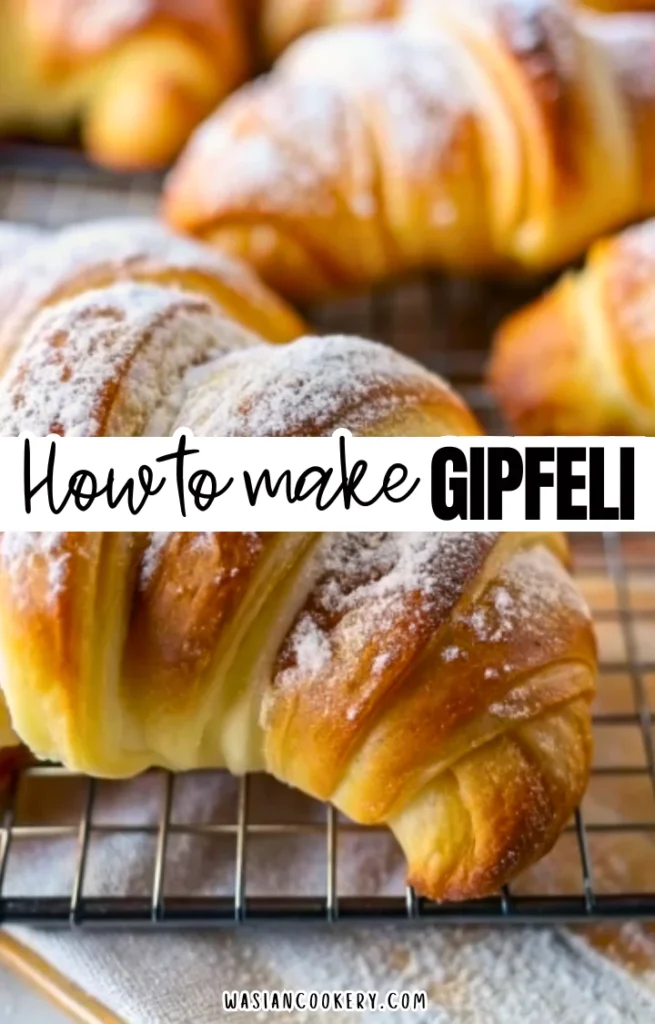
Easy Gipfeli Recipe
My kids love these Gipfeli pastries, especially when I make them at home using the recipe that has been in our family for a long time. The buttery layers turn golden and crisp outside, with a tender center that is lovely served warm.
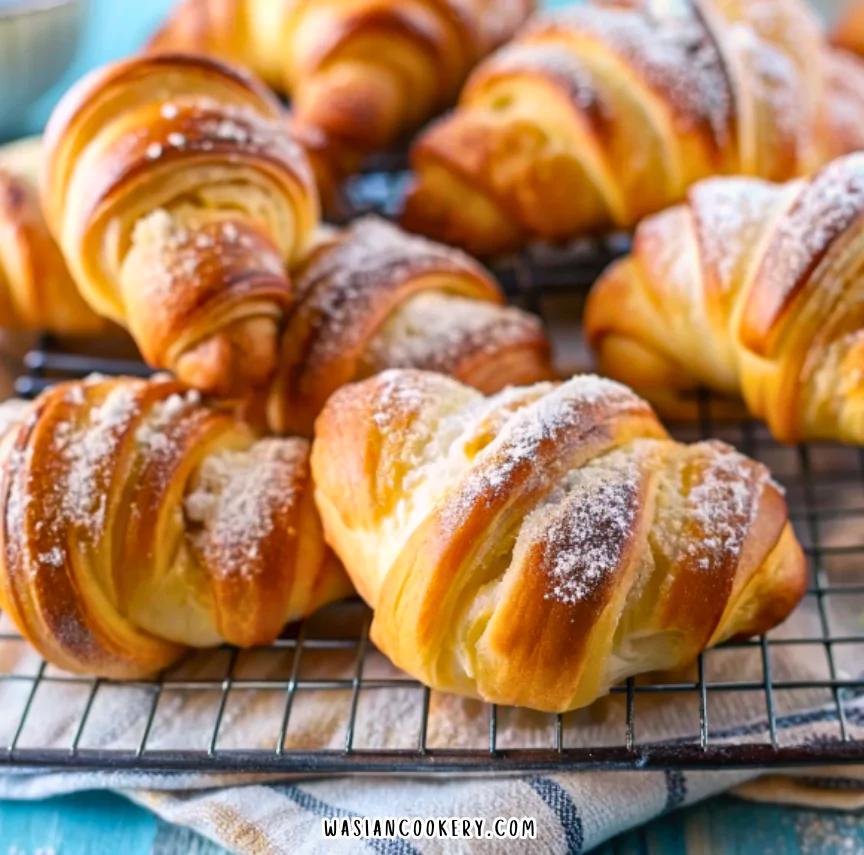
We like them with butter and different jams, and making them has become a special tradition in our house. A cup of coffee or tea and a warm pastry make a comforting breakfast or afternoon snack.
This version uses yeast dough folded around a separate butter layer. The rolling is only part of the work: chilling, proofing, and cooling all need time. Plan a relaxed baking day, or use the overnight rest after the final fold.
Why This Dish Is Great
- The layers give each pastry a crisp surface and a soft middle, making plain Gipfeli satisfying even before you add a spread.
- The dough has a gentle sweetness that works with jam at breakfast or a savory filling after baking.
- Twelve pastries make a useful batch for a family breakfast, with extras that can be frozen once baked and cooled.
- The refrigerator breaks up the hands-on work. You do a little rolling, then give the dough time to relax and the butter time to firm up.
- You can finish the folding the evening before, then shape, proof, and bake the next day without rushing the chilled dough.
What Is the Best Main Ingredient?
Unsalted butter is central to this recipe. The softened 60g portion belongs in the dough; the separate 250g portion creates the layers. Use block butter rather than a soft tub spread. For rolling, the butter should feel cool and flexible, with a similar firmness to the dough. Hard butter can crack into chunks, while soft, greasy butter can smear into the dough.
All-purpose flour forms the base, and fresh or dry yeast supplies the rise. Choose one yeast option, not both. This is a laminated, butter-rich version of the Swiss crescent pastry; shapes and formulas can vary. Here, success depends on following this particular dough and its resting stages rather than treating every crescent-shaped bread as interchangeable.
Ingredients
Dough
- 500g (4 cups) all-purpose flour
- 60g granulated sugar
- 10g (2 tsp) salt
- 20g (1 1/2 tbsp) fresh yeast or 7g (1 packet) dry yeast
- 300ml (1 1/4 cups) milk, lukewarm
- 60g unsalted butter, softened
Butter Layer
- 250g unsalted butter, cold
Egg Wash
- 1 egg, beaten
- 1 tbsp milk
Use the gram weights for the flour, sugar, salt, yeast, and butter, and the milliliter measure for the dough milk. The remaining cup and spoon measures are approximate guides; use the weights for this dough. Do not switch between the two systems mid-recipe. Keep the 1 tablespoon milk for the egg wash separate from the 300ml milk for the dough.
Kitchen Equipment You Will Need
As an Amazon Associate I earn from qualifying purchases.
- Digital kitchen scale
- Liquid measuring cup
- Measuring spoons
- Large mixing bowl
- Small mixing bowl
- Mixing spoon
- Rolling pin
- Pastry ruler
- Bench scraper
- Sharp knife
- Cutting board
- Baking sheets
- Parchment paper
- Plastic wrap
- Pastry brush
- Fork
- Oven mitts
- Wire cooling racks
- Instant-read thermometer
- Airtight storage container
- Freezer bags
- Small serving bowls
How To Make Gipfeli
- Prepare the yeast: Use the listed gram weights and 300ml dough milk; reserve the separate 1 tablespoon milk for the egg wash. For active dry yeast, warm the dough milk to the temperature stated on its packet, generally 100–110°F, and dissolve the yeast with a pinch taken from the measured sugar. Leave for 5–10 minutes until it shows activity. For fresh yeast, crumble it into the lukewarm milk; for instant yeast, mix it with the flour and add the lukewarm milk in the next step.
- Mix the dough: Reserve a little of the measured flour for light surface dusting. Combine the remaining flour, sugar, and salt in a large bowl. Add the prepared yeast and milk mixture, or the instant yeast and milk, and the 60g softened butter. Mix with a spoon until a dough forms and no dry pockets remain.
- Knead the dough: Turn it onto the lightly dusted surface and knead for about 8–10 minutes until smooth and elastic. Use the reserved flour sparingly to prevent sticking. Avoid working in large amounts of flour, which would make the dough dry and harder to roll.
- Rest and chill: Return the dough to the bowl, cover, and rest for 30 minutes. Flatten it into a rectangle, wrap, and refrigerate for at least 30 minutes, until cool. Extend this chill if the dough still feels warm before adding the butter.
- Prepare the butter layer: Place the 250g cold butter between sheets of parchment. Tap and roll it into an even rectangle about 1cm thick. Keep it cool, but let it become pliable enough to bend without cracking. Refrigerate briefly if it becomes shiny or greasy.
- Roll the dough: Roll the chilled dough into a rectangle wide enough to leave a small border around the butter and a little more than twice the butter rectangle’s length. The dough and butter should have similar firmness; let very hard butter soften slightly before enclosing it.
- Enclose the butter: Peel off the parchment and place the butter on one half of the dough. Fold the other half over it, press out any large trapped air pockets gently, and pinch the edges closed so the butter is fully enclosed.
- First fold: Roll the packet gently into a long, even rectangle. Brush away excess flour with a clean, dry pastry brush. Fold one short end over the middle third, then the other end over it, like a letter. Wrap and refrigerate for 30 minutes.
- Second fold: Turn the chilled packet a quarter turn. Roll it into a long rectangle, brush away excess flour, and fold into thirds again. Wrap and chill for another 30 minutes. Stop and chill sooner if butter begins to smear or leak.
- Final fold: Repeat the rolling and letter fold once more, making three folds in total. Wrap and refrigerate for at least 1 hour, or overnight. Keep the dough refrigerated throughout an overnight rest.
- Roll and cut: Divide the chilled dough in half, keeping one half refrigerated while working. Roll each half to about 5mm thick, aiming for a rectangle roughly 30 by 38cm. Cut each rectangle into three equal rectangles, then cut each of those diagonally to make six triangles. Repeat with the second half for 12 pastries. Use clean downward cuts rather than dragging the blade through the layers.
- Shape and proof: Gently lengthen each triangle and roll from its broad base toward its tip without pulling tightly. Set the tip underneath and curve the ends into a crescent. Space the pastries well apart on two parchment-lined baking sheets. Cover loosely with plastic wrap and proof in a draft-free room, ideally around 70–75°F, for about 1–2 hours or until noticeably expanded, puffy, and gently wobbly when the pan is moved. Allow longer if needed; keep them away from direct heat.
- Preheat: Toward the end of proofing, preheat the oven to 200°C (390°F), with racks arranged to accommodate both sheets. Remove the plastic wrap. Beat the egg with the reserved 1 tablespoon milk in a small bowl using a fork.
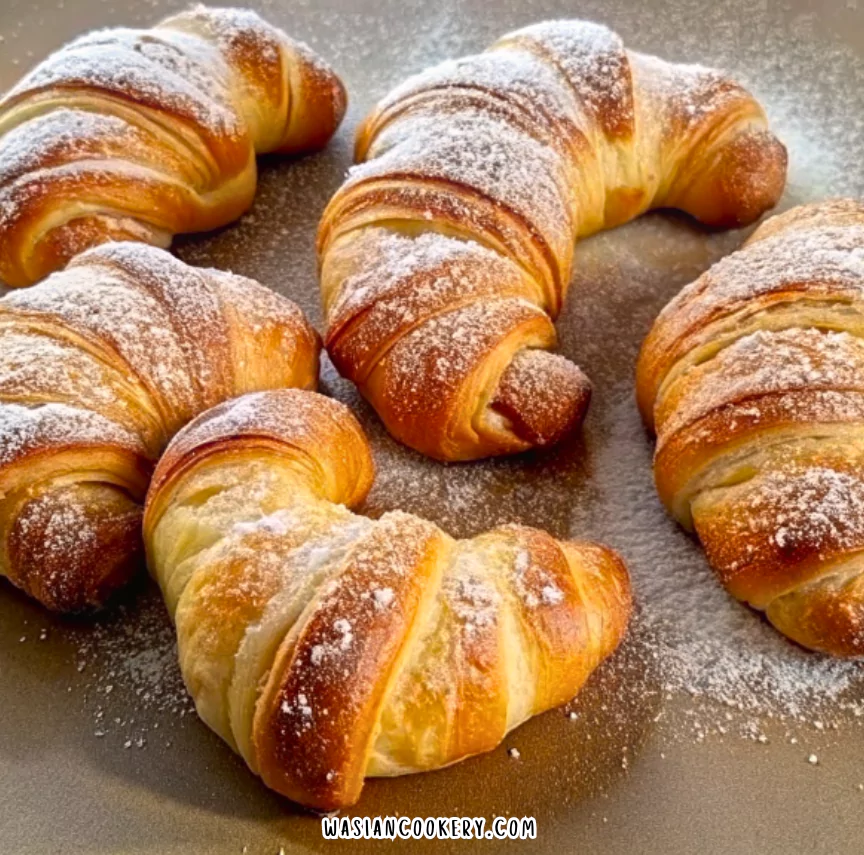
- Egg wash, bake, and cool: Gently brush the tops with egg wash, avoiding pools around the cut edges. Bake for about 25–30 minutes, exchanging the sheets’ positions after about 20 minutes if they brown unevenly. The pastries should be a deep golden brown, with set sides and no pale, raw-looking dough at the overlapping seams; bake longer if needed. Transfer to wire racks and cool for at least 20 minutes before serving.
For the same-day method, allow about 60 minutes of active preparation, 30 minutes of initial resting, 150 minutes of refrigeration across the four chilling stages, up to 120 minutes of proofing, 30 minutes of baking, and 20 minutes of cooling. That is about 6 hours 50 minutes altogether. Cold kitchens, extra pauses during rolling, or an overnight rest will make the total longer.
Notes
- Weigh the ingredients before beginning. In this recipe, the weights are the working amounts, particularly for the two separate portions of butter.
- Keep each rectangle even in thickness. Thin patches are more likely to tear and let butter escape during the next fold.
- Do not rush the chilling stages. They help keep the butter separate and let the dough relax so it stretches more easily.
- If the dough springs back strongly, cover and refrigerate it for another 15–20 minutes before continuing. Forcing it can tear the layers.
- If the butter shatters into hard pieces, pause briefly so it softens enough to roll. If it smears or looks oily, refrigerate the packet instead.
- Use a clean, dry brush to remove excess dusting flour before folding, then wash and dry it before using it for the egg wash.
- Judge proofing by the pastries as well as the clock. Baking tight, heavy-looking crescents too early can leave dense centers and more butter on the tray.
Ingredients You Can Add
Keep additions out of the dough on your first batch so they do not interrupt the layers. These six toppings or fillings are easiest to add after the pastries have baked and cooled enough to split.
- Butter can be spread lightly on the warm cut surface.
- Jam or preserves add fruit flavor and sweetness without making the dough wet during shaping.
- Sliced cheese turns a plain pastry into a simple savory snack.
- Ham or prosciutto can be added with cheese, as in the original serving suggestions.
- Smoked salmon brings a savory option for a freshly assembled brunch sandwich.
- Cream cheese makes a soft spread for the smoked salmon or for a spoonful of fruit preserves.
What To Serve With Gipfeli
My favorite way to enjoy Gipfeli is with butter and jam. Peach jam is a lovely fruit option beside the warm pastries. Serve the spreads separately so everyone can choose how much sweetness they want without softening every pastry at once.
For a heartier breakfast, split a cooled pastry and add freshly cooked egg. You can also take inspiration from these Mayak egg salad sandwiches and use a pastry in place of sandwich bread. Assemble just before eating so the filling does not soak into the delicate layers.
Fresh berries or sliced apples give a lighter contrast to the buttery pastry. A small bowl of peach overnight oats also fits a make-ahead brunch. Keep the cold dishes refrigerated until serving, and let the Gipfeli be the warm part of the meal.
Variations and Swaps
- Choose either the listed fresh yeast or dry yeast amount, following the appropriate mixing step. They are alternatives, not additions to one another.
- Use instant dry yeast directly with the flour if that is the type you have, while keeping the listed dry yeast weight.
- Use the overnight refrigerator option after the third fold when it fits your schedule better. Shaping and final proofing still happen afterward.
- Keep the crescents more open or curve their tips inward. Maintain twelve similar-sized pastries so they bake at a similar rate.
- Serve the pastries plain when you want their buttery flavor to be the main focus.
- Add sweet spreads after baking for a breakfast version without changing the dough.
- Use the existing savory ham, prosciutto, cheese, or salmon serving ideas for a freshly assembled sandwich.
- Freeze some fully baked pastries for another day. A freezer portion is more predictable than changing this method into an untested raw-dough freezing schedule.
Storage
For plain, unfilled Gipfeli, allow the pastries to cool completely on racks, then store in an airtight container at room temperature for up to 2 days. They are crispest on the day of baking. To keep them longer, wrap the cooled pastries, place in freezer bags, and freeze for up to 1 month for best quality.
Rewarm plain pastries on a baking sheet in a 350°F oven for about 5–10 minutes, checking that they are warm and crisp; larger or colder pastries may need longer. Thaw frozen pastries before warming. Pastries filled with egg, meat, fish, or soft cheese need prompt refrigeration within 2 hours, or 1 hour above 90°F, and should follow the filling’s safe storage period. The room-temperature advice applies only to the plain baked pastries.
FAQ
Are Gipfeli the same as croissants?
They are related crescent pastries, with regional and recipe differences. This version uses repeated folds around butter, so it needs the same care with temperature and resting as other laminated yeast doughs.
Can I skip a chill to save time?
Skipping the chill increases the chance of soft butter blending into the dough. Take the scheduled breaks, and add another short chill if the dough becomes greasy or difficult to handle.
Why did butter leak onto the tray?
Some leakage can happen, but a large pool can point to butter that became too warm, damaged layers, or pastries baked before they were fully proofed. Review the rolling and proofing cues before changing ingredient amounts.
How do I know the center is baked?
Look for a deeply golden surface, firm sides, and no raw-looking dough at the seams. Let the pastry cool before opening it; cutting while very hot can make the soft center seem gummy.
Can I make the dough ahead?
Yes. Complete the third fold, wrap well, and refrigerate overnight. The next day, allow enough time to roll, shape, proof, bake, and cool. Overnight chilling does not replace the final proof.
Are these pastries vegan or gluten-free?
No. The recipe contains wheat flour, milk, butter, and an egg wash. Replacing those ingredients changes the structure and would need a separately developed recipe.
Short Description
Buttery Gipfeli made from yeast dough, three careful folds, and a golden egg wash. This twelve-pastry batch includes clear chilling, proofing, baking, and cooling guidance for a relaxed same-day bake or an overnight dough rest.
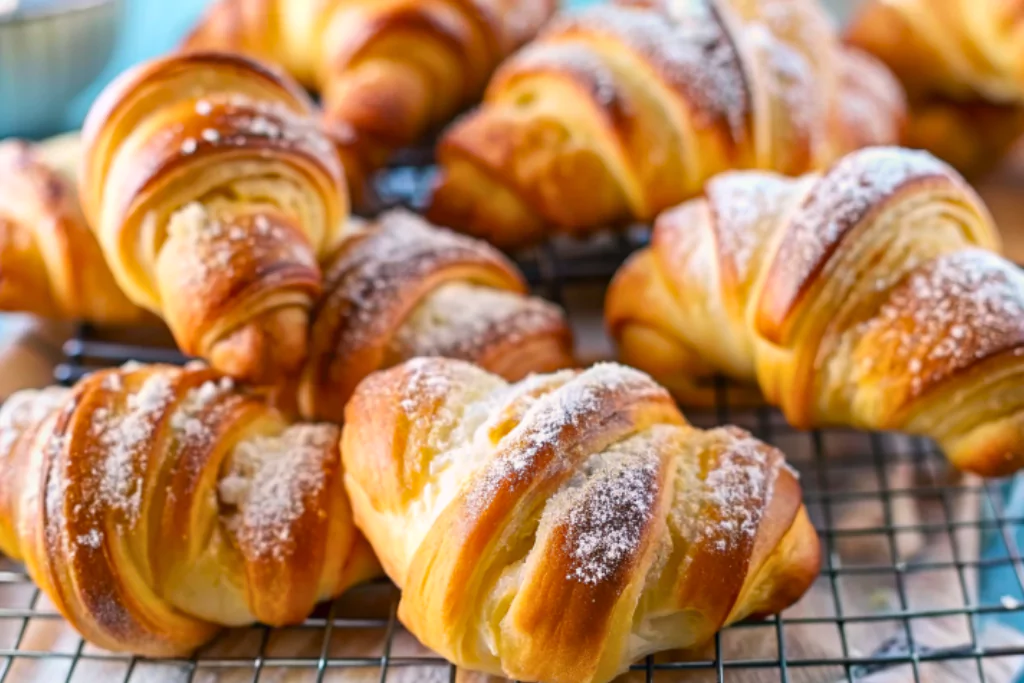
Gipfeli Recipe
Course: Breakfast, SnacksCuisine: SwissDifficulty: Easy12
Gipfeli1
hour30
minutes6
hours50
minutesUsing rich butter, flaky layers, and a golden brown finish, this Gipfeli recipe brings a taste of Swiss tradition to your home, perfect for a delightful breakfast or snack.
Ingredients
- Dough:
500g (4 cups) all-purpose flour
60g granulated sugar
10g (2 tsp) salt
20g (1 1/2 tbsp) fresh yeast or 7g (1 packet) dry yeast
300ml (1 1/4 cups) milk, lukewarm
60g unsalted butter, softened
- Butter Layer:
250g unsalted butter, cold
- Egg Wash:
1 egg, beaten
1 tbsp milk
Directions
- Prepare the yeast: Use the listed gram weights and 300ml dough milk; reserve the separate 1 tablespoon milk for the egg wash. For active dry yeast, warm the dough milk to the temperature stated on its packet, generally 100–110°F, and dissolve the yeast with a pinch taken from the measured sugar. Leave for 5–10 minutes until it shows activity. For fresh yeast, crumble it into the lukewarm milk; for instant yeast, mix it with the flour and add the lukewarm milk in the next step.
- Mix the dough: Reserve a little of the measured flour for light surface dusting. Combine the remaining flour, sugar, and salt in a large bowl. Add the prepared yeast and milk mixture, or the instant yeast and milk, and the 60g softened butter. Mix with a spoon until a dough forms and no dry pockets remain.
- Knead the dough: Turn it onto the lightly dusted surface and knead for about 8–10 minutes until smooth and elastic. Use the reserved flour sparingly to prevent sticking. Avoid working in large amounts of flour, which would make the dough dry and harder to roll.
- Rest and chill: Return the dough to the bowl, cover, and rest for 30 minutes. Flatten it into a rectangle, wrap, and refrigerate for at least 30 minutes, until cool. Extend this chill if the dough still feels warm before adding the butter.
- Prepare the butter layer: Place the 250g cold butter between sheets of parchment. Tap and roll it into an even rectangle about 1cm thick. Keep it cool, but let it become pliable enough to bend without cracking. Refrigerate briefly if it becomes shiny or greasy.
- Roll the dough: Roll the chilled dough into a rectangle wide enough to leave a small border around the butter and a little more than twice the butter rectangle’s length. The dough and butter should have similar firmness; let very hard butter soften slightly before enclosing it.
- Enclose the butter: Peel off the parchment and place the butter on one half of the dough. Fold the other half over it, press out any large trapped air pockets gently, and pinch the edges closed so the butter is fully enclosed.
- First fold: Roll the packet gently into a long, even rectangle. Brush away excess flour with a clean, dry pastry brush. Fold one short end over the middle third, then the other end over it, like a letter. Wrap and refrigerate for 30 minutes.
- Second fold: Turn the chilled packet a quarter turn. Roll it into a long rectangle, brush away excess flour, and fold into thirds again. Wrap and chill for another 30 minutes. Stop and chill sooner if butter begins to smear or leak.
- Final fold: Repeat the rolling and letter fold once more, making three folds in total. Wrap and refrigerate for at least 1 hour, or overnight. Keep the dough refrigerated throughout an overnight rest.
- Roll and cut: Divide the chilled dough in half, keeping one half refrigerated while working. Roll each half to about 5mm thick, aiming for a rectangle roughly 30 by 38cm. Cut each rectangle into three equal rectangles, then cut each of those diagonally to make six triangles. Repeat with the second half for 12 pastries. Use clean downward cuts rather than dragging the blade through the layers.
- Shape and proof: Gently lengthen each triangle and roll from its broad base toward its tip without pulling tightly. Set the tip underneath and curve the ends into a crescent. Space the pastries well apart on two parchment-lined baking sheets. Cover loosely with plastic wrap and proof in a draft-free room, ideally around 70–75°F, for about 1–2 hours or until noticeably expanded, puffy, and gently wobbly when the pan is moved. Allow longer if needed; keep them away from direct heat.
- Preheat: Toward the end of proofing, preheat the oven to 200°C (390°F), with racks arranged to accommodate both sheets. Remove the plastic wrap. Beat the egg with the reserved 1 tablespoon milk in a small bowl using a fork.
- Egg wash, bake, and cool: Gently brush the tops with egg wash, avoiding pools around the cut edges. Bake for about 25–30 minutes, exchanging the sheets’ positions after about 20 minutes if they brown unevenly. The pastries should be a deep golden brown, with set sides and no pale, raw-looking dough at the overlapping seams; bake longer if needed. Transfer to wire racks and cool for at least 20 minutes before serving.
Notes
- Use the listed gram weights and 300ml dough milk; the original parenthetical volume equivalents are approximate. Keep the separate 1 tablespoon egg-wash milk aside.
- Total time is about 6 hours 50 minutes: 60 active preparation, 30 initial rest, 150 chilling, 120 proofing, 30 baking, 20 cooling. Extra chilling, slower proofing, or overnight refrigeration adds time.
- Make 12 pastries from the dough. Keep butter cool and pliable, proof away from direct heat, and bake until deeply golden with no raw-looking seams.
- Room-temperature storage applies only to plain baked pastries; refrigerate perishable filled pastries promptly.