Chicken Teriyaki Noodles
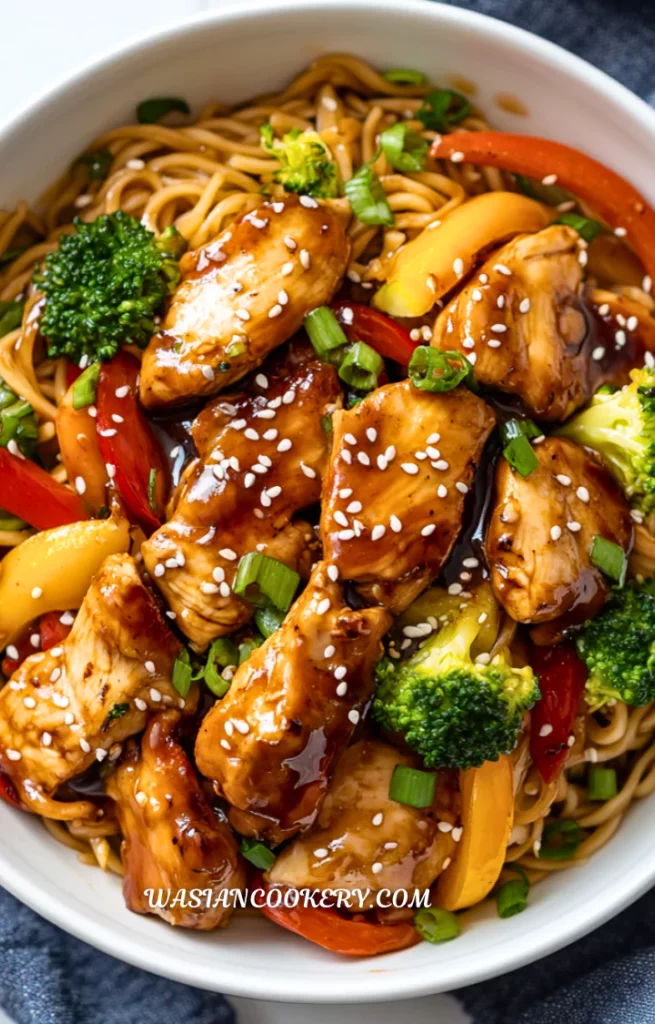
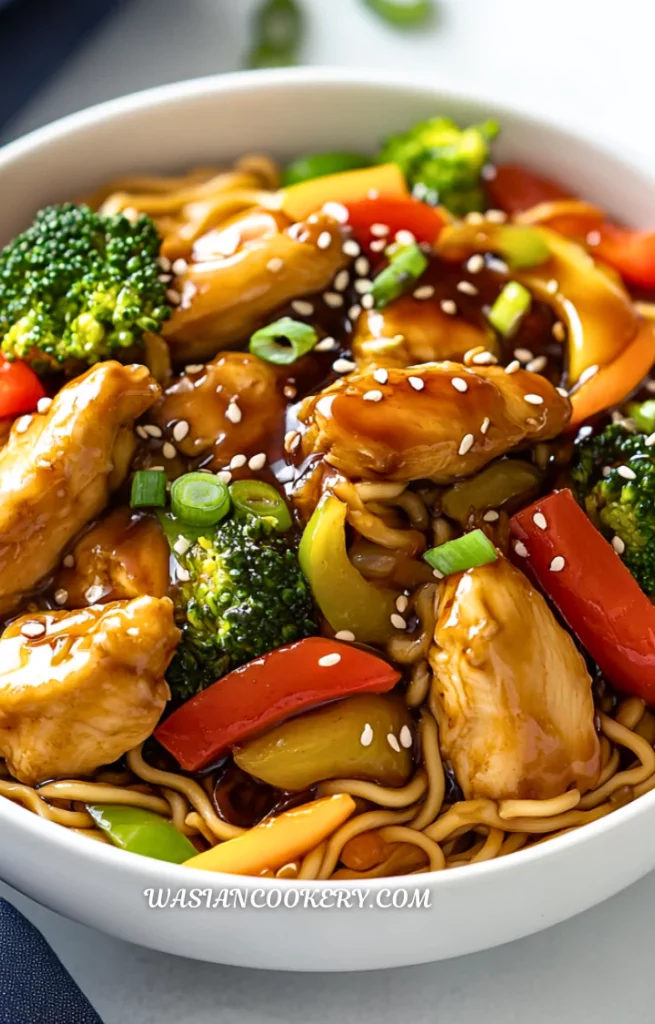
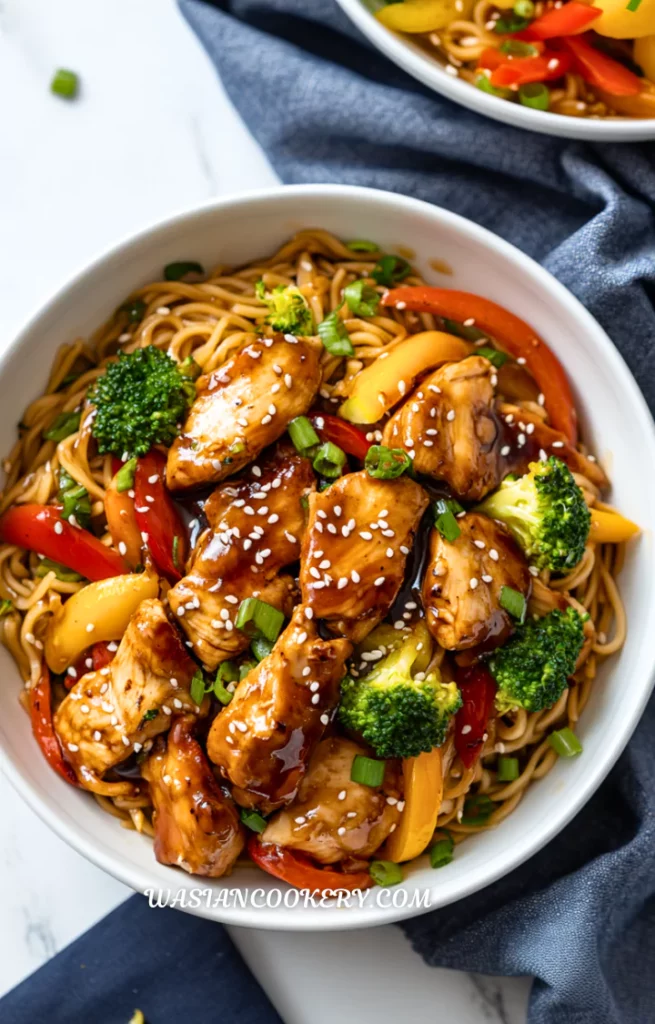
In my kitchen, Chicken Teriyaki Noodles are a comforting mix of tender chicken, chewy noodles, and colorful vegetables. The homemade sauce is sweet and savory, with garlic, ginger, and a little rice vinegar to brighten it. A light cornstarch coating helps the sauce cling to the chicken.
I prefer to enjoy this dish with a fresh cucumber salad or a small bowl of miso soup. Bell peppers, carrots, and broccoli already give the noodles plenty of color and crunch. Green onions and sesame seeds make a simple finish, and a little chili is easy to add at the table.
Have the ingredients ready before heating the skillet, because the last few steps move quickly. The chicken marinade and the finishing sauce use separate measured amounts of soy sauce and cornstarch. Plan on about 40 minutes for four servings, with extra time if your pan needs more than one chicken batch.
Why This Dish Is Great
- The recipe brings chicken, noodles, and three vegetables together in one serving bowl.
- A quick refrigerated marinade adds seasoning while you prepare the remaining ingredients.
- The sauce uses everyday ingredients and thickens directly in the vegetable pan.
- The chicken cooks separately first, making it easier to check its temperature and avoid overcooking the noodles.
- Lo mein, ramen, or spaghetti all work when cooked according to their own package directions.
- Leftovers can become an easy lunch with a little water added during reheating to loosen the sauce.
What Is the Best Chicken for These Noodles?
Use the two boneless, skinless chicken breasts listed in the recipe. Their size can vary, so cutting even strips matters more than assuming every breast cooks in the same number of minutes. Slice across the grain into pieces about ¼ inch thick, and trim away any tough connective tissue.
A wide nonstick skillet gives the chicken room to make contact with the hot surface. If it forms a deep pile, cook smaller batches instead of turning the heat higher. Chicken is ready when the thickest pieces reach 165°F; a pale interior or browned outside alone is not a reliable check.
For the noodles, dried lo mein, ramen, or spaghetti are convenient choices. Fresh noodles and thick udon have different package cooking times and absorb sauce differently. Use the listed 8 ounces, drain well, and avoid cooking them until completely soft before they return to the pan.
Ingredients
For the Chicken
- 2 boneless, skinless chicken breasts (thinly sliced)
- 1 tablespoon soy sauce
- 1 teaspoon cornstarch
- ½ teaspoon garlic powder
- ½ teaspoon black pepper
For the Teriyaki Sauce
- ¼ cup soy sauce
- 2 tablespoons honey (or brown sugar)
- 1 tablespoon rice vinegar
- 1 teaspoon sesame oil
- 1 teaspoon cornstarch (mixed with 2 teaspoons water)
- 1 teaspoon grated ginger
- 2 cloves garlic, minced
For the Noodles
- 8 ounces noodles (lo mein, ramen, or spaghetti)
- 1 tablespoon vegetable oil
- 1 cup bell peppers (red, yellow, or green), sliced
- 1 cup carrots, julienned
- 1 cup broccoli florets
- 2 green onions, sliced (for garnish)
- 1 teaspoon sesame seeds (optional)
Keep the two ingredient groups separate: 1 tablespoon soy sauce and 1 teaspoon cornstarch season the chicken, while ¼ cup soy sauce and another teaspoon cornstarch belong to the sauce. The 1 tablespoon vegetable oil is split into 2 teaspoons for the chicken and 1 teaspoon for the vegetables. Sesame oil goes into the sauce, not into the pan for frying.
Kitchen Equipment You Will Need
As an Amazon Associate I earn from qualifying purchases.
- Large nonstick skillet
- Large saucepan
- Colander
- Mixing bowls
- Small whisk
- Mixing spoon
- Measuring cups
- Measuring spoons
- Knife
- Cutting boards
- Fine grater
- Tongs
- Spatula
- Food thermometer
- Clean plate
- Food wrap
- Serving bowls
- Shallow airtight containers
- Freezer-safe containers
How To Make Chicken Teriyaki Noodles
Step 1: Season the chicken
Thinly slice the 2 chicken breasts across the grain into even strips about ¼ inch thick. Toss with the chicken ingredients: 1 tablespoon soy sauce, 1 teaspoon cornstarch, ½ teaspoon garlic powder, and ½ teaspoon black pepper. Cover and refrigerate for at least 10 minutes while preparing the vegetables and sauce. Start heating the noodle water.
Step 2: Whisk the sauce
In a separate bowl, mix the sauce’s 1 teaspoon cornstarch with 2 teaspoons cold water until smooth. Whisk in the ¼ cup soy sauce, 2 tablespoons honey or brown sugar, 1 tablespoon rice vinegar, 1 teaspoon sesame oil, 1 teaspoon grated ginger, and 2 minced garlic cloves. Keep this clean sauce separate from the raw chicken.
Step 3: Cook the noodles
Cook the 8 ounces noodles according to their package, stopping when just tender with a little bite. Drain well. Time this to finish near the stir-fry; loosen briefly under warm water and drain again if the noodles stick together. Do not add extra oil to the noodles.
Step 4: Cook the chicken safely
Heat 2 teaspoons of the measured vegetable oil in a large nonstick skillet or wok over medium-high heat. Add the chicken with its coating in a loose layer. Cook, turning and stirring, for about 6–8 minutes or as needed until the thickest strips reach 165°F. Work in batches if crowded, dividing these 2 teaspoons oil among them. Transfer the cooked chicken to a clean plate.
Step 5: Stir-fry the vegetables
Add the remaining 1 teaspoon vegetable oil to the pan. Stir-fry the sliced bell peppers, finely julienned carrots, and small broccoli florets for about 4–5 minutes, until crisp-tender. Stir often and lower the heat if the vegetables begin to scorch.
Step 6: Thicken and toss
Whisk the sauce again and pour all of it into the pan with the vegetables. Bring to a bubbling simmer, stirring for about 1 minute until glossy and slightly thickened. Return all the cooked chicken and its juices, add the drained noodles, and toss for 1–2 minutes until evenly coated and hot throughout. If the glaze becomes too tight, loosen with a small splash of water.
Step 7: Garnish and serve
Scatter the 2 sliced green onions and optional 1 teaspoon sesame seeds over the noodles. Serve hot, divided into 4 portions. Allow about 20 minutes preparation, including the short marinade, and 20 minutes cooking with noodle cooking overlapping the stir-fry; extra chicken batches require more time.
Notes
- Prepare vegetables before handling raw chicken, or use a separate cutting board. Wash hands and clean the knife and board after raw poultry touches them.
- Cut the carrots into thin matchsticks and the broccoli into small florets. Large chunks may stay hard during a quick stir-fry.
- Marinate in the refrigerator. The ten-minute wait can overlap vegetable chopping and sauce preparation, so it is included in the preparation estimate.
- Whisk the sauce immediately before pouring it in. Cornstarch settles in the bowl and needs to be redistributed for even thickening.
- Keep the noodles slightly firm. They soften further during the final toss, especially when they are thin or freshly made.
- Use medium-high heat for browning, then adjust as needed. A smoking pan can scorch the coating before the chicken cooks through.
- The finished sauce should lightly coat the strands. If it tightens while you toss, add water a small splash at a time; extra soy sauce would also increase the salt.
Ingredients You Can Add
- Sliced mushrooms bring an earthy flavor. Cook them with the vegetables until their excess moisture evaporates.
- Snow peas add crispness and need only a short time near the end of the vegetable cooking.
- Drained water chestnuts add crunch without needing lengthy cooking. Add them with the other vegetables.
- Well-drained pineapple pieces add sweetness. Use a modest amount so the honey-based sauce does not become overly sweet.
- Crushed peanuts can replace the sesame-seed garnish for a different crunch. Keep them separate when serving anyone with a peanut allergy.
- Chili flakes add heat without thinning the sauce. Start with a pinch and let each person adjust their own bowl.
What To Serve With Chicken Teriyaki Noodles
A crisp tomato cucumber salad gives a fresh contrast to the glossy noodles. Keep it chilled and serve it separately so its dressing does not loosen the teriyaki glaze.
For a larger family-style meal, add a small bowl of hibachi fried rice. Since both dishes contain starch, smaller side portions work well. Steamed dumplings or a simple broth-based soup are other comfortable pairings.
If you enjoy the same sweet-savory flavors in another main dish, teriyaki chicken is an option for a different dinner. These noodles already include chicken and vegetables, so they do not need another protein to make a complete plate.
Variations and Swaps
- Spicy noodles: Stir a little sriracha or chili paste into the finished dish, remembering that some brands also add sweetness and salt.
- Beef noodles: Thinly sliced beef can replace the chicken for a different meal. Cook whole-cut beef to at least 145°F with a 3-minute rest; do not use the chicken timing as a guarantee.
- Shrimp noodles: Use peeled shrimp instead of chicken and cook to 145°F, with pearly, opaque flesh. Remove them while the vegetables cook so they do not become rubbery.
- Vegetarian noodles: Replace the chicken with firm tofu and use the same sauce. Drain the tofu well, cook until hot and lightly golden, and check packaged ingredients for your dietary needs.
- Gluten-free noodles: Use certified gluten-free noodles and soy sauce, and check the other labels. Soba is not automatically gluten-free because many brands contain wheat.
- Vegetable noodles: Zucchini noodles or prepared shirataki noodles change the texture and sauce absorption. Drain them thoroughly and keep their final cooking brief.
- Peanut noodles: Add a small spoonful of peanut butter for a richer sauce, loosening with water as needed. This changes the original flavor and introduces another allergen.
- Rice bowl: Serve the cooked chicken and vegetables over rice instead of adding noodles. Spoon the glaze over just before serving so the rice keeps its texture.
Storage
Divide leftovers into shallow airtight containers and refrigerate within 2 hours, or within 1 hour if the temperature is above 90°F. Keep the refrigerator at 40°F or colder and use the noodles within 3–4 days. Pack individual portions so you can reheat only what you need rather than warming the entire batch repeatedly.
Freeze promptly chilled portions in freezer-safe containers for about 2 months for best quality. Thaw overnight in the refrigerator. Reheat in a skillet with a splash of water, tossing until the whole portion reaches 165°F. The noodles may soften after freezing; avoid adding more soy sauce simply to make them moist again.
FAQ
Can I use instant ramen?
Yes. Use the listed noodle weight and leave out the seasoning packets, which would change the salt and flavor. Cook the noodles just until they separate and become tender, drain, and finish them in the homemade sauce.
Why is my sauce watery?
Wet noodles or vegetables can dilute it. Drain the noodles well and let the sauce reach a bubbling simmer for about a minute before adding them. Give the measured cornstarch time to thicken rather than immediately adding more.
Why is the sauce too thick?
The noodles absorb liquid as they sit, and a hot pan continues to reduce the sauce. Turn down the heat and toss in a small splash of water. Add only enough to loosen the strands without washing away their coating.
Can I marinate the chicken longer?
Yes, keep it covered in the refrigerator and cook it the same day for an easy schedule. The listed ten minutes is enough to fit into the preparation steps. Never save the raw chicken bowl or utensils for the cooked food without washing them.
Can I use brown sugar instead of honey?
Yes. The original formula allows 2 tablespoons of either. Whisk until the sugar dissolves into the sauce. Their flavors differ slightly, but you do not need to change the remaining sauce amounts.
How do I keep the vegetables crisp?
Cut them evenly, use a wide pan, and stop when they are tender with a little bite. Remember that they cook again while the sauce bubbles and the noodles are tossed. Have the drained noodles ready so this final step does not drag on.
Short Description
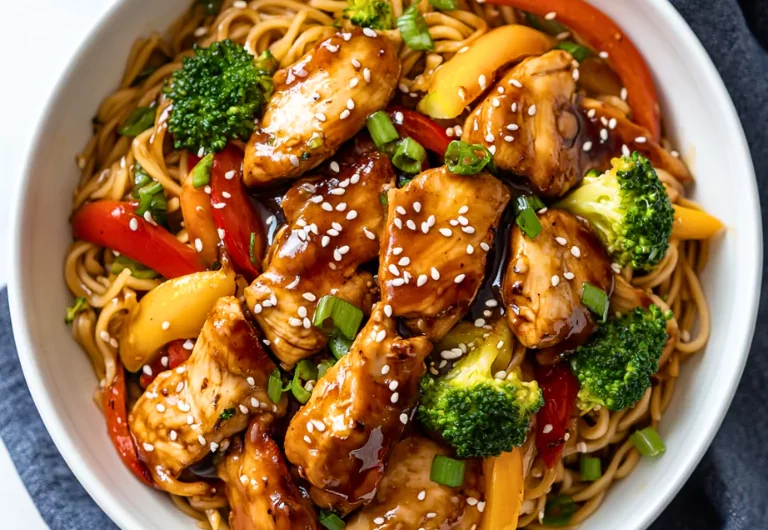
Chicken strips, noodles, bell peppers, carrots, and broccoli tossed in a homemade soy, honey, garlic, and ginger sauce, with green onions and optional sesame seeds.
Chicken Teriyaki Noodles
Course: MainCuisine: Japanese-InspiredDifficulty: Easy4
servings20
minutes20
minutes40
minutesChicken strips, noodles, bell peppers, carrots, and broccoli tossed in a homemade soy, honey, garlic, and ginger sauce, with green onions and optional sesame seeds.
Ingredients
- For the Chicken:
2 boneless, skinless chicken breasts (thinly sliced)
1 tablespoon soy sauce
1 teaspoon cornstarch
½ teaspoon garlic powder
½ teaspoon black pepper
- For the Teriyaki Sauce:
¼ cup soy sauce
2 tablespoons honey (or brown sugar)
1 tablespoon rice vinegar
1 teaspoon sesame oil
1 teaspoon cornstarch (mixed with 2 teaspoons water)
1 teaspoon grated ginger
2 cloves garlic, minced
- For the Noodles:
8 ounces noodles (lo mein, ramen, or spaghetti)
1 tablespoon vegetable oil
1 cup bell peppers (red, yellow, or green), sliced
1 cup carrots, julienned
1 cup broccoli florets
2 green onions, sliced (for garnish)
1 teaspoon sesame seeds (optional)
Directions
- Thinly slice the 2 chicken breasts across the grain into even strips about ¼ inch thick. Toss with the chicken ingredients: 1 tablespoon soy sauce, 1 teaspoon cornstarch, ½ teaspoon garlic powder, and ½ teaspoon black pepper. Cover and refrigerate for at least 10 minutes while preparing the vegetables and sauce. Start heating the noodle water.
- In a separate bowl, mix the sauce’s 1 teaspoon cornstarch with 2 teaspoons cold water until smooth. Whisk in the ¼ cup soy sauce, 2 tablespoons honey or brown sugar, 1 tablespoon rice vinegar, 1 teaspoon sesame oil, 1 teaspoon grated ginger, and 2 minced garlic cloves. Keep this clean sauce separate from the raw chicken.
- Cook the 8 ounces noodles according to their package, stopping when just tender with a little bite. Drain well. Time this to finish near the stir-fry; loosen briefly under warm water and drain again if the noodles stick together. Do not add extra oil to the noodles.
- Heat 2 teaspoons of the measured vegetable oil in a large nonstick skillet or wok over medium-high heat. Add the chicken with its coating in a loose layer. Cook, turning and stirring, for about 6–8 minutes or as needed until the thickest strips reach 165°F. Work in batches if crowded, dividing these 2 teaspoons oil among them. Transfer the cooked chicken to a clean plate.
- Add the remaining 1 teaspoon vegetable oil to the pan. Stir-fry the sliced bell peppers, finely julienned carrots, and small broccoli florets for about 4–5 minutes, until crisp-tender. Stir often and lower the heat if the vegetables begin to scorch.
- Whisk the sauce again and pour all of it into the pan with the vegetables. Bring to a bubbling simmer, stirring for about 1 minute until glossy and slightly thickened. Return all the cooked chicken and its juices, add the drained noodles, and toss for 1–2 minutes until evenly coated and hot throughout. If the glaze becomes too tight, loosen with a small splash of water.
- Scatter the 2 sliced green onions and optional 1 teaspoon sesame seeds over the noodles. Serve hot, divided into 4 portions. Allow about 20 minutes preparation, including the short marinade, and 20 minutes cooking with noodle cooking overlapping the stir-fry; extra chicken batches require more time.
Notes
- The two soy sauce and cornstarch amounts serve different purposes: keep the chicken coating separate from the finishing sauce.
- Use 2 teaspoons of the vegetable oil for the chicken and the remaining 1 teaspoon for the vegetables.
- Timing includes the short refrigerated marinade during preparation and cooking the noodles alongside the stir-fry. Extra chicken batches need additional time.