Salmon Cakes Recipe
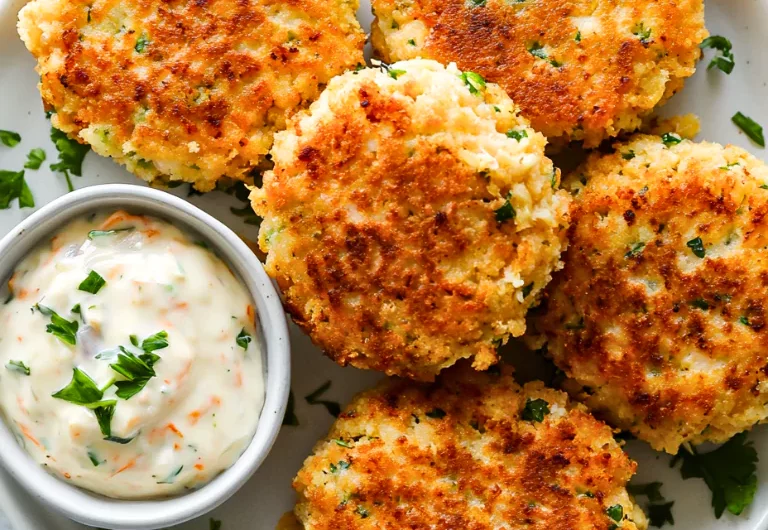
My favorite thing about Salmon Cakes is their crisp, golden outside and tender, flaky center. Lemon, parsley, Dijon, and a little paprika give the salmon plenty of flavor. They are an easy way to turn canned salmon or already-cooked salmon into a warm main dish.
I prefer to enjoy them with a fresh salad and a squeeze of lemon. A dollop of tartar sauce makes them even better, and a salmon cake tucked into a bun is a satisfying lunch. The seasoning is simple enough to work with either pink or sockeye salmon.
This recipe makes four large cakes and keeps the original measured ingredients. A short chill helps them hold together, so allow about 50 minutes when cooking in two batches. Start with cooked salmon, then cook the assembled cakes thoroughly because the mixture also contains a raw egg.

Why This Dish Is Great
- Canned salmon keeps the preparation convenient and saves the separate step of cooking a fresh fillet.
- The breadcrumbs and egg bind the fish while mayonnaise helps the center stay tender.
- Dijon, lemon, and Worcestershire sauce add tang and savory flavor without a long sauce-making step.
- The patties work as a main dish, a sandwich filling, or smaller appetizers when you adjust the cooking time.
- A brief refrigerator chill makes the mixture easier to handle and lets the breadcrumbs absorb moisture.
- Cooked leftovers are useful for lunch, especially with a crunchy salad or a simple vegetable side.
What Is the Best Salmon for Salmon Cakes?
Use plain canned salmon, drained well, or the listed alternative of cooked fresh salmon. Canned salmon is already cooked. For the canned option, start with cans totaling the listed 12 ounces and drain away the packing liquid. Do not pour that liquid into the mixture, where it can make the patties loose.
If starting with raw salmon, cook it separately to 145°F before flaking, then let it cool enough to handle. Remove any hard bones. That extra cooking and cooling time comes before this recipe. Previously cooked salmon should have been refrigerated promptly and still be within its safe storage period; making cakes does not rescue old fish.
Pink salmon usually has a milder flavor, while sockeye tastes richer. Break the fish into small flakes instead of mashing it into a paste. Remove skin and larger bones for a smoother texture. Check the seasoning on leftover salmon before using it, since a strong glaze can change the flavor of the cakes.
Ingredients
- 12 oz canned salmon (or cooked fresh salmon, flaked)
- ½ cup breadcrumbs (panko or regular)
- 1 egg, beaten
- 2 tablespoons mayonnaise
- 1 tablespoon Dijon mustard
- 1 teaspoon Worcestershire sauce
- ½ teaspoon garlic powder
- ½ teaspoon onion powder
- ½ teaspoon paprika
- ¼ teaspoon black pepper
- 2 tablespoons chopped parsley
- 1 green onion, finely chopped
- 1 tablespoon lemon juice
- 2 tablespoons olive oil (for frying)
The full ½ cup breadcrumbs goes into the mixture, and the 2 tablespoons olive oil are divided between two skillet batches. Keep the lemon juice, mayonnaise, and mustard measured rather than pouring freely: extra liquid can make a patty difficult to turn. Lemon wedges and dipping sauce are optional serving additions.
Kitchen Equipment You Will Need
As an Amazon Associate I earn from qualifying purchases.
- Large mixing bowl
- Small bowl
- Fork
- Mixing spoon
- Large nonstick skillet
- Wide spatula
- Measuring cups
- Measuring spoons
- Can opener
- Fine-mesh strainer
- Knife
- Cutting board
- Food thermometer
- Plates
- Paper towels
- Food wrap
- Citrus zester
- Baking sheet
- Oven
- Oven mitts
- Air fryer
- Pastry brush
- Shallow airtight containers
- Freezer-safe containers

How To Make Salmon Cakes
Step 1: Prepare the cooked salmon
Drain the 12 oz canned salmon well and flake it with a fork, removing any large bones or skin you do not want. If using the fresh-salmon alternative, start with 12 oz already-cooked, flaked salmon, not raw fish. Raw salmon must first be cooked separately to 145°F and cooled enough to handle; that extra work is not included in the recipe time.
Step 2: Mix gently
In a bowl, combine the beaten egg, mayonnaise, Dijon mustard, Worcestershire sauce, garlic powder, onion powder, paprika, black pepper, and lemon juice. Gently fold in the salmon, ½ cup breadcrumbs, parsley, and green onion until evenly combined. Do not taste the mixture while the egg is raw.
Step 3: Shape and chill
Divide into 4 equal portions and shape into patties about ½ inch thick. Set on a clean plate, cover, and refrigerate for 15 minutes to firm up. Keep the patties cold until the pan is ready.
Step 4: Cook in two batches
Heat 1 tablespoon of the olive oil in a large nonstick skillet over medium heat. Cook 2 patties without crowding, starting with 3–4 minutes per side and allowing up to 5 minutes per side or longer as needed. Turn gently once a crust forms. Check the center from the side with a food thermometer and cook to 165°F. Lower the heat if the surface browns before the center is ready. Repeat with the remaining 1 tablespoon oil and 2 patties.
Step 5: Drain and serve
Transfer the cooked salmon cakes to a clean plate lined with paper towels to briefly drain. Serve hot, with optional lemon wedges, tartar sauce, or salad. Makes 4 servings of 1 large cake. The 50-minute estimate includes 15 minutes preparation, 15 minutes chilling, and up to 20 minutes cooking in two batches.
Notes
- Drain canned fish thoroughly before mixing. The consistency of different brands varies, and removing the packing liquid is the simplest way to control moisture.
- Beat the egg in a small bowl first. It will distribute more evenly, so you will not have to stir the delicate salmon as much.
- Chop the parsley and green onion finely. Large pieces can interrupt the edge of a patty and make it more likely to break.
- Keep each cake about ½ inch thick from edge to center. A domed middle heats more slowly than the flatter edges.
- Chill the shaped cakes for the full 15 minutes. If they still feel soft, give them longer in the refrigerator instead of immediately adding more dry ingredients.
- Wait for the first side to form a crust before sliding a wide spatula underneath. Repeated turning can break the patties apart.
- Use moderate heat and check the center temperature. A dark crust is not a reason to stop if the center has not reached 165°F.
Ingredients You Can Add
- Finely diced red bell pepper adds color and sweetness; keep the amount small so the mixture still holds together.
- A pinch of seafood seasoning can replace some of the dry spices. Check its salt content before adding more.
- Drained, finely chopped capers add a briny bite that works well with the lemon and Dijon.
- A little grated Parmesan gives a savory finish. It also adds salt, so taste only after the cakes are cooked.
- A pinch of cayenne brings gentle heat without changing the moisture of the mixture.
- Fresh dill can replace part of the parsley for a different herb flavor that still suits the salmon.
What To Serve With Salmon Cakes
For a classic plate, serve the cakes with Luby’s tartar sauce and lemon wedges. Put the sauce in a separate bowl so the crust stays crisp until each bite is dipped.
A crunchy side such as Bonefish Grill coleslaw balances the warm salmon. Roasted potatoes also fit well, or choose steamed asparagus or sautéed spinach for a simpler vegetable side.
For lunch, set a cake on a bun with lettuce and tomato, or serve it beside tomato cucumber salad. Let the cake rest briefly after cooking so you can move it into the sandwich without breaking its edges.
Variations and Swaps
- Spicy cakes: Use a little finely chopped jalapeño or a pinch of chili flakes. Keep liquid hot sauce modest so the mixture does not become wet.
- Lemon-herb cakes: Add finely grated lemon zest and replace some parsley with dill. The zest gives citrus flavor without extra liquid.
- Gluten-free cakes: Use certified gluten-free breadcrumbs and check the Worcestershire sauce, mustard, and seasonings. Ordinary breadcrumbs and some sauces contain wheat.
- Lower-carb variation: Finely crushed pork rinds or almond flour can change the crumb texture considerably. Their absorbency differs from breadcrumbs, so do not assume the same amount will bind the cakes equally well. Keep the egg and chill the mixture before shaping.
- Baked cakes: Brush a baking sheet and the patties with the measured oil. Bake at 375°F, begin checking after 15–18 minutes, turn carefully, and continue until the centers reach 165°F.
- Air-fried cakes: Brush with the measured oil and cook in a single layer at 375°F. Check at 10–12 minutes, turn gently once firm, and continue to 165°F. Basket size may require batches.
- Tropical serving: Serve a little finely chopped mango or well-drained pineapple alongside the cakes. Keeping the fruit outside preserves the firmness of the original mixture.
- Dairy-free option: The basic recipe can already be dairy-free when the breadcrumbs, mayonnaise, and other packaged ingredients contain no dairy. Check labels; mayonnaise commonly contains egg, which is a different allergen.
Storage
Place cooked leftovers in shallow airtight containers and refrigerate within 2 hours, or within 1 hour above 90°F. Keep them at 40°F or colder and use within 3–4 days. If you started with leftover cooked salmon, use the earlier storage deadline from that fish rather than automatically adding four more days. Do not wait for cakes to become completely cold on the counter.
For longer storage, freeze promptly chilled cakes in freezer-safe containers for about 2 months for best texture. Thaw in the refrigerator, then reheat in a skillet over moderate heat or in a 350°F oven until the center reaches 165°F. Timing depends on thickness and starting temperature. Keep sauce and salad separate during storage.

FAQ
Can I put raw salmon straight into the mixture?
No. This recipe is written for canned salmon or cooked, flaked salmon. Raw salmon needs a different preparation. Cook a raw fillet separately to 145°F first, then flake it; include that extra cooking and cooling time in your meal plan.
Why are my salmon cakes falling apart?
Excess liquid, large vegetable pieces, and turning too soon are common causes. Drain the salmon well, chill the shaped cakes, and let the first side set. Use a wide spatula to support the whole cake as you turn it.
Can I make smaller cakes?
Yes. Divide the same mixture into smaller portions and keep the thickness even. They will usually cook faster, but still check that the centers reach 165°F. The original four servings refer to the total mixture, not a fixed number of appetizer pieces.
Do I need extra breadcrumbs?
Start with the listed ½ cup and allow the chill time to work. More crumbs can make the cakes dry. If the mixture is still too loose after thorough draining and chilling, any adjustment changes the original balance, so add only a small amount at a time.
Can I leave out the egg?
The egg provides structure as the cakes cook, so leaving it out can make them fragile. An egg-free version needs a suitable binder and may behave differently. It is not an automatic one-for-one swap for mayonnaise, yogurt, or avocado.
Can I shape them earlier in the day?
Yes. Keep the shaped patties covered in the refrigerator and cook them the same day. Use clean utensils because the mixture contains raw egg, and allow extra cooking time if they are very cold. Keep them refrigerated until the skillet is ready.
Short Description
Golden skillet salmon cakes made with canned or already-cooked salmon, breadcrumbs, egg, lemon, and herbs, chilled briefly and cooked until hot through the center.
Salmon Cakes
Course: Main, AppetizersCuisine: AmericanDifficulty: Easy4
servings15
minutes20
minutes50
minutesGolden skillet salmon cakes made with canned or already-cooked salmon, breadcrumbs, egg, lemon, and herbs, chilled briefly and cooked until hot through the center.
Ingredients
12 oz canned salmon (or cooked fresh salmon, flaked)
½ cup breadcrumbs (panko or regular)
1 egg, beaten
2 tablespoons mayonnaise
1 tablespoon Dijon mustard
1 teaspoon Worcestershire sauce
½ teaspoon garlic powder
½ teaspoon onion powder
½ teaspoon paprika
¼ teaspoon black pepper
2 tablespoons chopped parsley
1 green onion, finely chopped
1 tablespoon lemon juice
2 tablespoons olive oil (for frying)
Directions
- Drain the 12 oz canned salmon well and flake it with a fork, removing any large bones or skin you do not want. If using the fresh-salmon alternative, start with 12 oz already-cooked, flaked salmon, not raw fish. Raw salmon must first be cooked separately to 145°F and cooled enough to handle; that extra work is not included in the recipe time.
- In a bowl, combine the beaten egg, mayonnaise, Dijon mustard, Worcestershire sauce, garlic powder, onion powder, paprika, black pepper, and lemon juice. Gently fold in the salmon, ½ cup breadcrumbs, parsley, and green onion until evenly combined. Do not taste the mixture while the egg is raw.
- Divide into 4 equal portions and shape into patties about ½ inch thick. Set on a clean plate, cover, and refrigerate for 15 minutes to firm up. Keep the patties cold until the pan is ready.
- Heat 1 tablespoon of the olive oil in a large nonstick skillet over medium heat. Cook 2 patties without crowding, starting with 3–4 minutes per side and allowing up to 5 minutes per side or longer as needed. Turn gently once a crust forms. Check the center from the side with a food thermometer and cook to 165°F. Lower the heat if the surface browns before the center is ready. Repeat with the remaining 1 tablespoon oil and 2 patties.
- Transfer the cooked salmon cakes to a clean plate lined with paper towels to briefly drain. Serve hot, with optional lemon wedges, tartar sauce, or salad. Makes 4 servings of 1 large cake. The 50-minute estimate includes 15 minutes preparation, 15 minutes chilling, and up to 20 minutes cooking in two batches.
Notes
- Use canned or already-cooked salmon, never raw salmon directly in this mixture.
- Makes 4 large, ½-inch-thick cakes, with 1 cake per serving.
- The 50-minute total includes 15 minutes preparation, 15 minutes chilling, and up to 20 minutes for two skillet batches. Cooking a raw fillet first requires additional time.