Cajun Sausage Pasta
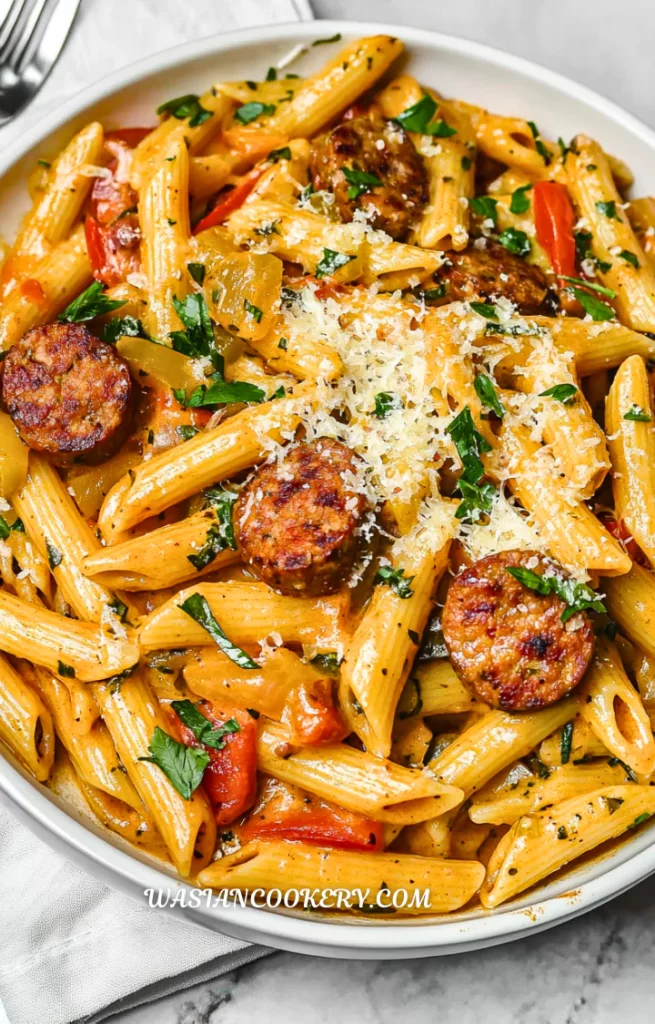
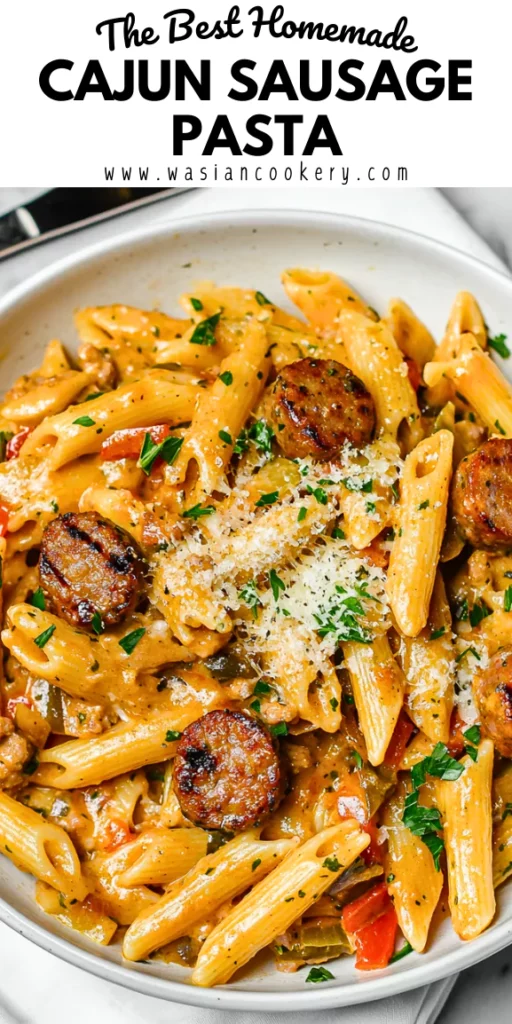
I love making Cajun Sausage Pasta when I want a creamy dinner with smoky flavor and a little heat. Browned sausage, bell pepper, garlic, and Parmesan give each forkful plenty of flavor without a long ingredient list.
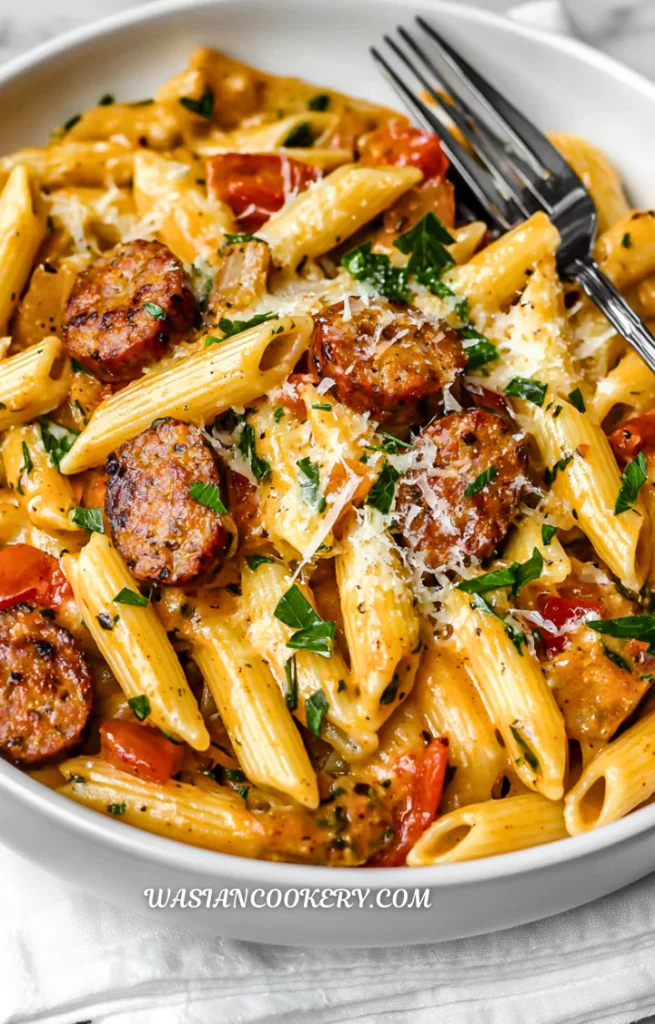
I prepare it for my family when we want a warm, comforting meal. Garlic bread and a fresh green salad are lovely alongside it, and a little extra Parmesan at the table makes it easy to finish each bowl to taste.
The pasta cooks in a pot while the sauce comes together in a skillet. Allow about 48 minutes, including chopping and a short rest. Use the sauce texture and sausage label as your guides, and keep the heat gentle once the cream goes in.
Why This Dish Is Great
- Smoked sausage seasons the skillet as it browns, building flavor before the sauce even begins.
- The cream softens the Cajun spices while Parmesan adds a savory finish that coats the pasta.
- Red or green bell pepper gives the dish color and a little sweetness beside the smoky sausage.
- The optional red pepper flakes let you decide whether to add extra heat.
- Penne catches sauce in its ridges, while fettuccine makes a lovely silky version with the same dry pasta amount.
- Everything finishes on the stove, so there is no baking step or casserole dish to manage.
What Is the Best Sausage for Cajun Pasta?
Andouille gives the strongest smoky, peppery flavor, while kielbasa makes a milder version. Choose the smoked sausage option you prefer and read the label before cooking. A smoked appearance does not tell you whether a sausage is ready to eat. Look for a clear fully cooked statement or directions requiring cooking.
Slice the sausage into similar pieces so they brown evenly. Use a deep skillet with room to toss the pasta without spilling cream over the edge. Freshly grated Parmesan disperses more easily than thick shreds, and a low-sodium broth gives you more control when the Cajun seasoning already contains salt.
Ingredients
- 8 oz (225g) pasta (penne, fettuccine, or your choice)
- 1 tbsp olive oil
- 12 oz (340g) smoked sausage (andouille or kielbasa), sliced
- 1 small onion, diced
- 2 cloves garlic, minced
- 1 bell pepper (red or green), sliced
- 1 ½ cups heavy cream
- 1 cup chicken broth
- 1 tbsp Cajun seasoning (adjust to taste)
- ½ cup grated Parmesan cheese
- ½ tsp red pepper flakes (optional, for spice)
- Salt and black pepper to taste
- 2 tbsp chopped fresh parsley (for garnish)
Measure the pasta before cooking. Keep the full amounts of cream, broth, and cheese in the base recipe. Cajun blends vary in salt and heat, so use the ingredient list’s adjustment-to-taste option thoughtfully. The reserved pasta water is only for loosening the finished sauce if needed.
Kitchen Equipment You Will Need
As an Amazon Associate I earn from qualifying purchases.
- Large pot
- Deep skillet
- Colander
- Chef’s knife
- Cutting board
- Measuring cups
- Measuring spoons
- Heatproof measuring cup
- Wooden spoon
- Cheese grater
- Food thermometer
- Dinner plate
- Serving spoon
- Shallow storage containers
- Oven mitts
- Serving bowls
How To Make Cajun Sausage Pasta
Step 1
Bring a large pot of lightly salted water to a boil. Cook the 8 ounces dry pasta according to its package until al dente, with a slight firmness in the center. Before draining, reserve a little cooking water in a heatproof measuring cup. Begin the skillet steps while the water heats so the pasta and sauce finish close together.
Step 2
Check the sausage label. For fully cooked smoked sausage, heat the olive oil in a large, deep skillet over medium heat. Brown the slices for 3-5 minutes, turning them, and follow any additional package heating directions. Transfer to a clean plate. If the sausage is uncooked, cook it according to its package first: pork or beef sausage must reach 160°F, and poultry sausage 165°F. Raw sausage needs additional time; browning alone does not establish doneness.
Step 3
In the same skillet, cook the diced onion and sliced bell pepper for about 4-5 minutes, stirring, until the onion softens and the pepper is tender with a little bite. Add the minced garlic and stir for 30 seconds, just until fragrant. Lower the heat if the garlic starts browning quickly.
Step 4
Pour in the chicken broth and heavy cream, scraping up the browned pan juices. Stir in the Cajun seasoning and optional red pepper flakes. Bring to a gentle simmer and cook uncovered for about 8-10 minutes, stirring regularly, until slightly reduced and beginning to coat the spoon. The sauce should remain pourable; avoid a hard boil.
Step 5
Return the cooked sausage and drained pasta to the skillet. Stir well to coat everything and heat gently for 2-3 minutes. If the sauce still looks very loose, give it a little more time over low heat. If it becomes too thick, stir in reserved pasta water a spoonful at a time.
Step 6
Turn the heat to its lowest setting or remove the skillet from the burner. Add the Parmesan in small handfuls, stirring until incorporated. Taste before adding salt and black pepper, because the sausage, broth, seasoning, and cheese already contribute salt. Sprinkle with the chopped parsley.
Step 7
Let the pasta stand off the heat for 2-3 minutes so the sauce settles around it, then serve hot. The timing estimate is 15 minutes preparation, 30 minutes cooking with the pasta and skillet work overlapping, and 3 minutes resting, for 48 minutes total. Allow more time for uncooked sausage or slower pasta-water heating.
Notes
- Cook the pasta just until al dente. It softens a little more in the sauce, so very soft pasta can break when stirred.
- Brown the sausage in a roomy layer. If the slices overlap heavily, move them around or brown in batches to develop better edges.
- Stir across the bottom of the skillet while the cream simmers. A gentle bubble is enough; vigorous boiling makes the sauce harder to control.
- Give the broth and cream time to reduce before adding the pasta. Two and a half cups of liquid will look loose at first.
- Add Parmesan gradually over very low heat. Dumping it into a boiling sauce can leave small clumps instead of an even coating.
- Season with salt after the cheese and sausage are combined. Different brands can change the saltiness quite noticeably.
- Serve after the short rest while the sauce is still creamy. Pasta keeps absorbing liquid as it stands, so avoid cooking it until dry.
Ingredients You Can Add
- Mushrooms: Brown sliced mushrooms until their liquid evaporates before adding them to the sauce.
- Spinach: Fold a small handful into the hot pasta and let it wilt before serving.
- Cherry tomatoes: Add halved tomatoes near the end for a fresh, juicy contrast.
- Zucchini: Sauté small pieces until just tender and keep the quantity modest so the sauce stays balanced.
- Fresh basil: Tear a few leaves over the finished bowls alongside the parsley.
- Extra Parmesan: Offer a little at the table so each person can choose a stronger cheese finish.
What To Serve with Cajun Sausage Pasta
Serve the pasta in warm bowls with a slice of Grandma Sycamore bread. Plain bread or garlic bread is useful for catching the sauce without competing with the sausage and spices.
A cool tomato cucumber salad balances the rich cream sauce. Keep the salad separate so its dressing does not thin the pasta sauce. Steamed broccoli or roasted vegetables are other simple sides.
If you enjoy this combination of cream and spice, Creamy Cajun Chicken Pasta is another dinner to put on the meal plan. For this sausage version, a vegetable side and a small bread portion make a satisfying plate.
Variations and Swaps
- Milder version: Choose kielbasa, use a mild Cajun blend, and leave out the optional pepper flakes.
- Extra heat: Use the listed optional red pepper flakes and offer more separately at the table.
- Different pasta shape: Use the same dry weight of rotini or bowties and follow the package cooking time.
- Fettuccine version: Use fettuccine and fold gently to keep the strands intact.
- Greener pasta: Add wilted spinach or cooked broccoli after the sauce has reduced.
- Lighter sauce variation: Half-and-half makes a thinner, less rich sauce. Keep its heat especially gentle and expect a different finish.
- Coconut variation: Full-fat coconut milk changes the flavor. For a dairy-free version, omit Parmesan and check the sausage and other labels; the sauce will be less cheesy.
- Meatless variation: A version with mushrooms, zucchini, and peppers needs vegetable broth as well. Brown the vegetables first and expect a different flavor from the smoked sausage base.
How To Store
Refrigerate leftovers in shallow containers within 2 hours, or within 1 hour above 90°F. Keep at 40°F or below and use within 3 days. Do not leave the full skillet on the counter until completely cold. Store bread and salad separately.
Freeze portions for up to 2 months for best quality and thaw overnight in the refrigerator. Cream sauce may separate slightly after freezing. Reheat gently in the skillet with a small splash of broth, stirring until the food reaches 165°F throughout. Add liquid gradually rather than flooding the sauce.
FAQ
Why is my sauce too thin?
The cream and broth need a gentle uncovered simmer before the pasta is added. Let the liquid reduce enough to coat a spoon lightly. Parmesan and the short rest thicken it further, so judge the final texture after those steps.
Why is the pasta dry after standing?
Pasta absorbs sauce as it rests. Stir in a spoonful of reserved cooking water for freshly made pasta, or a little broth when reheating. Add only enough to restore a creamy coating.
Can I cook the pasta directly in the sauce?
This formula is written for separately boiled pasta. Putting dry pasta straight into the skillet changes how much liquid is absorbed and how long the sauce cooks. Boil and drain it first for the method given here.
Can I prepare anything ahead?
Dice the onion, slice the pepper, and grate the cheese ahead, then refrigerate them separately. Keep sausage refrigerated according to its package. The assembled pasta has the loosest, creamiest texture when served soon after cooking.
Is this very spicy?
The heat depends on the sausage and Cajun blend. Andouille can be quite peppery; kielbasa is usually gentler. Red pepper flakes are optional, so leave them out if the seasoning is already hot enough.
Can I use fully cooked sausage?
Yes, fully cooked smoked sausage suits this quick skillet method. Brown and heat it according to its package. If the label says uncooked or cook before eating, use the longer cooking directions and thermometer checks in Step 2.
Short Description
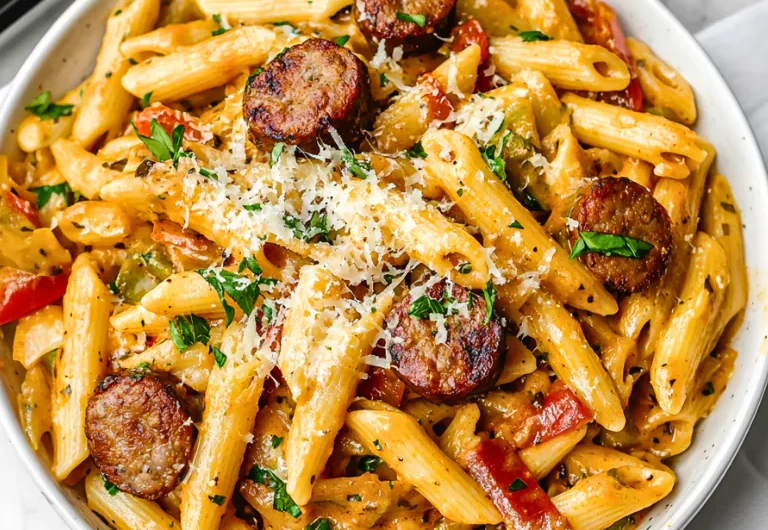
Cajun Sausage Pasta combines smoky sausage, tender pasta, peppers, and a creamy Parmesan sauce. Cajun seasoning adds warmth to this comforting stovetop dinner.
Cajun Sausage Pasta
Course: MainCuisine: CajunDifficulty: Easy4
servings15
minutes30
minutes48
minutesCajun Sausage Pasta combines smoky sausage, tender pasta, peppers, and a creamy Parmesan sauce. Cajun seasoning adds warmth to this comforting stovetop dinner.
Ingredients
8 oz (225g) pasta (penne, fettuccine, or your choice)
1 tbsp olive oil
12 oz (340g) smoked sausage (andouille or kielbasa), sliced
1 small onion, diced
2 cloves garlic, minced
1 bell pepper (red or green), sliced
1 ½ cups heavy cream
1 cup chicken broth
1 tbsp Cajun seasoning (adjust to taste)
½ cup grated Parmesan cheese
½ tsp red pepper flakes (optional, for spice)
Salt and black pepper to taste
2 tbsp chopped fresh parsley (for garnish)
Directions
- Bring a large pot of lightly salted water to a boil. Cook the 8 ounces dry pasta according to its package until al dente, with a slight firmness in the center. Before draining, reserve a little cooking water in a heatproof measuring cup. Begin the skillet steps while the water heats so the pasta and sauce finish close together.
- Check the sausage label. For fully cooked smoked sausage, heat the olive oil in a large, deep skillet over medium heat. Brown the slices for 3-5 minutes, turning them, and follow any additional package heating directions. Transfer to a clean plate. If the sausage is uncooked, cook it according to its package first: pork or beef sausage must reach 160°F, and poultry sausage 165°F. Raw sausage needs additional time; browning alone does not establish doneness.
- In the same skillet, cook the diced onion and sliced bell pepper for about 4-5 minutes, stirring, until the onion softens and the pepper is tender with a little bite. Add the minced garlic and stir for 30 seconds, just until fragrant. Lower the heat if the garlic starts browning quickly.
- Pour in the chicken broth and heavy cream, scraping up the browned pan juices. Stir in the Cajun seasoning and optional red pepper flakes. Bring to a gentle simmer and cook uncovered for about 8-10 minutes, stirring regularly, until slightly reduced and beginning to coat the spoon. The sauce should remain pourable; avoid a hard boil.
- Return the cooked sausage and drained pasta to the skillet. Stir well to coat everything and heat gently for 2-3 minutes. If the sauce still looks very loose, give it a little more time over low heat. If it becomes too thick, stir in reserved pasta water a spoonful at a time.
- Turn the heat to its lowest setting or remove the skillet from the burner. Add the Parmesan in small handfuls, stirring until incorporated. Taste before adding salt and black pepper, because the sausage, broth, seasoning, and cheese already contribute salt. Sprinkle with the chopped parsley.
- Let the pasta stand off the heat for 2-3 minutes so the sauce settles around it, then serve hot. The timing estimate is 15 minutes preparation, 30 minutes cooking with the pasta and skillet work overlapping, and 3 minutes resting, for 48 minutes total. Allow more time for uncooked sausage or slower pasta-water heating.
Notes
- Use 8 ounces dry pasta and cook it separately. The sauce is made in a second pan.
- Check the smoked sausage label. Raw pork or beef sausage needs 160°F; raw poultry sausage needs 165°F.
- The total includes a 3-minute rest. Pasta and skillet work overlap; uncooked sausage and extra batches need more time.
- Refrigerate promptly in shallow containers and reheat leftovers to 165°F.