Butternut Squash Lasagna Recipe
I learned to make this butternut squash lasagna from my mom, who always knew how to make our family meals special. Growing up, I loved watching her cook, and now I’m excited to carry on that tradition in my kitchen. This recipe is close to my heart and reminds me of family time together.
Making this lasagna for my husband is one of my favorite things to do. He loves the creamy ricotta and sweet butternut squash, and it is lovely to share those familiar flavors. Fresh spinach, mozzarella, and a little marinara give the layers color, creaminess, and a savory balance.
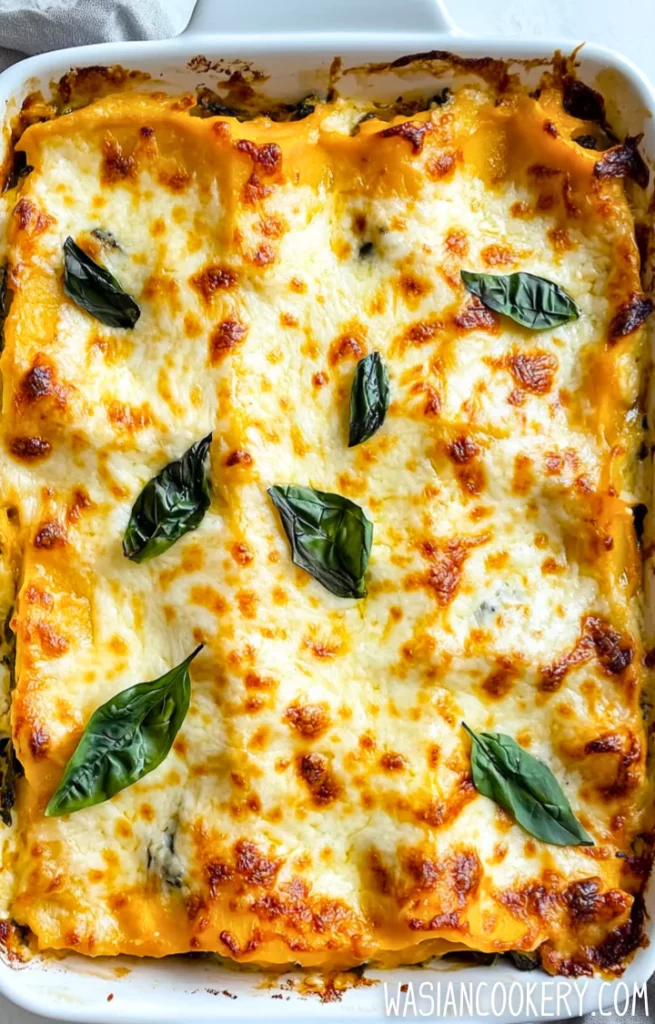
This is my favorite kind of fall lasagna, with warm flavors and a generous cheese topping. Baking the squash before layering helps every slice turn tender, and cooking the noodles first keeps the small amount of sauce from being stretched too far. Give yourself about two hours, including the short rest before serving.
Why This Dish Is Great
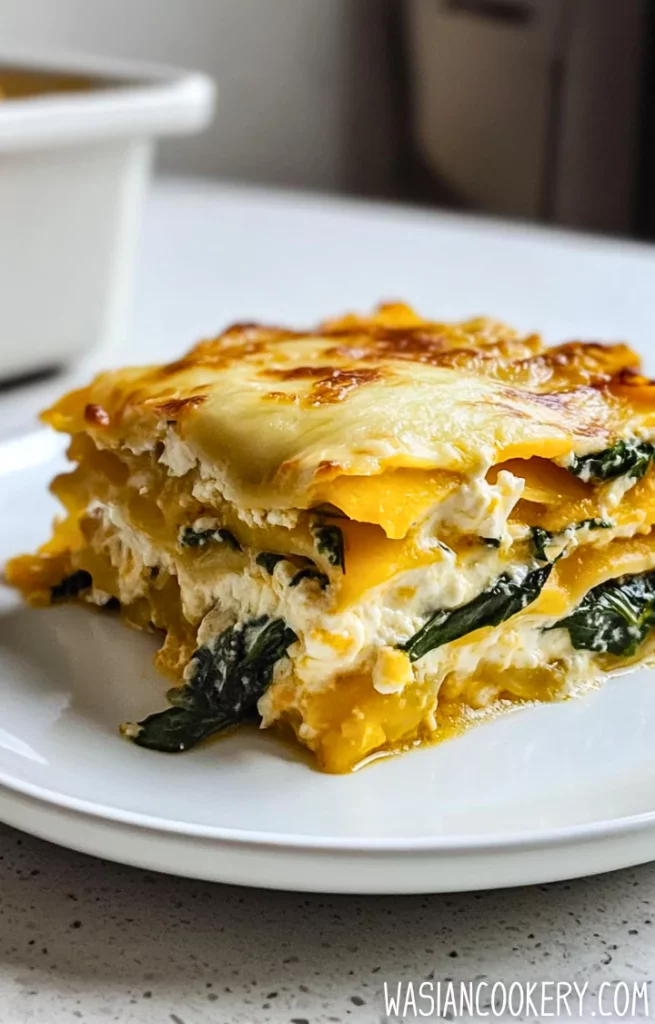
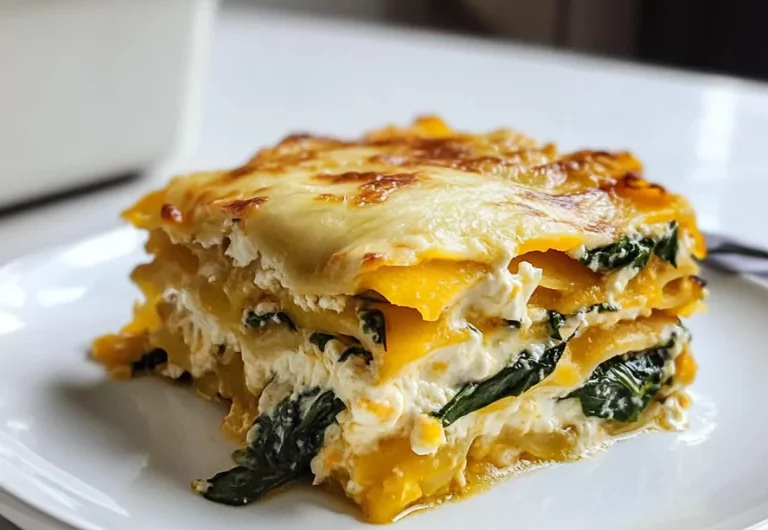
- Sweet squash, creamy ricotta, and savory tomato sauce give each forkful a lovely balance without a meat filling.
- The spinach adds a green layer that goes well with the orange squash and golden cheese.
- Preparing the squash separately lets you check its tenderness before it disappears inside the casserole.
- Three noodle layers and two filling layers make assembly easy to follow once the ingredients are ready.
- The warm, hearty flavors suit a family dinner or a relaxed fall gathering with bread and salad.
- Leftover portions are easy to pack separately, so you can reheat a slice without warming the whole dish.
What Is the Best Butternut Squash?
Choose a medium butternut squash that feels firm and heavy for its size, with no soft spots or deep cuts. A longer neck gives more easy-to-cut slices, but use the rounded seed section too. Remove the tough skin and seeds, then aim for an even thickness. Thin pieces that are cooked first are easier to layer than a mixture of raw chunks and slices.
A medium squash varies in size, so a deep baking dish matters more than forcing everything into a shallow pan. Use the full prepared squash, divided evenly between the two filling layers. If your trays are crowded, cook another tray batch until tender and allow the extra time rather than piling the raw slices into a thick mound.
Ingredients
- 1 medium butternut squash, peeled and sliced thin
- 9 regular lasagna noodles, cooked and drained
- 2 cups ricotta cheese
- 1 egg
- 2 cups shredded mozzarella cheese
- 1 cup grated Parmesan cheese
- 2 cups spinach (fresh or frozen)
- 1 teaspoon garlic powder
- 1 teaspoon dried oregano
- Salt and pepper, to taste
- 2 cups marinara sauce
Use regular noodles cooked and drained before assembly. This recipe has only two cups of marinara, so dry no-boil sheets are not a direct replacement. Choose a spoonable sauce rather than a very thick tomato paste-style sauce. For spinach, measure the original two cups before wilting fresh leaves or thawing frozen spinach, then squeeze it well; the two choices will make slightly different filling volumes.
Kitchen Equipment You Will Need
As an Amazon Associate I earn from qualifying purchases.
- Deep 9-by-13-inch baking dish
- Large rimmed baking sheets
- Parchment paper
- Aluminum foil
- Vegetable peeler
- Chef’s knife
- Cutting board
- Measuring cups
- Measuring spoons
- Large pasta pot
- Colander
- Clean kitchen towel
- Covered skillet
- Mixing bowls
- Mixing spoon
- Fork
- Food thermometer
- Wide serving spatula
- Shallow storage containers
- Microwave-safe containers
- Oven mitts
How To Make Butternut Squash Lasagna
Step 1
Heat the oven to 400°F (200°C). Line 2 large rimmed baking sheets with oven-safe parchment. Peel the butternut squash, remove its seeds, and cut the flesh into even slices about ¼ inch thick. Use a stable cutting board and a sharp knife. Have a deep 9-by-13-inch baking dish, at least 3 inches deep, ready for the assembled lasagna.
Step 2
Arrange all the squash slices across the 2 trays in a thin layer. Season with the 1 teaspoon garlic powder and salt and pepper to taste. Cover the trays with foil and bake for 25–30 minutes, swapping their positions halfway through, until a fork enters the squash easily. Meanwhile, cook the 9 regular lasagna noodles in boiling water according to the package until al dente, then drain and lay them separately on a clean kitchen towel. Reduce the oven to 375°F (190°C) after the squash comes out.
Step 3
For fresh spinach, measure the 2 cups before cooking, wash it, and wilt it in a covered skillet with the water clinging to the leaves for 2–3 minutes. For frozen spinach, measure the 2 cups before thawing, then thaw according to the package. Let either option cool enough to handle and squeeze out excess moisture. Chop the spinach and mix it with the 2 cups ricotta, 1 egg, 1 teaspoon oregano, and salt and pepper to taste. Divide this filling and the tender squash into 2 equal portions.
Step 4
Spread ¼ cup marinara across the bottom of the deep baking dish. Add 3 cooked noodles, half the ricotta filling, half the squash, and ½ cup marinara. Add another 3 noodles, all the remaining ricotta filling, all the remaining squash, and another ½ cup marinara. Finish with the last 3 noodles. Spread each layer evenly and keep the filling below the rim.
Step 5
Spread the remaining ¾ cup marinara over the top noodles, covering their corners and edges. This uses all 2 cups of sauce. Sprinkle all 2 cups mozzarella and all 1 cup Parmesan evenly over the top, as the cheese topping. Tent with foil so it does not press into the cheese, then seal the foil around the dish.
Step 6
Bake at 375°F (190°C) for 30 minutes covered. Uncover carefully and bake for about 15 minutes more, until the top is golden, the sauce bubbles, and the center reaches 165°F on a food thermometer. Check that a knife slips through the squash and pasta without a hard layer. If the center needs longer, cover again to protect the cheese and continue baking until it is ready.
Step 7
Let the lasagna rest for 10 minutes before cutting and lifting out portions with a wide spatula. The original yield is 4 generous main-dish servings; smaller squares work well with sides. Plan about 2 hours overall: 35 minutes preparation and assembly, 75 minutes oven cooking, and 10 minutes resting, with noodle and spinach cooking done while the squash bakes. Extra tray batches or a cold assembled dish need longer.
Notes
- Make the squash slices roughly the same thickness. Thin edges soften faster than thick centers, even when the trays are covered.
- Use parchment rated for the oven temperature and keep it inside the tray edges. It prevents sticking without adding oil to the ingredient list.
- Drain the noodles and separate them while warm. A tangled pile becomes much harder to arrange without tearing.
- Squeeze the spinach after it cools enough to handle. Extra vegetable water can make the ricotta layer slide when you cut a slice.
- Spoon the ricotta in small dollops before spreading. This is easier than dragging one large mound across slippery noodles.
- Save the full ¾ cup sauce for the top and spread it to the corners. Exposed noodle edges can dry out before the center is ready.
- Rest for the full 10 minutes. The casserole stays warm, but the filling settles enough to make serving much tidier.
Ingredients You Can Add
These extras are optional and do not replace the measured base ingredients. Keep additions small enough that the filling still fits comfortably below the dish rim.
- Fresh chopped sage adds an earthy flavor that goes especially well with sweet squash.
- A pinch of nutmeg can warm the ricotta filling without making it taste sweet.
- Crushed red pepper flakes add a gentle kick to the marinara sauce.
- Cooked, well-drained mushrooms give the filling a deeper savory flavor.
- Chopped fresh basil brightens a finished slice just before serving.
- Fresh parsley makes a simple green garnish over the golden cheese.
What To Serve With Butternut Squash Lasagna
A simple green salad is a lovely match for creamy lasagna. Arugula, spinach, or romaine add a fresh crunch, and tomato cucumber salad is another light side when you want something cool beside the hot casserole.
Garlic bread or crusty bread is good for picking up sauce left on the plate. The buttery, garlicky flavor of Yats-style bread makes a cozy pairing. Keep the bread portions modest if you are serving large lasagna squares.
For another family pasta night, classic lasagna with ricotta offers a different filling while keeping the familiar cheese-and-noodle layers. This squash version is especially nice when you want vegetables to be the main feature of the meal.
Variations and Swaps
- Fresh spinach gives a lighter green layer; frozen spinach is convenient but needs thorough draining after thawing.
- Whole-milk ricotta makes the richest filling. Part-skim ricotta can be used in the same amount if that is what you have.
- Use low-moisture mozzarella for a familiar melted topping; very wet fresh mozzarella adds more moisture.
- For a gentle cheese change, replace part of the mozzarella with provolone while keeping the same total amount.
- A mushroom variation works best with mushrooms cooked first until their released liquid has evaporated.
- A classic meat variation can include cooked ground beef or sausage, as in the original ideas. Cook either to 160°F before layering and avoid overfilling the dish.
- A pesto chicken variation uses already cooked chicken and a little pesto for flavor; cook chicken to 165°F and heat the finished casserole to 165°F.
- For a meatless meal, check that the marinara contains no meat and that the cheeses use vegetarian rennet if that matters to your table.
Storage
Cut leftovers into smaller portions and transfer to shallow containers. Refrigerate promptly at 40°F or below, within 2 hours of cooking, or within 1 hour if the room is above 90°F. Do not wait for the whole deep dish to reach room temperature on the counter. Refrigerated lasagna keeps for 3–4 days when handled this way.
For longer storage, freeze chilled individual portions in freezer-safe containers for about 2–3 months for best quality. Thaw in the refrigerator overnight. Reheat covered in a 350°F (175°C) oven, or use a microwave-safe container, until the middle reaches 165°F. Check more than one spot in a thick piece, then uncover briefly if you want a less soft cheese topping.

FAQ
Can I put raw squash into the layers?
Precooking is the more dependable method here. Squash size and thickness vary, and a golden cheese topping does not prove that raw vegetable layers have softened. Bake the slices until a fork enters easily before assembling.
Can I use no-boil noodles?
Use regular, precooked noodles for the quantities given here. Dry no-boil sheets need enough liquid to hydrate, and the required amount depends on the product. Do not substitute them dry while keeping this small sauce quantity.
How do I know the lasagna is done?
The center should reach 165°F, the sauce should bubble, and a knife should pass through tender squash and pasta. If the top browns before the middle is hot, replace the foil and keep baking.
Can I assemble it ahead?
Yes. Cool the cooked components promptly, assemble, cover, and refrigerate for up to a day before baking. Follow your baking dish maker’s directions for moving a cold dish into a hot oven. Expect extra covered baking time and check for 165°F.
Why is my lasagna watery?
Wet spinach or a very watery sauce can loosen the layers. Squeeze the spinach, cook the squash first, and give the baked casserole its rest. Do not solve the problem by omitting the sauce needed to cover the noodles.
Can I use a shallow casserole dish?
Choose the deep dish specified in the method so there is room for all the squash, ricotta, noodles, and cheese. A shallow dish risks overflow and makes it difficult to keep the layers even.
Short Description
Sweet butternut squash, spinach, and creamy ricotta sit between tender lasagna noodles, with marinara and a golden mozzarella-Parmesan topping. Precook the squash and pasta for even layers.
Butternut Squash Lasagna
Course: MainCuisine: ItalianDifficulty: Easy4
servings35
minutes1
hour15
minutes2
hoursSweet butternut squash, spinach, and creamy ricotta sit between tender lasagna noodles, with marinara and a golden mozzarella-Parmesan topping. Precook the squash and pasta for even layers.
Ingredients
1 medium butternut squash, peeled and sliced thin
9 regular lasagna noodles, cooked and drained
2 cups ricotta cheese
1 egg
2 cups shredded mozzarella cheese
1 cup grated Parmesan cheese
2 cups spinach (fresh or frozen)
1 teaspoon garlic powder
1 teaspoon dried oregano
Salt and pepper, to taste
2 cups marinara sauce
Directions
- Heat the oven to 400°F (200°C). Line 2 large rimmed baking sheets with oven-safe parchment. Peel the butternut squash, remove its seeds, and cut the flesh into even slices about ¼ inch thick. Use a stable cutting board and a sharp knife. Have a deep 9-by-13-inch baking dish, at least 3 inches deep, ready for the assembled lasagna.
- Arrange all the squash slices across the 2 trays in a thin layer. Season with the 1 teaspoon garlic powder and salt and pepper to taste. Cover the trays with foil and bake for 25–30 minutes, swapping their positions halfway through, until a fork enters the squash easily. Meanwhile, cook the 9 regular lasagna noodles in boiling water according to the package until al dente, then drain and lay them separately on a clean kitchen towel. Reduce the oven to 375°F (190°C) after the squash comes out.
- For fresh spinach, measure the 2 cups before cooking, wash it, and wilt it in a covered skillet with the water clinging to the leaves for 2–3 minutes. For frozen spinach, measure the 2 cups before thawing, then thaw according to the package. Let either option cool enough to handle and squeeze out excess moisture. Chop the spinach and mix it with the 2 cups ricotta, 1 egg, 1 teaspoon oregano, and salt and pepper to taste. Divide this filling and the tender squash into 2 equal portions.
- Spread ¼ cup marinara across the bottom of the deep baking dish. Add 3 cooked noodles, half the ricotta filling, half the squash, and ½ cup marinara. Add another 3 noodles, all the remaining ricotta filling, all the remaining squash, and another ½ cup marinara. Finish with the last 3 noodles. Spread each layer evenly and keep the filling below the rim.
- Spread the remaining ¾ cup marinara over the top noodles, covering their corners and edges. This uses all 2 cups of sauce. Sprinkle all 2 cups mozzarella and all 1 cup Parmesan evenly over the top, as the cheese topping. Tent with foil so it does not press into the cheese, then seal the foil around the dish.
- Bake at 375°F (190°C) for 30 minutes covered. Uncover carefully and bake for about 15 minutes more, until the top is golden, the sauce bubbles, and the center reaches 165°F on a food thermometer. Check that a knife slips through the squash and pasta without a hard layer. If the center needs longer, cover again to protect the cheese and continue baking until it is ready.
- Let the lasagna rest for 10 minutes before cutting and lifting out portions with a wide spatula. The original yield is 4 generous main-dish servings; smaller squares work well with sides. Plan about 2 hours overall: 35 minutes preparation and assembly, 75 minutes oven cooking, and 10 minutes resting, with noodle and spinach cooking done while the squash bakes. Extra tray batches or a cold assembled dish need longer.
Notes
- Use 9 regular lasagna noodles, cooked and drained; dry no-boil sheets are not a direct swap for this sauce quantity.
- Bake the squash until tender before layering. Heat the assembled center to 165°F and rest for 10 minutes.