Classic Frittata Recipe
I love sharing this classic frittata for a holiday brunch or a simple meal at home. Eggs, seasonal vegetables, and creamy cheese make a satisfying dish that pairs perfectly with fresh salad and crusty toast.
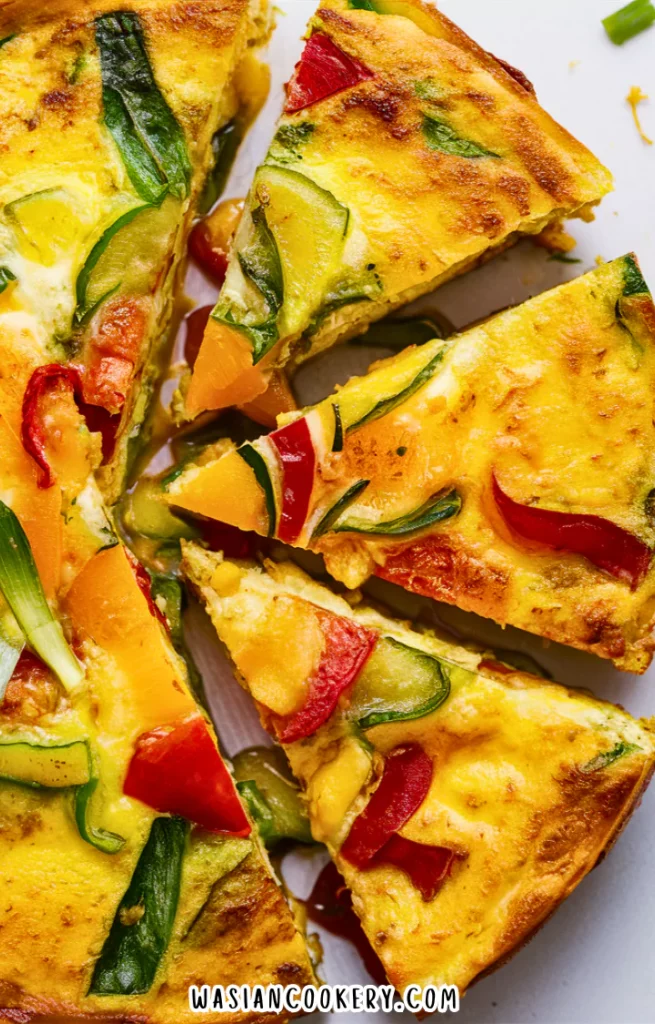
I use simple ingredients like eggs, cheese, and cooked vegetables, with optional cooked meat for a heartier version. A little milk or cream keeps the eggs tender, while a handful of herbs makes a lovely finish.
The frittata starts gently on the stovetop and finishes in the oven. Keep the fillings free of excess moisture, check the center before serving, and give the pan a short rest so the wedges lift out neatly.
Why This Dish Is Great
- This frittata is versatile, letting you choose vegetables and cheese you already enjoy while keeping the measured filling amounts consistent.
- It works for breakfast, brunch, or a light dinner, so the same method suits several kinds of meals.
- Already cooked vegetables and optional meat make assembly straightforward and keep raw fillings from releasing water into the eggs.
- The skillet handles both stovetop and oven cooking, with a mixing bowl needed for the egg mixture.
- Four generous wedges are easy to serve, and refrigerated leftovers can become a convenient meal the next day.
What Are the Best Eggs and Fillings?
Use the 8 large eggs listed in the recipe. Egg size affects the amount of liquid and the balance with the cheese and fillings, so a carton of very small eggs is not an exact match. Keep eggs refrigerated until preparation. They do not need to sit out for a long time to make a tender frittata; gentle cooking matters more.
Measure the vegetables after cooking, using 1 cup in total. Mushrooms and spinach can release plenty of liquid, while chopped onions and peppers need softening before they go in. If you start with fresh raw vegetables, cook them separately first and allow extra time. The optional 1/2 cup meat must also be fully cooked; this short egg method is not intended to cook raw sausage or bacon.
Ingredients
- 8 large eggs
- 1/4 cup whole milk or heavy cream
- 1/2 teaspoon salt
- 1/4 teaspoon black pepper
- 1 cup cooked vegetables (such as spinach, bell peppers, onions, mushrooms)
- 1/2 cup cooked meat (such as bacon, sausage, or ham) – optional
- 1 cup shredded cheese (such as cheddar, feta, or goat cheese)
- 2 tablespoons olive oil or butter
- Fresh herbs for garnish (such as parsley, chives, or basil) – optional
Choose whole milk for a lighter finish or heavy cream for a richer one, keeping the amount at 1/4 cup. Cheddar can be shredded, while feta and goat cheese are easier to crumble. Use 1 cup total cheese regardless of the style you choose. The 2 tablespoons oil or butter coat the skillet and help release the finished wedges.

Kitchen Equipment You Will Need
As an Amazon Associate I earn from qualifying purchases.
- Oven-safe skillet
- Large mixing bowl
- Whisk
- Silicone spatula
- Chef’s knife
- Cutting board
- Measuring cups
- Measuring spoons
- Cheese grater
- Food thermometer
- Oven mitts
- Heatproof trivet
- Oven-safe reheating dish
- Aluminum foil
- Shallow airtight containers
- Freezer-safe containers
How To Make a Classic Frittata
Allow about 15 minutes for preparation, up to 35 minutes for stovetop and oven cooking, and a 5-minute rest, or about 55 minutes altogether. These estimates start with cooked fillings. A 12-inch skillet makes a thinner frittata than a 10-inch skillet, so begin checking early and rely on the center temperature rather than the timer alone.
Step 1
Preheat your oven to 350°F (175°C). Use a 10–12-inch oven-safe skillet and check that its handle can tolerate the oven temperature. Have the vegetables and optional meat already fully cooked, chopped, and ready.
Step 2
Whisk the eggs, milk or cream, salt, and black pepper in a large bowl until the whites and yolks are fully combined. You want an even mixture without long strands of egg white; there is no need to beat it into a thick foam.
Step 3
Heat the olive oil or butter in the skillet over medium heat. Add the cooked vegetables and optional cooked meat. Sauté for about 3–5 minutes, until hot and any excess moisture has evaporated. If using refrigerated leftovers, heat them to 165°F before adding the eggs. Spread the filling evenly across the pan.
Step 4
Pour the egg mixture over the filling. Lower the heat to medium-low and let it cook undisturbed for about 2–3 minutes, until the outer edge begins to set. Do not keep stirring as you would for scrambled eggs.
Step 5
Sprinkle the shredded or crumbled cheese evenly over the top, breaking up any large clumps. Keep the topping spread across the pan so each wedge gets some cheese.
Step 6
Continue cooking gently on the stovetop for another 2–3 minutes. The edges should be set while the middle remains loose. If the bottom seems to be browning quickly, move on to the oven step instead of increasing the heat.
Step 7
Transfer the skillet to the preheated oven using oven mitts. Start checking after 10–12 minutes and continue baking as needed, usually about 10–18 minutes total, until the center is set and reaches 160°F for a vegetable-only frittata, or 165°F if the optional meat is included. Check with a food thermometer without touching the pan, and allow longer if needed to reach the required temperature. For an optional golden top, broil only in a broiler-safe skillet for 1–2 minutes, watching continuously; the center still must reach 160°F for vegetable-only or 165°F with meat.
Step 8
Remove the skillet with oven mitts and set it on a heatproof trivet. Let the frittata rest for 5 minutes. Loosen the edges with a spatula, slice into four wedges, and garnish with fresh herbs if desired. Serve warm, remembering that the skillet handle stays hot after it leaves the oven.
Notes
- Use an oven-safe pan with a handle and coating rated for the heat. A skillet that can bake safely is not automatically suitable for the broiler.
- Whisk until the eggs are evenly blended. Long strands of unmixed white can cook into firm patches in an otherwise tender wedge.
- Start on moderate heat and lower it after adding eggs. High heat can brown the bottom before the center has a chance to set.
- Cook away excess vegetable liquid before adding the eggs. A wet filling can leave a watery layer under the frittata.
- Keep the measured filling amounts in mind. The original recipe uses 1 cup cooked vegetables, optional 1/2 cup cooked meat, and 1 cup cheese.
- Check the temperature in the center without letting the thermometer touch the metal pan. The center should reach 160°F for a vegetable-only frittata or 165°F when meat is included, even if the top already looks puffed.
- Rest the frittata for 5 minutes before cutting. The pause helps it settle, but it does not replace cooking the eggs fully before removing the pan.
Ingredients You Can Add
Think of these as choices within the existing vegetable and cheese amounts, with herbs used as small accents. You do not need to add all of them to one skillet.
- Cooked spinach gives the filling a leafy flavor; remove excess moisture before measuring it.
- Sautéed mushrooms add a savory, earthy bite and work well with mild cheese.
- Softened bell peppers add sweetness and color when chopped into small pieces.
- Tender cooked asparagus gives the frittata a springtime feel; cut it into short pieces.
- Chopped chives add a gentle onion flavor to the garnish.
- Fresh basil brings a bright finish when sprinkled over the cooked frittata.
What To Serve With Frittata
For me, a fresh salad and some crusty bread make an easy plate. Greek Chickpea Salad adds crisp vegetables and a bright dressing alongside the warm eggs. Keep the salad on the side so the frittata stays tender rather than soaking up dressing.
For a heartier brunch, add Crispy Wasian Potatoes and a bowl of fruit. Prepare the potatoes first if they need the oven, then keep your frittata timing focused on cooking the eggs gently and serving them after the short rest.
A slice of Grandma Sycamore Bread is another simple partner, especially when toasted. The bread can be made ahead. Fruit, salad, and toast provide enough variety without needing another rich egg dish on the same table.
Variations and Swaps
Keep the original totals when combining these ideas: 1 cup cooked vegetables, up to the optional 1/2 cup cooked meat, and 1 cup cheese. Extra fillings can overwhelm the eggs and change the cooking time.
- Vegetarian Mediterranean: Combine cooked spinach with drained sun-dried tomatoes and artichoke hearts within the vegetable cup, then use feta for the cheese.
- Mushroom and Swiss: Sauté mushrooms with a little garlic and thyme until their moisture evaporates, then pair them with Swiss cheese.
- Bacon and cheddar: Use crisp, fully cooked bacon within the optional meat amount and cheddar for a smoky, comforting combination.
- Asparagus and goat cheese: Pair tender cooked asparagus pieces with crumbled goat cheese for a fresh spring variation.
- Chorizo and pepper jack: Use fully cooked, drained chorizo within the optional meat amount and pepper jack for a spicier version. Raw chorizo must be cooked separately first.
- Smoked salmon and dill: Use ready-to-eat smoked salmon in place of the optional cooked meat and add dill. A little cream cheese can form part of the total cheese amount.
- Dairy-free adaptation: Choose an unsweetened dairy-free milk and a suitable cheese alternative. Flavor, melting, and texture will differ from the original dairy version.
- Simple vegetable version: Leave out the optional meat and use your favorite cooked vegetable combination. Keep the eggs, milk, cheese, and pan fat at their listed amounts.
Storage
Cut leftovers into portions and refrigerate in shallow airtight containers within 2 hours of cooking, or within 1 hour when the temperature is above 90°F. Do not leave the whole skillet on the counter waiting for it to become completely cold. Keep refrigerated at 40°F or below and use within 3 days.
Reheat portions in an oven-safe dish at 350°F, loosely covered with foil, until the center reaches 165°F; check from about 10 minutes and allow longer for thick or very cold slices. For longer storage, freeze cooled portions in freezer-safe containers for up to 3 months for best quality. Thaw in the refrigerator overnight before reheating. Some vegetables may release a little moisture after freezing.
FAQ
Can I make a frittata ahead of time?
Yes. Cook it fully, refrigerate portions promptly, and use within 3 days. For the freshest texture, you can instead prepare the cooked fillings ahead and make the egg mixture when you are ready to cook.
How do I know when it is done?
The center should be set and reach 160°F for a vegetable-only frittata, or 165°F when the optional meat is included. A golden top or a clean-looking knife alone does not tell you the temperature. Check the thickest middle area without touching the skillet.
Why is my frittata watery?
Vegetables may have carried too much moisture into the eggs, or the center may need more cooking. Cook fillings until excess liquid evaporates, and check the center temperature before taking the pan out.
What if the bottom is browning too quickly?
Lower the stovetop heat and transfer the skillet to the preheated oven once the edges have set. Do not leave it over a strong burner while waiting for the middle to cook.
Can I skip the optional broiling?
Absolutely. Baking until the center reaches 160°F for a vegetable-only frittata, or 165°F with meat, is enough. Broiling is only a brief finishing option for a golden top, and it requires a pan specifically rated for broiler heat.
What is the difference between a frittata and a quiche?
A frittata has no pastry crust and usually uses less dairy in relation to its eggs. A quiche has a crust and a softer custard filling, so its pan preparation and baking time are different.
Short Description
A classic skillet frittata with eggs, cooked vegetables, cheese, and optional cooked meat, gently finished in the oven and rested before slicing.
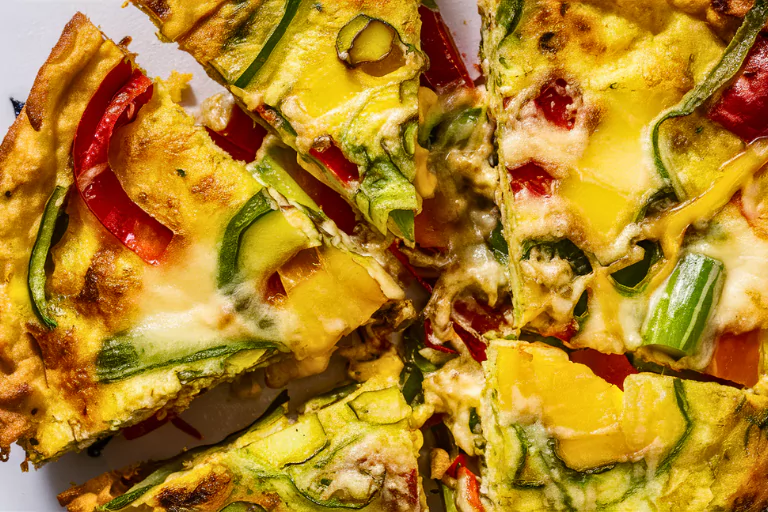
Classic Frittata
Course: Breakfast, BrunchCuisine: AmericanDifficulty: Easy4
servings15
minutes35
minutes55
minutesA classic skillet frittata with eggs, cooked vegetables, cheese, and optional cooked meat, gently finished in the oven and rested before slicing.
Ingredients
8 large eggs
1/4 cup whole milk or heavy cream
1/2 teaspoon salt
1/4 teaspoon black pepper
1 cup cooked vegetables (such as spinach, bell peppers, onions, mushrooms)
1/2 cup cooked meat (such as bacon, sausage, or ham) – optional
1 cup shredded cheese (such as cheddar, feta, or goat cheese)
2 tablespoons olive oil or butter
Fresh herbs for garnish (such as parsley, chives, or basil) – optional
Directions
- Preheat your oven to 350°F (175°C). Use a 10–12-inch oven-safe skillet and check that its handle can tolerate the oven temperature. Have the vegetables and optional meat already fully cooked, chopped, and ready.
- Whisk the eggs, milk or cream, salt, and black pepper in a large bowl until the whites and yolks are fully combined. You want an even mixture without long strands of egg white; there is no need to beat it into a thick foam.
- Heat the olive oil or butter in the skillet over medium heat. Add the cooked vegetables and optional cooked meat. Sauté for about 3–5 minutes, until hot and any excess moisture has evaporated. If using refrigerated leftovers, heat them to 165°F before adding the eggs. Spread the filling evenly across the pan.
- Pour the egg mixture over the filling. Lower the heat to medium-low and let it cook undisturbed for about 2–3 minutes, until the outer edge begins to set. Do not keep stirring as you would for scrambled eggs.
- Sprinkle the shredded or crumbled cheese evenly over the top, breaking up any large clumps. Keep the topping spread across the pan so each wedge gets some cheese.
- Continue cooking gently on the stovetop for another 2–3 minutes. The edges should be set while the middle remains loose. If the bottom seems to be browning quickly, move on to the oven step instead of increasing the heat.
- Transfer the skillet to the preheated oven using oven mitts. Start checking after 10–12 minutes and continue baking as needed, usually about 10–18 minutes total, until the center is set and reaches 160°F for a vegetable-only frittata, or 165°F if the optional meat is included. Check with a food thermometer without touching the pan, and allow longer if needed to reach the required temperature. For an optional golden top, broil only in a broiler-safe skillet for 1–2 minutes, watching continuously; the center still must reach 160°F for vegetable-only or 165°F with meat.
- Remove the skillet with oven mitts and set it on a heatproof trivet. Let the frittata rest for 5 minutes. Loosen the edges with a spatula, slice into four wedges, and garnish with fresh herbs if desired. Serve warm, remembering that the skillet handle stays hot after it leaves the oven.
Notes
- Timing starts with fully cooked fillings: about 15 minutes prep, up to 35 minutes cooking and a 5-minute rest. Cooking raw fillings adds time.
- Cook the center to 160°F for vegetable-only, or 165°F when the optional meat is included; allow longer baking if needed. Reheat refrigerated leftover fillings to 165°F before adding eggs, and reheat leftover frittata portions to 165°F.
- Use an oven-safe skillet. Optional broiling requires a broiler-safe pan, and the handle remains hot after cooking.