Thai Peanut Sauce
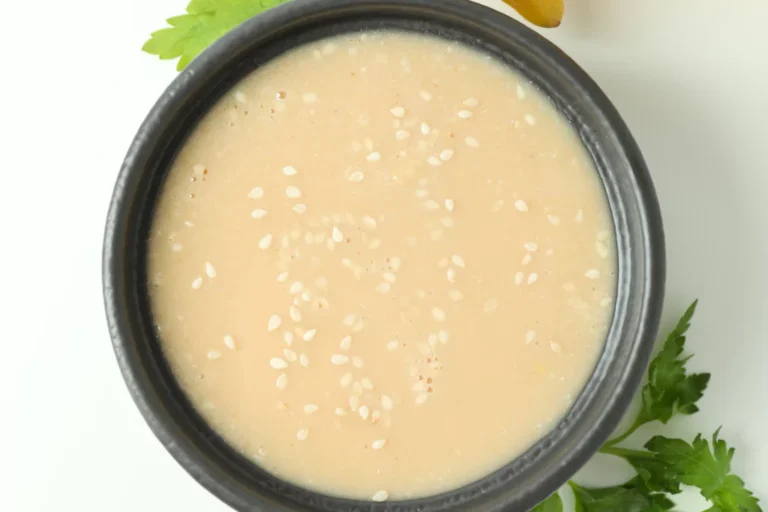
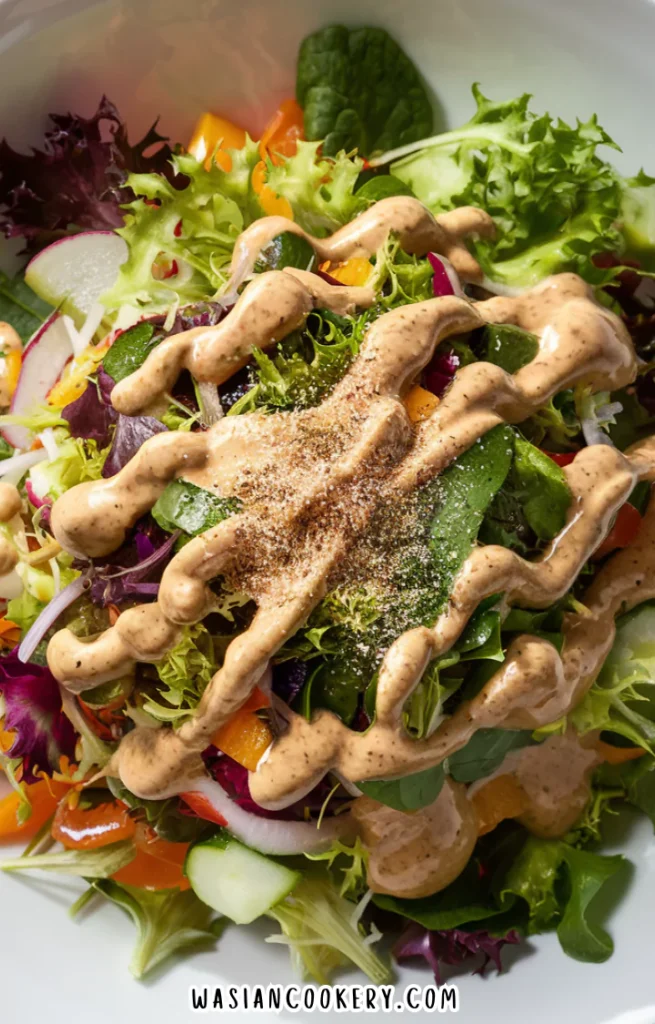
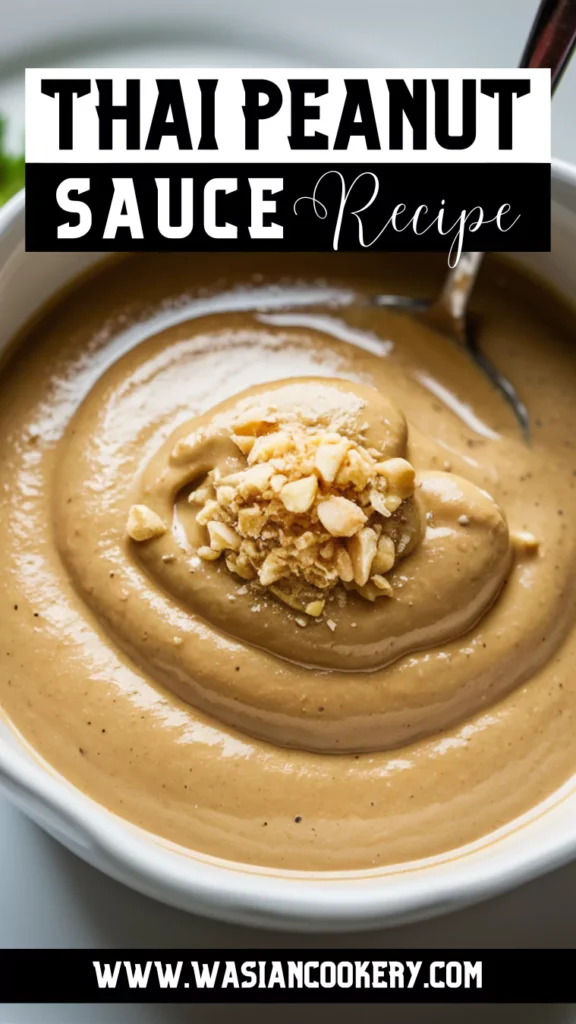
I love this Thai Peanut Sauce on a crisp, refreshing veggie salad. On hot days, that mix of fresh vegetables and creamy, nutty dressing is just what I want, and the sauce is easy to stir together at home.
Peanut butter, soy sauce, lime juice, garlic, and ginger give it a rich flavor with a bright finish. A little chili garlic sauce adds heat if you like it, while coconut milk or water helps you choose the texture.
I also like it for rice bowls and as a spread on sandwiches. Keep it thick for dipping vegetables, or use the measured thinning liquid to make a dressing that gently coats noodles and crunchy greens.
Why This Sauce Is Great
- It needs no cooking. A bowl, whisk, and a few everyday ingredients are enough to bring the sauce together.
- The peanut butter makes it creamy without dairy, so the coconut-milk version stays naturally dairy-free when the packaged ingredients are suitable.
- Lime and rice vinegar balance the rich nuts, giving the sauce a tangy finish that works with crisp vegetables.
- Chili garlic sauce is optional, letting you make a mild base and choose a warmer version when you want it.
- The same batch can be a dip, a noodle coating, or a salad dressing by changing how much of the measured liquid you use.
- A short refrigerator rest gives you time to assemble the rest of the meal while the garlic and ginger flavors settle into the sauce.
What Is the Best Peanut Butter?
Creamy peanut butter gives the smoothest result. The original recipe uses Jif Creamy Peanut Butter, but another smooth peanut butter can work too. If a natural peanut butter has separated in the jar, stir its oil back in thoroughly before measuring. Scooping from a dry layer at the bottom can make the sauce unusually stiff.
Check whether your peanut butter contains added sugar or salt, because both affect the finished flavor. Keep the written amounts for the base recipe, then taste before adding anything extra. Crunchy peanut butter makes a chunkier dip; it will not whisk completely smooth, even with more liquid. Fresh ginger should feel firm, and fresh lime juice gives a bright, clean taste.
Ingredients
- 1/2 cup creamy peanut butter
- 1/4 cup soy sauce
- 2 tablespoons lime juice
- 1 tablespoon rice vinegar
- 1 tablespoon honey or brown sugar
- 1-2 cloves garlic, minced
- 1 tablespoon grated fresh ginger
- 1-2 teaspoons chili garlic sauce (optional, for heat)
- 1/4 cup coconut milk or water (for thinning)
- 1 tablespoon sesame oil (optional)
- Chopped peanuts and fresh cilantro for garnish (optional)
Choose plain rice vinegar, not a heavily sweetened seasoned vinegar. Stir canned coconut milk before measuring so the thick cream and thinner liquid are evenly mixed. Water makes the peanut flavor more direct, while coconut milk gives a richer finish. The sesame oil and garnishes are optional, so you can leave them out without changing the main method.
Kitchen Equipment You Will Need
As an Amazon Associate I earn from qualifying purchases.
- Mixing bowl
- Whisk
- Silicone spatula
- Chef knife
- Cutting board
- Fine grater
- Measuring cups
- Measuring spoons
- Can opener
- Covered freezer-safe containers
- Serving bowl
- Serving spoon
How To Make Thai Peanut Sauce
Plan for 10 minutes of preparation and 30 minutes of chilling, or 40 minutes total. No cooking is needed. Mince the garlic finely and grate the ginger before mixing so neither leaves large, sharp bites in the finished sauce. Use a clean spoon whenever you taste.
Step 1
In a medium bowl, combine the 1/2 cup creamy peanut butter, 1/4 cup soy sauce, 2 tablespoons lime juice, 1 tablespoon rice vinegar, and 1 tablespoon honey or brown sugar. Whisk until evenly combined. Stir in the minced garlic and grated ginger, then add 1 teaspoon of the optional chili garlic sauce if using it. Keep the second teaspoon for adjusting the heat.
Step 2
Measure the 1/4 cup coconut milk or water. Whisk it into the sauce a little at a time, stopping at a thick but smooth consistency and reserving any remaining liquid for after chilling. Scrape the sides and bottom of the bowl with a spatula. A stiff or slightly uneven mixture often becomes smooth as you keep whisking in the liquid.
Step 3
For extra flavor, stir in the optional 1 tablespoon sesame oil. Whisk until it is fully incorporated rather than sitting on top. Taste a small amount on a clean spoon, then add the remaining optional chili garlic sauce only if you want more heat.
Step 4
Transfer the sauce to a covered container and refrigerate for 30 minutes to let the garlic, ginger, and peanut flavors mingle. The total time includes this rest. Keep any unused measured coconut milk refrigerated as well. Stir the sauce after chilling and whisk in reserved thinning liquid, if needed, until it suits your dip or dressing.
Step 5
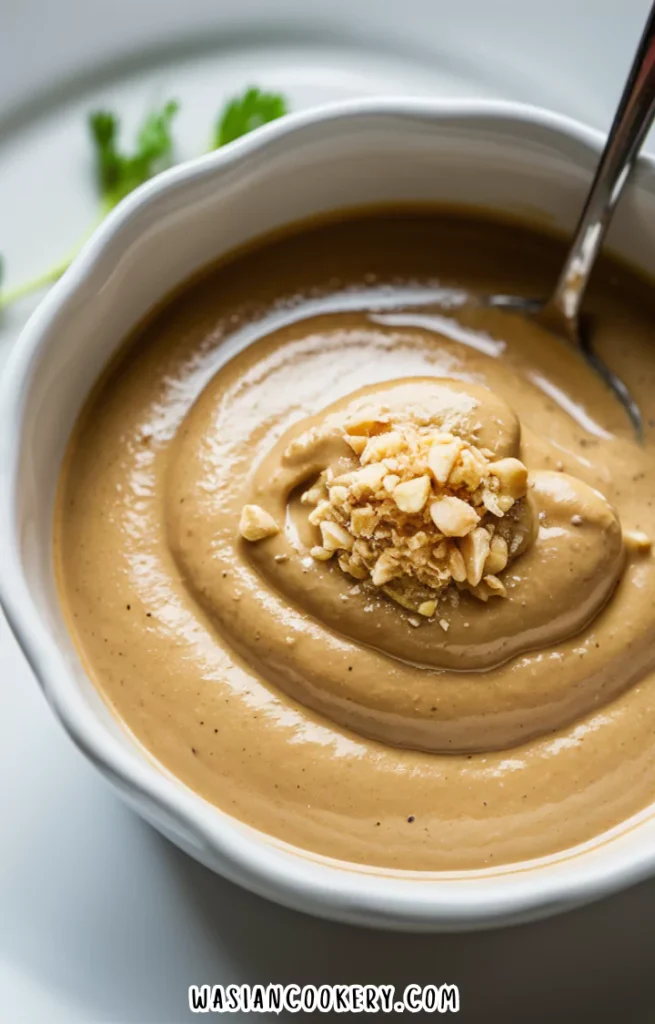
Spoon into a clean serving bowl and garnish with the optional chopped peanuts and fresh cilantro. Serve as a dip, dressing, or drizzle. Reserve a clean portion before serving if you want leftovers, and keep unused sauce refrigerated. This makes 4 generous sauce portions; the amount used per person depends on the dish.
Notes
- Add the thinning liquid slowly. Once a sauce is too thin, it is harder to return to a dipping texture without changing the ingredient balance.
- Whisk before deciding the sauce has failed. Peanut butter may look thick or uneven when the first watery ingredients are added, then loosen as they combine.
- Use the smaller garlic amount if you prefer a milder raw-garlic flavor. The written range is 1 to 2 cloves, and clove size varies.
- Start with the lower chili amount. It is easier to add the second teaspoon than to calm a sauce that is already too spicy.
- Let the sauce sit in the fridge for 30 minutes before serving. This rest is included in the recipe timing rather than treated as an invisible extra.
- Expect a chilled sauce to thicken. Stir it first, then add any reserved measured coconut milk or water gradually.
- Keep garnishes separate until serving. Chopped peanuts stay crunchier that way, and each person can choose whether to add cilantro.
Ingredients You Can Add
- Fresh cilantro: Use the optional garnish for a fresh, leafy finish, especially over a rice bowl.
- Chopped peanuts: The original optional garnish adds crunch to a smooth dressing or a bowl of noodles.
- Scallions: A little finely sliced green onion gives a gentle onion flavor without changing the sauce base.
- Lime zest: A small amount of finely grated zest adds citrus aroma; wash the lime and avoid the bitter white layer.
- Fresh chili: A little finely chopped chili adds another kind of heat, so taste before also increasing the chili garlic sauce.
- Toasted sesame seeds: A light scattering brings a little texture, especially if you already chose the optional sesame oil.
What To Serve with Thai Peanut Sauce
This sauce is incredibly versatile. Use it as a dip for fresh vegetables, drizzle it over noodles and stir-fries, or spoon it onto rice bowls. Spicy Noodle Spring Rolls make a fun pairing when you want something with a little extra bite; keep the sauce mild if the rolls are already hot.
For a crisp lunch, try the vegetables and chicken from Thai Chicken Salad with this sauce served alongside. Add dressing gradually to your own bowl so the vegetables stay crunchy, and keep any undressed portion separate if you are packing lunch ahead.
It is also lovely with tofu or grilled chicken skewers. If you enjoy comparing peanut sauces, Creamy Vietnamese Peanut Sauce is another recipe to explore. When using any sauce around raw meat, set aside the clean serving portion first and discard sauce that has touched the raw meat.
Variations and Swaps
- Mild sauce: Omit the optional chili garlic sauce and let the ginger provide a little warmth.
- Spicier sauce: Use the full 2 teaspoons chili garlic sauce from the listed range, then taste before adding any further heat.
- Coconut version: Choose coconut milk for the measured thinning liquid to make the sauce richer.
- Water version: Choose water for a lighter texture that keeps the peanut and lime flavors prominent.
- Brown-sugar version: Choose the listed brown sugar instead of honey and whisk until it dissolves.
- Vegan version: Use brown sugar suitable for your preferences and check the chili sauce and other packaged ingredients.
- Gluten-free version: Use a labeled gluten-free soy sauce or tamari and check all other ingredients, including the chili garlic sauce.
- Alternative spread: Sunflower seed butter or another suitable nut butter changes the flavor and thickness. Treat this as a different sauce and check allergy labels carefully.
Storage
Store the sauce in a clean, airtight container in the refrigerator at 40°F or below and use within 3 to 4 days. This freshly mixed sauce contains added liquid, garlic, and ginger; it should not be stored like a jar of plain peanut butter. Refrigerate it within 2 hours, or within 1 hour above 90°F, and discard a serving portion left out longer.
For a longer hold, freeze a clean portion in a freezer-safe container for up to 1 month for best texture, leaving a little room for expansion. Thaw in the refrigerator and whisk well before serving. Coconut milk can separate after freezing, so the texture may be less silky. Do not return sauce from a communal dipping bowl to the clean stored batch.
FAQ
Is Thai Peanut Sauce spicy?
It can be, but the chili garlic sauce is optional. Start with the smaller amount in the range, let the sauce rest, and taste before increasing it. Raw ginger and garlic also bring a little sharpness.
Why is my sauce too thick?
Peanut butter brands vary, and the sauce thickens when cold. Stir thoroughly, then whisk in the unused portion of the measured coconut milk or water a little at a time. A dip can stay thicker than a dressing.
Can I skip the refrigerator rest?
The sauce is mixed and ready to taste right away, but this version includes a 30-minute rest for the flavors to mingle. The card total includes that waiting time. Keep it refrigerated if you are not serving it immediately.
Can I make it without peanuts?
A suitable seed or other nut butter can make a different sauce, but it is not automatically safe for someone with a peanut allergy. Check ingredients, manufacturing warnings, garnishes, and utensils for that person’s needs.
Why did the sauce separate?
A little separation can happen as it sits, especially with natural peanut butter or coconut milk. Whisk it thoroughly while cold. Separation alone does not tell you whether an old or improperly stored sauce is safe to eat.
How much does this recipe serve?
The card keeps the original 4 servings as generous sauce portions. A little drizzle stretches further than a large dipping bowl, so the number of people it covers depends on how you use it. No exact finished cup yield is assumed.
Short Description
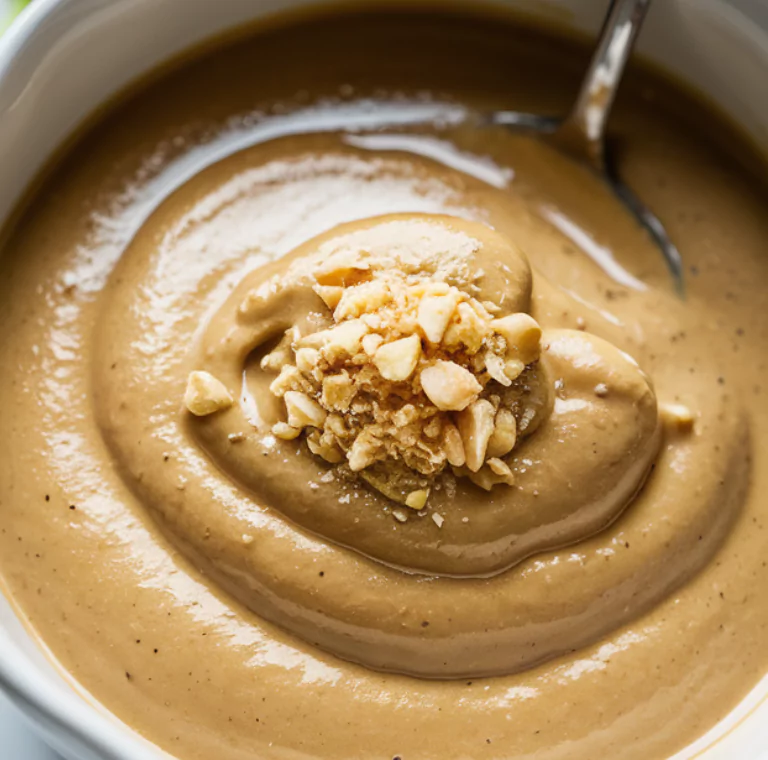
A creamy Thai-style peanut sauce with soy sauce, fresh lime, garlic, and ginger. Stir it together without cooking, then chill briefly before serving as a dip or dressing.
Thai Peanut Sauce
Course: Appetizers, SauceCuisine: ThaiDifficulty: Easy4
servings10
minutes40
minutesA creamy Thai-style peanut sauce with soy sauce, fresh lime, garlic, and ginger. Stir it together without cooking, then chill briefly before serving as a dip or dressing.
Ingredients
1/2 cup creamy peanut butter
1/4 cup soy sauce
2 tablespoons lime juice
1 tablespoon rice vinegar
1 tablespoon honey or brown sugar
1-2 cloves garlic, minced
1 tablespoon grated fresh ginger
1-2 teaspoons chili garlic sauce (optional, for heat)
1/4 cup coconut milk or water (for thinning)
1 tablespoon sesame oil (optional)
Chopped peanuts and fresh cilantro for garnish (optional)
Directions
- In a medium bowl, combine the 1/2 cup creamy peanut butter, 1/4 cup soy sauce, 2 tablespoons lime juice, 1 tablespoon rice vinegar, and 1 tablespoon honey or brown sugar. Whisk until evenly combined. Stir in the minced garlic and grated ginger, then add 1 teaspoon of the optional chili garlic sauce if using it. Keep the second teaspoon for adjusting the heat.
- Measure the 1/4 cup coconut milk or water. Whisk it into the sauce a little at a time, stopping at a thick but smooth consistency and reserving any remaining liquid for after chilling. Scrape the sides and bottom of the bowl with a spatula. A stiff or slightly uneven mixture often becomes smooth as you keep whisking in the liquid.
- For extra flavor, stir in the optional 1 tablespoon sesame oil. Whisk until it is fully incorporated rather than sitting on top. Taste a small amount on a clean spoon, then add the remaining optional chili garlic sauce only if you want more heat.
- Transfer the sauce to a covered container and refrigerate for 30 minutes to let the garlic, ginger, and peanut flavors mingle. The total time includes this rest. Keep any unused measured coconut milk refrigerated as well. Stir the sauce after chilling and whisk in reserved thinning liquid, if needed, until it suits your dip or dressing.
- Spoon into a clean serving bowl and garnish with the optional chopped peanuts and fresh cilantro. Serve as a dip, dressing, or drizzle. Reserve a clean portion before serving if you want leftovers, and keep unused sauce refrigerated. This makes 4 generous sauce portions; the amount used per person depends on the dish.
Notes
- Total time includes 10 minutes preparation and 30 minutes refrigeration; no cooking is needed.
- Use up to the measured 1/4 cup coconut milk or water for the desired consistency, reserving some for after chilling if needed.
- Refrigerate at 40°F or below and use within 3 to 4 days. Keep clean storage portions separate from communal dipping sauce.