Teriyaki Chicken Skewers Recipe
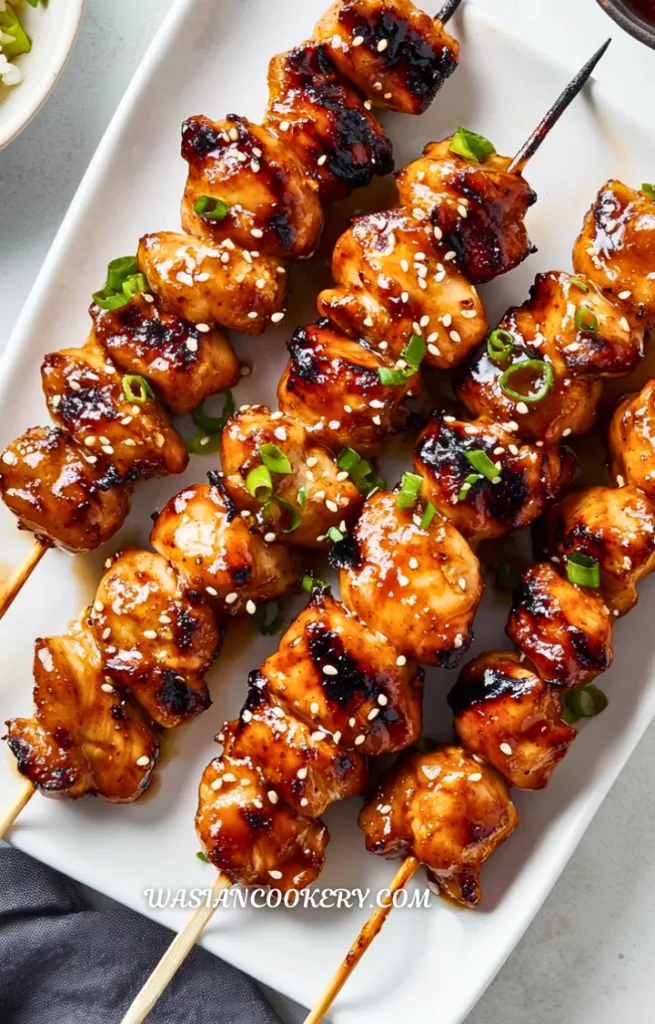
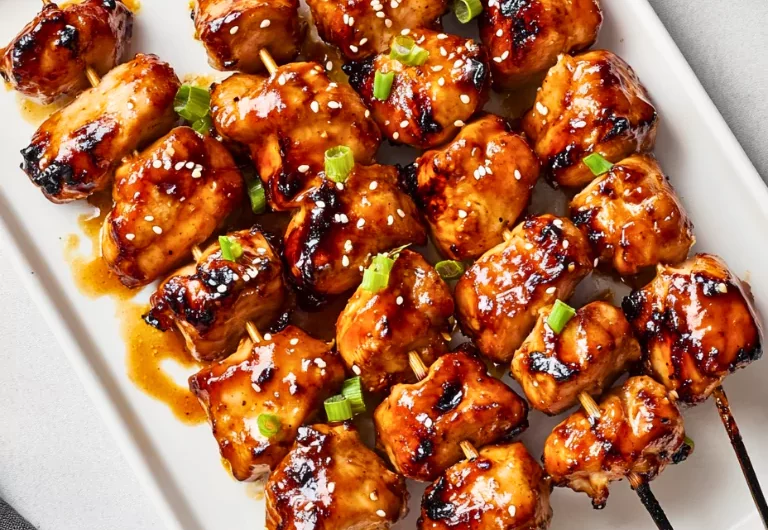
I made these teriyaki chicken skewers for a family get-together, and the sweet, savory glaze made them a lovely dish to share. Garlic and ginger give the sauce its warm flavor, while the chicken picks up browned edges on the grill. Sesame seeds and green onions add a simple finish.
The sauce does two jobs: half coats the raw chicken during marinating, and half stays separate for finishing the cooked skewers. Keeping those portions apart makes serving easier. A short simmer with cornstarch gives the sauce enough body to cling to the chicken instead of running straight onto the plate.
This recipe serves four with rice and vegetables. Allow about 90 minutes for the shortest version, including sauce cooling, a 30-minute marinade, grilling, and resting. The wooden skewers soak while other work happens, and the grill can preheat during marinating. A longer marinade or extra grill batches adds time.
Why This Dish Is Great
- Sweet and savory flavor comes from familiar ingredients, with rice vinegar balancing the honey or brown sugar.
- Small pieces of chicken cook fairly quickly once the grill is hot, making the final cooking stage easy to watch.
- Thighs and breasts both work. Choose one for each batch so the pieces have a similar texture and cooking pace.
- The sauce is made before raw chicken touches it, giving you a clean portion to brush over the finished food.
- Individual skewers are convenient to turn and serve, and the chicken can also be removed for rice bowls.
- The seasoning is mild as written, with optional chili added only if you want a hotter version.
The Best Chicken For Skewers
Boneless, skinless thighs are forgiving on the grill, while breasts have a leaner texture. Cut the 1½ pounds into similar bite-size chunks, about an inch across. Trim loose pieces that might burn before the larger chunks cook. Avoid folding thick pieces tightly around the skewer, because their centers will take longer to heat. Keep the chicken refrigerated until needed.
Ingredients
- 1½ lbs boneless, skinless chicken thighs or breasts, cut into chunks
- ½ cup soy sauce
- ¼ cup honey or brown sugar
- 2 tablespoons rice vinegar
- 1 tablespoon sesame oil
- 2 garlic cloves, minced
- 1 teaspoon fresh ginger, grated
- 1 tablespoon cornstarch + 2 tablespoons water
- Wooden skewers, soaked in water for 30 minutes
- Garnish: sesame seeds, chopped green onions
Choose either honey or brown sugar for the measured sweetener. Mix the cornstarch with its separate 2 tablespoons water before adding it to the hot sauce; dry starch can form lumps. Soy sauce supplies the salt, so no extra salt is needed in the base recipe. The water used for soaking wooden skewers is separate from the measured slurry water.
Kitchen Equipment You Will Need
As an Amazon Associate I earn from qualifying purchases.
- Mixing bowls
- Small saucepan
- Whisk
- Measuring cups
- Measuring spoons
- Chef’s knife
- Cutting board
- Skewers
- Outdoor grill
- Grill pan
- Grill basket
- Tongs
- Basting brush
- Food thermometer
- Serving platter
- Rimmed baking sheet
- Air fryer
How To Make Teriyaki Chicken Skewers
Step 1: Prepare Chicken And Skewers
Start soaking wooden skewers in water for at least 30 minutes; metal skewers do not need soaking. Cut the chicken into even chunks about 1 inch across and refrigerate. Measure the sauce ingredients. Allow about 20 minutes active preparation in all, including threading the skewers later.
Step 2: Thicken The Sauce
Combine the soy sauce, honey or brown sugar, rice vinegar, sesame oil, garlic, and ginger in a small saucepan. Heat to a gentle simmer. Whisk the cornstarch with the measured 2 tablespoons water, then stir the slurry into the sauce and simmer for about 1 minute until glossy and thickened. Allow about 5 minutes for heating and thickening.
Step 3: Cool And Marinate
Divide the sauce equally between two clean shallow bowls. Cool promptly, allowing about 15 minutes or longer as needed; setting the bowls in cold water helps. Refrigerate the clean finishing half separately. Once the other half is cool, coat the chicken with it in a covered container and refrigerate for at least 30 minutes or up to 4 hours.
Step 4: Preheat And Thread
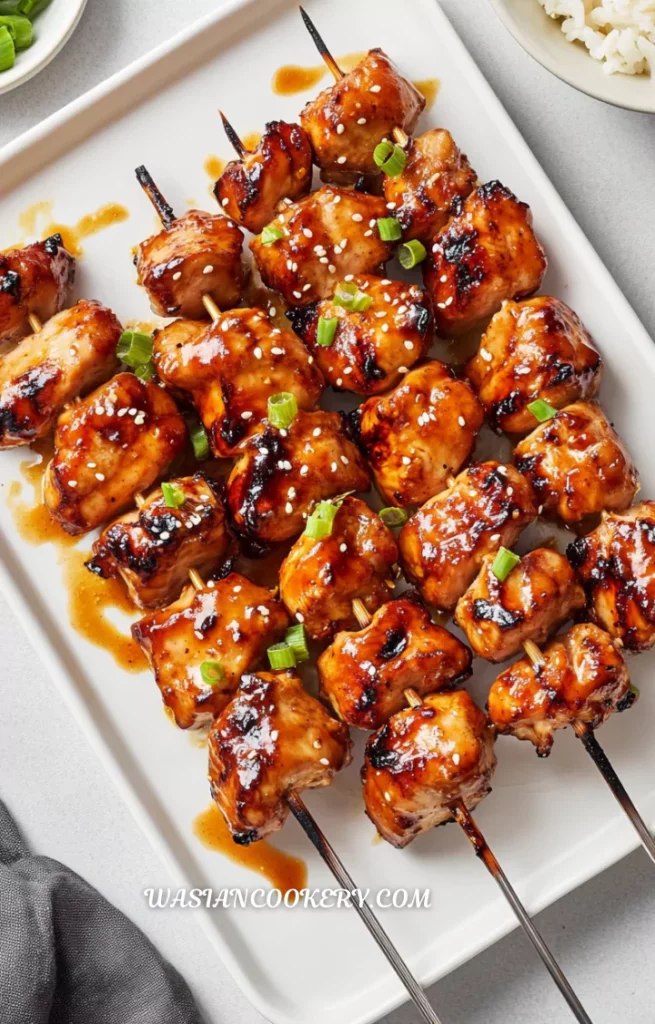
During the last 15 minutes of marinating, preheat the grill to medium-high, about 400–450°F, with a cooler area available. Drain the wooden skewers, then thread the chicken loosely, leaving small gaps. Discard the raw-chicken marinade. Keep exposed wooden handles away from flames; soaking reduces scorching but does not make them fireproof.
Step 5: Grill To Temperature
Grill the skewers for about 10–15 minutes, turning every 2–3 minutes, until the largest chicken pieces reach 165°F in the center. Insert the thermometer from the side without touching the skewer. Move to the cooler area if the glaze darkens too quickly. Cook uncrowded batches if needed, allowing another 10–15 minutes for each extra batch and keeping waiting raw chicken refrigerated.
Step 6: Glaze And Serve
Transfer cooked skewers to a clean platter. Brush with the clean reserved sauce using a clean brush, then rest for 5 minutes. Garnish with sesame seeds and green onions. Handle hot skewers with tongs and remove the chicken before serving young children. The roughly 90-minute total includes 20 minutes active prep, 20 minutes sauce/grill cooking, 15 minutes cooling, 30 minutes marinating, and 5 minutes resting; soaking and preheating overlap other work.
Notes
- Keep the clean sauce separate before adding chicken. Never dip a brush that touched raw chicken into the finishing bowl.
- The chicken already carries a thin coating of sauce onto the grill. Let excess drip off rather than adding more raw marinade.
- Honey and brown sugar can darken quickly. A cooler grill area gives the centers time to finish without burning the outside.
- Small gaps between chicken pieces help heat reach the sides. Tightly packed skewers can brown outside while staying undercooked inside.
- Check several large pieces, especially near the middle of each skewer. Browning alone does not tell you whether chicken is safe.
- Use tongs to move hot metal or wooden skewers. Keep the sharp points facing away from hands when threading and serving.
- The base timing assumes one grill batch. A small indoor grill pan may need several rounds; keep finished chicken warm while the next batch cooks.
Ingredients You Can Add
- Pineapple chunks bring a sweet contrast. Grill them separately so the fruit and chicken can each finish at the right time.
- Sesame seeds are already an optional garnish. Toast them briefly in a dry pan if you prefer a nuttier flavor.
- Chili flakes can join the sauce before it is divided, or go onto individual portions for adjustable heat.
- A splash of mirin or sake is an optional addition to the sauce before simmering. These contain alcohol; do not assume brief cooking removes it all.
- Extra chopped scallions add a fresh onion bite. Keep them away from the raw-chicken board and sprinkle over cooked portions.
- Zucchini, bell peppers, or onions can go on their own skewers. Separate vegetable skewers give you better control over tenderness.
What To Serve With Teriyaki Chicken Skewers
Plain steamed rice is a mild base for the sweet sauce. For a more varied spread, serve smaller portions of pineapple fried rice, which already includes shrimp, egg, and cashews. Its fruit works nicely with the ginger and garlic in the chicken.
For crunch and a little heat, add spicy Korean cucumber salad. Keep it chilled until serving and let people take their own portion. Its sharp dressing contrasts with the sticky glaze, so you do not need another rich sauce on the plate.
A simple tomato cucumber salad is another fresh option for a mixed grill. Add grilled vegetables or edamame if you like, and place the skewers on a clean serving platter with tongs so guests can help themselves without handling hot sticks.
Recipe Variations And Swaps
- Beef: use suitable whole-muscle steak pieces as a separate variation. Cooking time changes; check for at least 145°F and rest 3 minutes. Do not reuse chicken marinade for beef.
- Vegetarian: use firm tofu or mushrooms with a fresh batch of sauce. Keep their utensils separate from raw chicken and grill until hot and browned.
- Less sweet: reducing the sweetener changes both flavor and browning. Sugar substitutes behave differently, so expect a different glaze rather than an identical result.
- Spicy: stir chili paste or sriracha into the sauce before dividing it. Keep the basic batch mild when serving people with different preferences.
- Air fryer: use suitable skewers only if the appliance instructions allow them; otherwise cook loose chicken pieces in one layer. Preheat as directed during marinating and cook at 380°F for about 12–15 minutes, turning halfway, to 165°F. Plan about 90 minutes overall, plus batches.
- Oven: preheat to 425°F during the last 15 minutes of marinating and arrange on a foil-lined rimmed baking sheet. Bake about 15–20 minutes, turning halfway, until chicken reaches 165°F. Glaze with clean sauce after cooking. Allow about 95 minutes overall for one batch.
- Vegetable skewers: alternate vegetables on separate sticks, using clean reserved sauce only after they are cooked. This keeps raw chicken juices away from vegetables that may finish sooner.
- No skewers: use a grill pan or grill basket that keeps the small chicken pieces from falling through. Cook in a single layer and check the largest pieces for 165°F.
How To Store
Refrigerate cooked chicken in shallow airtight containers within 2 hours, or within 1 hour above 90°F. Remove it from the skewers for easier storage, taking care with hot metal. Keep leftovers for up to 3 days, as a practical make-ahead window. Reheat in a covered pan or microwave, stirring or turning as needed, until the chicken reaches 165°F throughout.
You can freeze the raw chicken in its cooled marinade for up to 2 months for best quality. Freeze it promptly in a labeled freezer bag, then thaw in the refrigerator before cooking. Keep any clean finishing sauce in a separate container. Used raw-chicken marinade is discarded, and marinating does not extend the safe refrigerator life of raw chicken.
FAQ
How long should the chicken marinate?
Use the stated 30 minutes to 4 hours in the refrigerator. A longer marinade extends the 90-minute plan by the additional waiting time; there is no need to leave the chicken on the counter.
Can I use chicken breasts?
Yes. Keep the chunks evenly sized and check temperature as soon as they begin to look browned. Breasts can dry out if left on the grill after they have reached 165°F.
Can I use an indoor grill pan?
Yes. Preheat the pan, ventilate the kitchen, and cook uncrowded batches. Watch the sugary coating closely and lower the heat if it blackens before the centers are cooked.
Do wooden skewers still burn after soaking?
They can. The 30-minute soak helps, but exposed ends still need protection from direct flames. Metal skewers avoid scorching, although they become very hot and need careful handling.
Can I brush on the used marinade?
Discard the portion that held raw chicken. This recipe already reserves a clean half for the cooked skewers, so there is no reason to reuse the contaminated portion.
Why is the sauce very thick after cooling?
Cornstarch thickens further as it cools. Stir the clean reserved sauce before brushing it on. A thin coating is enough; heavy layers on the grill can scorch before the chicken cooks.
Short Description
Teriyaki Chicken Skewers pair grilled chicken with a sweet soy, garlic, and ginger sauce, finished with clean reserved glaze, sesame seeds, and green onions.
Teriyaki Chicken Skewers Recipe
Course: MainCuisine: AsianDifficulty: Easy4
servings20
minutes20
minutes1
hour30
minutesTeriyaki Chicken Skewers pair grilled chicken with a sweet soy, garlic, and ginger sauce, finished with clean reserved glaze, sesame seeds, and green onions.
Ingredients
1½ lbs boneless, skinless chicken thighs or breasts, cut into chunks
½ cup soy sauce
¼ cup honey or brown sugar
2 tablespoons rice vinegar
1 tablespoon sesame oil
2 garlic cloves, minced
1 teaspoon fresh ginger, grated
1 tablespoon cornstarch + 2 tablespoons water
Wooden skewers, soaked in water for 30 minutes
Garnish: sesame seeds, chopped green onions
Directions
- Start soaking wooden skewers in water for at least 30 minutes; metal skewers do not need soaking. Cut the chicken into even chunks about 1 inch across and refrigerate. Measure the sauce ingredients. Allow about 20 minutes active preparation in all, including threading the skewers later.
- Combine the soy sauce, honey or brown sugar, rice vinegar, sesame oil, garlic, and ginger in a small saucepan. Heat to a gentle simmer. Whisk the cornstarch with the measured 2 tablespoons water, then stir the slurry into the sauce and simmer for about 1 minute until glossy and thickened. Allow about 5 minutes for heating and thickening.
- Divide the sauce equally between two clean shallow bowls. Cool promptly, allowing about 15 minutes or longer as needed; setting the bowls in cold water helps. Refrigerate the clean finishing half separately. Once the other half is cool, coat the chicken with it in a covered container and refrigerate for at least 30 minutes or up to 4 hours.
- During the last 15 minutes of marinating, preheat the grill to medium-high, about 400–450°F, with a cooler area available. Drain the wooden skewers, then thread the chicken loosely, leaving small gaps. Discard the raw-chicken marinade. Keep exposed wooden handles away from flames; soaking reduces scorching but does not make them fireproof.
- Grill the skewers for about 10–15 minutes, turning every 2–3 minutes, until the largest chicken pieces reach 165°F in the center. Insert the thermometer from the side without touching the skewer. Move to the cooler area if the glaze darkens too quickly. Cook uncrowded batches if needed, allowing another 10–15 minutes for each extra batch and keeping waiting raw chicken refrigerated.
- Transfer cooked skewers to a clean platter. Brush with the clean reserved sauce using a clean brush, then rest for 5 minutes. Garnish with sesame seeds and green onions. Handle hot skewers with tongs and remove the chicken before serving young children. The roughly 90-minute total includes 20 minutes active prep, 20 minutes sauce/grill cooking, 15 minutes cooling, 30 minutes marinating, and 5 minutes resting; soaking and preheating overlap other work.
Notes
- The 90-minute plan includes the minimum 30-minute marinade, sauce cooling, and a 5-minute rest. Soaking and grill preheating overlap other work. Longer cooling, marinating, or extra cooking batches adds time.
- Divide the sauce before raw chicken touches it. Discard used chicken marinade and apply the clean reserved sauce with clean utensils after chicken reaches 165°F.
- Wooden skewers soak for at least 30 minutes but can still scorch. Keep exposed ends away from flames; use tongs for hot skewers.
- Optional air fryer: 380°F for about 12–15 minutes, turning halfway. Optional oven: preheat to 425°F and bake about 15–20 minutes, turning halfway. Preheat during marinating; allow about 90 minutes overall for air frying or 95 minutes for baking. Both methods need 165°F chicken and extra time for batches.
- Refrigerate cooked chicken promptly, use within 3 days, and reheat to 165°F.