Raspberry Macarons Recipe
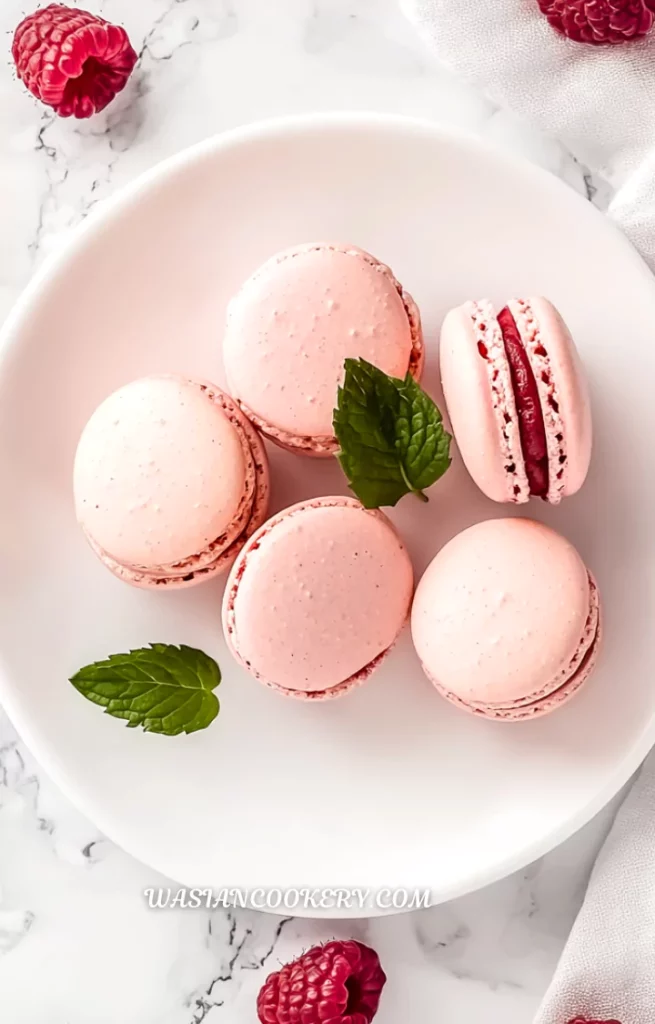
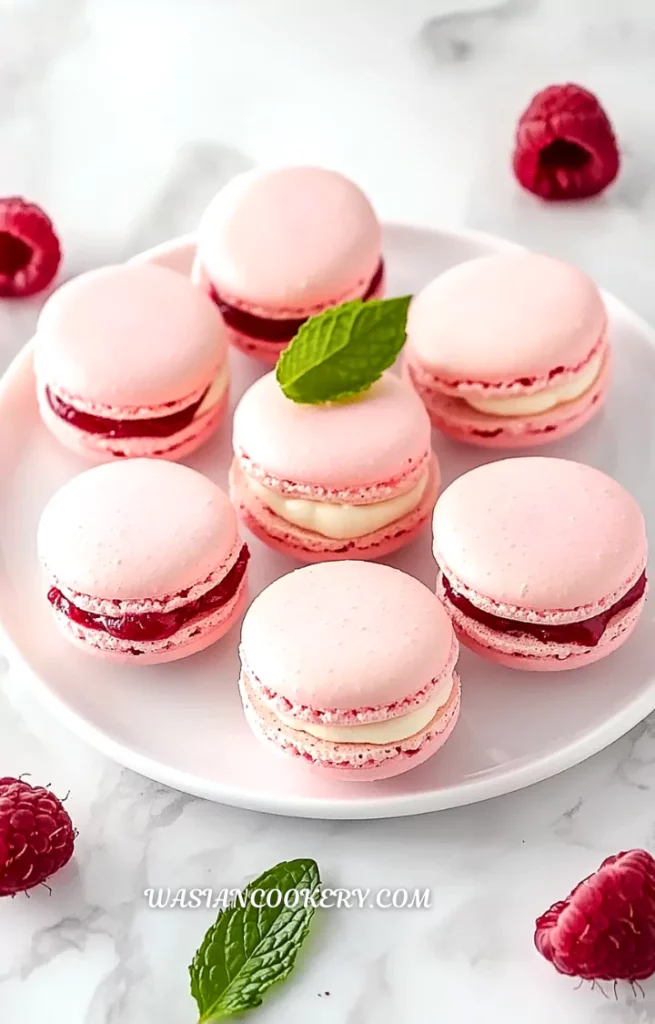
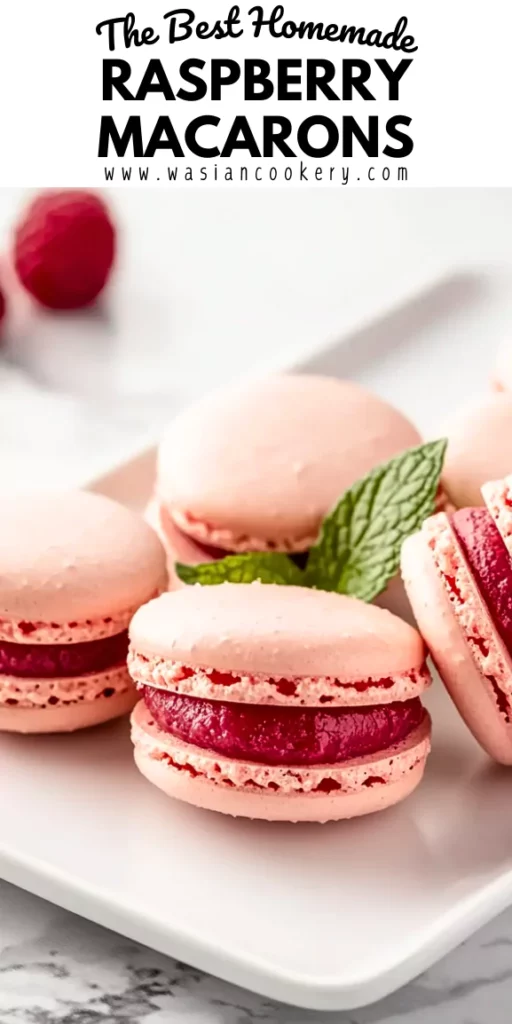
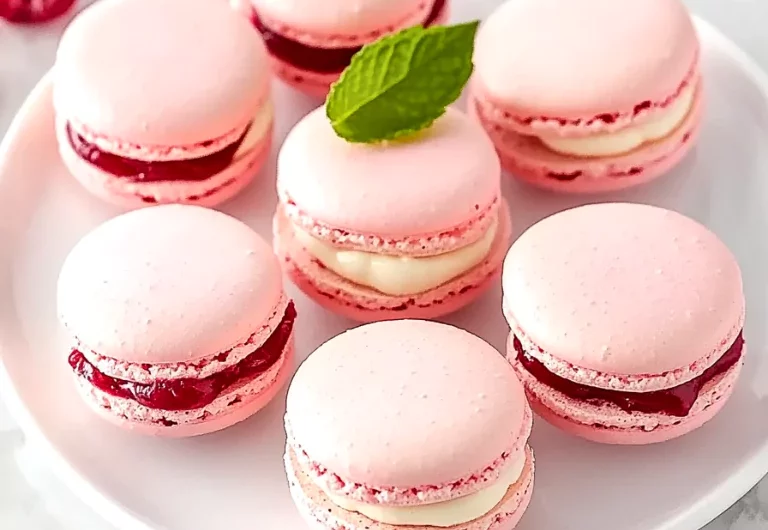
In my kitchen, raspberry macarons are a lovely choice when I want a small dessert with delicate texture and bright fruit flavor. The almond shells have a lightly crisp surface, and the raspberry buttercream softens their centers as they rest. A gentle pink color makes them pretty without elaborate decoration.
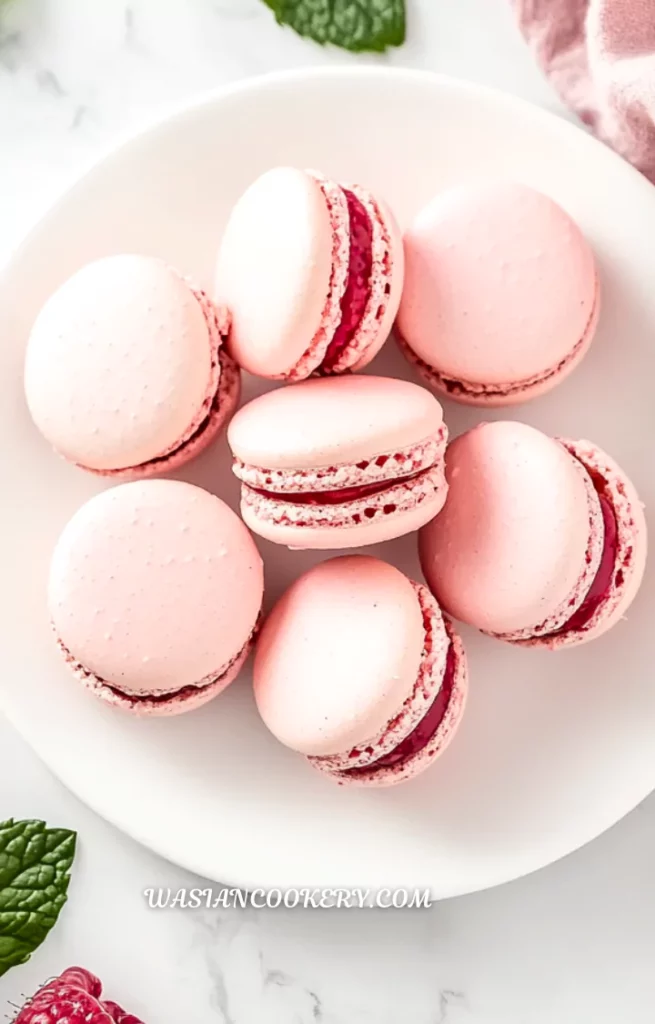
This recipe uses a French meringue made from egg whites and granulated sugar, folded with almond flour and powdered sugar. The filling combines butter, powdered sugar, raspberry puree or seedless jam, and vanilla. Careful mixing, dry shell surfaces, and full cooling make more difference than fancy equipment or decorations.
Plan to make these ahead. The working time is about 40 minutes, but two baking trays, shell resting, cooling, and at least 24 hours in the refrigerator bring the complete plan to about 27 hours. Macarons need attention and practice, so follow the texture cues instead of expecting every stage to finish at an exact minute.
Why This Dish Is Great
- Raspberry adds a bright fruit flavor that balances the sweet almond shells.
- The filling uses familiar buttercream ingredients and needs no cooked sugar syrup.
- The original batch makes about 20 sandwich cookies, depending on how large you pipe the shells.
- A day of refrigerated maturation helps the filling and shell textures come together.
- A simple pink shell is enough decoration for a pretty dessert plate or gift box.
- The jam option gives you raspberry flavor without needing to make a separate fruit sauce.
What Is the Best Almond Flour for Macarons?
Choose finely ground blanched almond flour rather than coarse almond meal with dark skin flecks. Large pieces make the surface rough and are harder to fold evenly through the meringue. Almond flour is not interchangeable with wheat flour or coconut flour here. Those ingredients absorb moisture differently and would need a different formula.
Use the printed gram weights for the shell powdered sugar, almond flour, and granulated sugar. Cup measurements vary with how a dry ingredient is scooped and how finely it is ground. Use three large egg whites, separating them carefully so no yolk enters the mixing bowl.
Ingredients
For the Macaron Shells
- 1 3/4 cups (175g) powdered sugar
- 1 cup (120g) almond flour
- 3 large egg whites, room temperature
- 1/4 cup (50g) granulated sugar
- 1/4 teaspoon cream of tartar (optional)
- A few drops of pink or red food coloring
For the Raspberry Buttercream Filling
- 1/2 cup unsalted butter, softened
- 1 1/2 cups powdered sugar
- 2 tablespoons raspberry puree or seedless raspberry jam
- 1/2 teaspoon vanilla extract
The powdered sugar appears twice because the shells and filling need separate portions. Keep them in separate bowls as you measure. Seedless raspberry jam is the simplest filling choice. If you choose the puree option, use a thick, smooth, cooled puree without excess watery juice; adding more than the stated 2 tablespoons can make the filling too loose.
Kitchen Equipment You Will Need
As an Amazon Associate I earn from qualifying purchases.
- Digital kitchen scale
- Measuring cups
- Measuring spoons
- Mixing bowls
- Fine-mesh sieve
- Electric hand mixer
- Silicone spatula
- Baking sheets
- Parchment paper
- Piping bags
- Round piping tips
- Toothpicks
- Oven thermometer
- Cooling rack
- Citrus zester
- Food storage containers
- Chef’s knife
- Cutting board
- Dessert plates
How To Make Raspberry Macarons
Step 1
Line two large baking sheets with parchment paper and prepare a piping bag with a round tip. Weigh the shell ingredients using the printed gram amounts where supplied. Sift the 175 g powdered sugar and 120 g almond flour together, pressing soft lumps through gently. Use finely ground flour so you do not have to discard a substantial part of the measured amount. Keep the filling sugar separate.
Step 2
Keep the egg whites refrigerated at 40°F or below until shortly before mixing. A brief warm-up of about 10 minutes while you prepare the dry ingredients is enough; never age them on the counter. Beat the whites in a clean, dry, grease-free bowl until frothy. Add the optional cream of tartar, continue to soft peaks, then gradually add the 50 g granulated sugar while beating. Stop at glossy, firm peaks that stand up; avoid a dry, clumpy meringue. Do not taste raw meringue, and wash your hands and utensils after handling raw egg.
Step 3
Mix in a few drops of pink or red food coloring just until the color is even. A concentrated gel color limits added liquid. Do not keep adding liquid coloring in pursuit of a very dark shade, because excess moisture can change the shell batter.
Step 4
Fold the sifted dry ingredients into the meringue in additions with a silicone spatula. Scrape around the bowl and fold through the center, pressing gently against the side as the mixture loosens. Stop when the batter falls in a continuous ribbon and gradually settles back into the surface. Check frequently near the end; batter that runs like water is overmixed.
Step 5
Transfer the batter to the piping bag. Hold it upright and pipe about forty 1.5-inch rounds across the two lined sheets, leaving about 1 inch between rounds. This gives about 20 filled macarons; the exact count depends on piping size. Tap each sheet firmly on the counter to release air bubbles, then use a clean toothpick to pop visible surface bubbles.
Step 6
Let the shells stand uncovered for 30–60 minutes in a cool, dry room until their tops feel dry and do not stick to a light touch. Track the egg whites’ total time out of refrigeration, including warm-up, mixing, resting, and the second tray waiting for the oven. Keep that time under 2 hours, or under 1 hour above 90°F. If the shells cannot dry within that limit, discard the raw batch and try again in cooler, drier conditions rather than extending the counter rest.
Step 7
Preheat the oven to 300°F (150°C) during the shell rest, with the rack near the center. Check the temperature with an oven thermometer if your oven runs unevenly. Have the oven fully heated before the first tray is ready so the raw batter does not wait through an extra preheating period.
Step 8
Bake one tray at a time for 13–15 minutes per tray, about 30 minutes for two trays. The raised bases should have small ruffled feet, and a top nudged very gently should not slide around on its base. If still loose, bake a little longer and check again. Cool completely on the sheets before peeling off the parchment, allowing about 30 minutes after the final tray comes out; extend cooling if necessary. Sticky warm shells can tear, so do not rush removal.
Step 9
For the filling, beat the softened unsalted butter in a clean bowl until creamy. The butter should dent under gentle pressure but should not be melted or oily. Scrape the bowl so no hard pieces remain.
Step 10
Add the filling’s 1 1/2 cups powdered sugar gradually on low speed, then beat until smooth and fluffy. Pause to scrape the bowl. If the sugar is lumpy, sift it first so the filling will pass smoothly through the piping tip.
Step 11
Beat in the 2 tablespoons raspberry puree or seedless raspberry jam and the 1/2 teaspoon vanilla. Use thick, cool puree rather than a watery liquid, or choose the listed jam option for an easier consistency. The filling should hold a small mound. If warm and soft, chill for 15–20 minutes, then stir; that optional chill adds to the total time.
Step 12
Pair completely cool shells of similar size. Pipe a small mound of filling onto the flat side of one shell and gently press its partner on top. Stop when the filling approaches the edge; do not squeeze hard enough to crack the shells. Divide the filling among the pairs rather than overfilling the first few.
Step 13
Place the filled macarons in a covered container and refrigerate at 40°F or below for 24–48 hours to mature. Allow about 20 minutes out of the refrigerator before serving. The planned total is about 27 hours with 40 minutes active preparation and assembly, 60 minutes shell resting, 30 minutes baking two trays, 30 minutes cooling, 24 hours refrigerated maturation, and 20 minutes before serving. A 48-hour maturation makes the same plan about 51 hours; extra chilling, baking, or trays adds time.
Notes
- Keep yolk and grease out of the egg whites. Clean, dry beaters and a clean bowl help the whites hold air.
- If you separate the eggs a day ahead, cover the whites and refrigerate them. Overnight countertop aging is not part of this recipe.
- Use the batter’s flow as your guide. Counting folds alone cannot account for different mixing strength or meringue texture.
- Pipe onto cool sheets. A warm sheet can make one tray behave differently from the next.
- Check the dry surface with a very light touch near the edge of a shell so you do not dent it.
- Cool each baking sheet on a rack. Peel the paper away gently once the shells are fully cool instead of pulling upward on delicate tops.
- Keep a short note of your oven temperature and baking time for future batches; hollow centers and cracks can have several causes.
Ingredients You Can Add
- A tiny amount of finely crushed freeze-dried raspberry can decorate the filled cookies at serving time.
- Small ready-made white chocolate curls look pretty beside the macarons on the plate.
- A few fresh raspberries served alongside add a tart contrast without wetting the shells.
- A light scattering of finely chopped pistachios on the plate adds color; keep nuts clearly identified for guests.
- A little lemon zest can flavor the filling as a separate optional variation, without adding more liquid puree.
- A few small sprinkles on the finished serving plate give a festive look without weighing down raw shells.
What To Serve with Raspberry Macarons
A cup of tea or coffee is enough beside a few macarons. For a fruit-themed assortment, add White Chocolate Raspberry Cookies. Their softer baked texture gives the plate variety while keeping the raspberry flavor running through the selection.
For a celebration, arrange macarons beside Chocolate Covered Strawberries. Keep the berries on their own small plate so their moisture does not soften the macaron shells. Take out modest portions and replenish from the refrigerator when needed.
A few Red Velvet Cupcakes make a pretty larger dessert table. Macarons are small enough to enjoy alongside a slice or a cupcake. If packing them as a gift, use a firm container and keep it chilled until it is handed over.
Variations and Swaps
- Jam filling: Choose the listed seedless raspberry jam for a smoother filling with less preparation.
- Puree filling: Use the listed thick, cool raspberry puree when you prefer a fresh fruit flavor.
- Pale shells: Use only a little coloring for a soft pink shade instead of chasing a dark red.
- Matching pairs: Pair shells by size before filling so slightly different circles still look tidy.
- Simple piping: Use a round tip for both batter and filling, washing and drying it between uses.
- Lemon accent: Add a little finely grated lemon zest to the filling for a citrus variation; use a zester and avoid the bitter white pith.
- Plain presentation: Leave decorations off the shells and serve fresh berries on the side.
- Separate-shell storage: Freeze fully cooled unfilled shells in a protected container, then thaw covered in the refrigerator before filling. Still allow the filled cookies their maturation time.
How To Store
Keep filled macarons in a covered container in the refrigerator at 40°F or below and use within 3–4 days, counting the maturation period as part of that time. Arrange them carefully so they do not crush one another, with parchment between layers if necessary. Take out only the portion you plan to serve about 20 minutes ahead, then return leftovers promptly.
For longer storage, freeze unfilled, fully cooled shells for up to 1 month for best quality in a sturdy covered container. Thaw them covered in the refrigerator to limit condensation on the surface, then fill and mature as usual. Do not leave the raspberry buttercream or filled cookies in a warm room for long periods; keep total serving time under 2 hours, or 1 hour above 90°F.
FAQ
Do I need to age the egg whites overnight?
No countertop aging is needed. Keep the whites refrigerated until a brief warm-up before mixing. If separating them in advance, keep them covered in the refrigerator. The long rest in this recipe belongs to the filled macarons in the refrigerator.
Why did the shells crack?
A wet surface, trapped bubbles, or an oven that is too hot can contribute. Tap the trays, pop visible bubbles, check the dry skin, and verify the oven temperature. Do not assume a longer counter rest is always the answer.
How do I know when to stop folding?
The batter should fall from the spatula in a continuous ribbon and slowly blend back into the bowl. If it drops in stiff chunks, it needs more folding. If it is thin and runs rapidly, it may already be overmixed.
Why are my macarons hollow?
Meringue texture, folding, and oven heat can all play a role. A hollow shell does not identify one single mistake. Check one variable at a time on another batch instead of changing the ingredient amounts and oven temperature together.
Why are the shells sticking to the paper?
First let them cool completely. Warm shells are fragile and often stick. If fully cooled shells remain wet underneath, the next tray may need slightly longer baking. Avoid pulling hard on the tops and breaking the shells.
Does the total include the overnight rest?
Yes. The 27-hour plan includes a full 24-hour refrigerator maturation and two baking trays. Choosing 48 hours of maturation makes it about 51 hours. Resting, cooling, or baking beyond the listed allowances adds more time.
Short Description
Delicate almond macaron shells with raspberry buttercream, baked in two trays and matured in the refrigerator for a softly chewy center.
Raspberry Macarons
Course: DessertCuisine: FrenchDifficulty: Easy20
macarons40
minutes30
minutes27
hoursDelicate almond macaron shells with raspberry buttercream, baked in two trays and matured in the refrigerator for a softly chewy center.
Ingredients
- For the Macaron Shells:
1 3/4 cups (175g) powdered sugar
1 cup (120g) almond flour
3 large egg whites, room temperature
1/4 cup (50g) granulated sugar
1/4 teaspoon cream of tartar (optional)
A few drops of pink or red food coloring
- For the Raspberry Buttercream Filling:
1/2 cup unsalted butter, softened
1 1/2 cups powdered sugar
2 tablespoons raspberry puree or seedless raspberry jam
1/2 teaspoon vanilla extract
Directions
- Prepare the Macaron Shells:
- Line two large baking sheets with parchment paper and prepare a piping bag with a round tip. Weigh the shell ingredients using the printed gram amounts where supplied. Sift the 175 g powdered sugar and 120 g almond flour together, pressing soft lumps through gently. Use finely ground flour so you do not have to discard a substantial part of the measured amount. Keep the filling sugar separate.
- Keep the egg whites refrigerated at 40°F or below until shortly before mixing. A brief warm-up of about 10 minutes while you prepare the dry ingredients is enough; never age them on the counter. Beat the whites in a clean, dry, grease-free bowl until frothy. Add the optional cream of tartar, continue to soft peaks, then gradually add the 50 g granulated sugar while beating. Stop at glossy, firm peaks that stand up; avoid a dry, clumpy meringue. Do not taste raw meringue, and wash your hands and utensils after handling raw egg.
- Mix in a few drops of pink or red food coloring just until the color is even. A concentrated gel color limits added liquid. Do not keep adding liquid coloring in pursuit of a very dark shade, because excess moisture can change the shell batter.
- Fold the sifted dry ingredients into the meringue in additions with a silicone spatula. Scrape around the bowl and fold through the center, pressing gently against the side as the mixture loosens. Stop when the batter falls in a continuous ribbon and gradually settles back into the surface. Check frequently near the end; batter that runs like water is overmixed.
- Transfer the batter to the piping bag. Hold it upright and pipe about forty 1.5-inch rounds across the two lined sheets, leaving about 1 inch between rounds. This gives about 20 filled macarons; the exact count depends on piping size. Tap each sheet firmly on the counter to release air bubbles, then use a clean toothpick to pop visible surface bubbles.
- Let the shells stand uncovered for 30–60 minutes in a cool, dry room until their tops feel dry and do not stick to a light touch. Track the egg whites’ total time out of refrigeration, including warm-up, mixing, resting, and the second tray waiting for the oven. Keep that time under 2 hours, or under 1 hour above 90°F. If the shells cannot dry within that limit, discard the raw batch and try again in cooler, drier conditions rather than extending the counter rest.
- Bake the Macarons:
- Preheat the oven to 300°F (150°C) during the shell rest, with the rack near the center. Check the temperature with an oven thermometer if your oven runs unevenly. Have the oven fully heated before the first tray is ready so the raw batter does not wait through an extra preheating period.
- Bake one tray at a time for 13–15 minutes per tray, about 30 minutes for two trays. The raised bases should have small ruffled feet, and a top nudged very gently should not slide around on its base. If still loose, bake a little longer and check again. Cool completely on the sheets before peeling off the parchment, allowing about 30 minutes after the final tray comes out; extend cooling if necessary. Sticky warm shells can tear, so do not rush removal.
- Make the Raspberry Buttercream Filling:
- For the filling, beat the softened unsalted butter in a clean bowl until creamy. The butter should dent under gentle pressure but should not be melted or oily. Scrape the bowl so no hard pieces remain.
- Add the filling’s 1 1/2 cups powdered sugar gradually on low speed, then beat until smooth and fluffy. Pause to scrape the bowl. If the sugar is lumpy, sift it first so the filling will pass smoothly through the piping tip.
- Beat in the 2 tablespoons raspberry puree or seedless raspberry jam and the 1/2 teaspoon vanilla. Use thick, cool puree rather than a watery liquid, or choose the listed jam option for an easier consistency. The filling should hold a small mound. If warm and soft, chill for 15–20 minutes, then stir; that optional chill adds to the total time.
- Assemble the Macarons:
- Pair completely cool shells of similar size. Pipe a small mound of filling onto the flat side of one shell and gently press its partner on top. Stop when the filling approaches the edge; do not squeeze hard enough to crack the shells. Divide the filling among the pairs rather than overfilling the first few.
- Place the filled macarons in a covered container and refrigerate at 40°F or below for 24–48 hours to mature. Allow about 20 minutes out of the refrigerator before serving. The planned total is about 27 hours with 40 minutes active preparation and assembly, 60 minutes shell resting, 30 minutes baking two trays, 30 minutes cooling, 24 hours refrigerated maturation, and 20 minutes before serving. A 48-hour maturation makes the same plan about 51 hours; extra chilling, baking, or trays adds time.
Notes
- The planned 27-hour total includes 40 minutes active preparation and assembly, 60 minutes shell resting, 30 minutes baking two trays, 30 minutes cooling, 24 hours refrigerated maturation, and 20 minutes before serving. A 48-hour maturation makes the same plan about 51 hours. Additional baking, trays, or an optional filling chill adds time.
- Keep egg whites refrigerated at 40°F or below until shortly before mixing. Do not age them on the counter. Keep cumulative time out, including mixing, shell resting, and waiting for the oven, under 2 hours, or 1 hour above 90°F. Work in a cool, dry room; discard raw batter if the limit is exceeded.
- Use the printed gram weights for the shell dry ingredients and three large egg whites. The yield is about 20 filled macarons, depending on piping size.
- Refrigerate filled cookies at 40°F or below and use within 3–4 days including maturation. Freeze cooled unfilled shells up to 1 month for quality, thaw covered in the refrigerator, then fill and mature.