Oatmeal Raisin Cookies Recipe
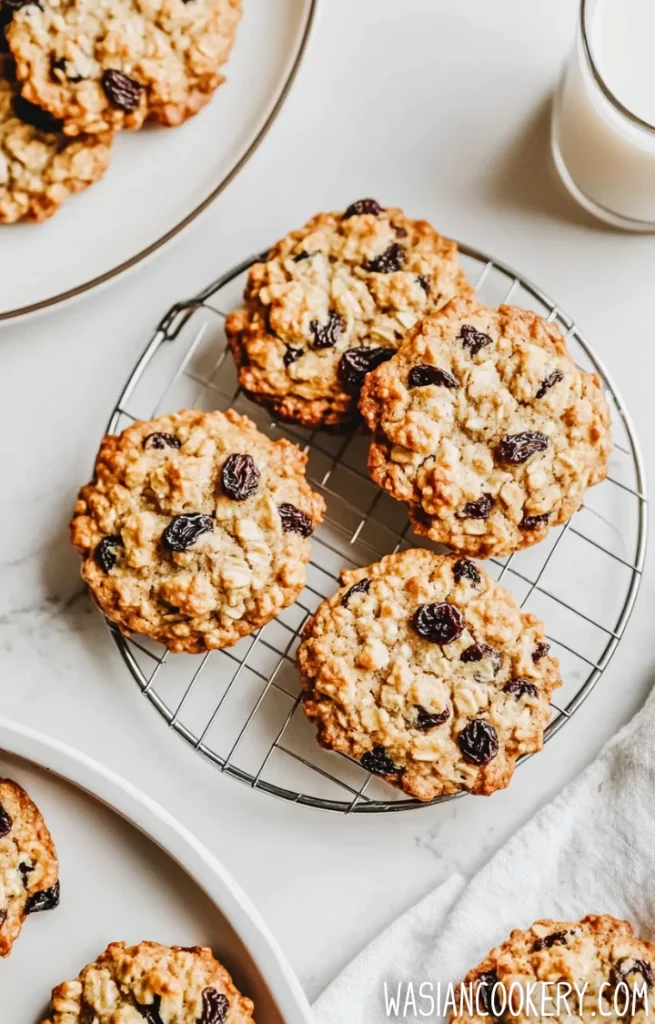
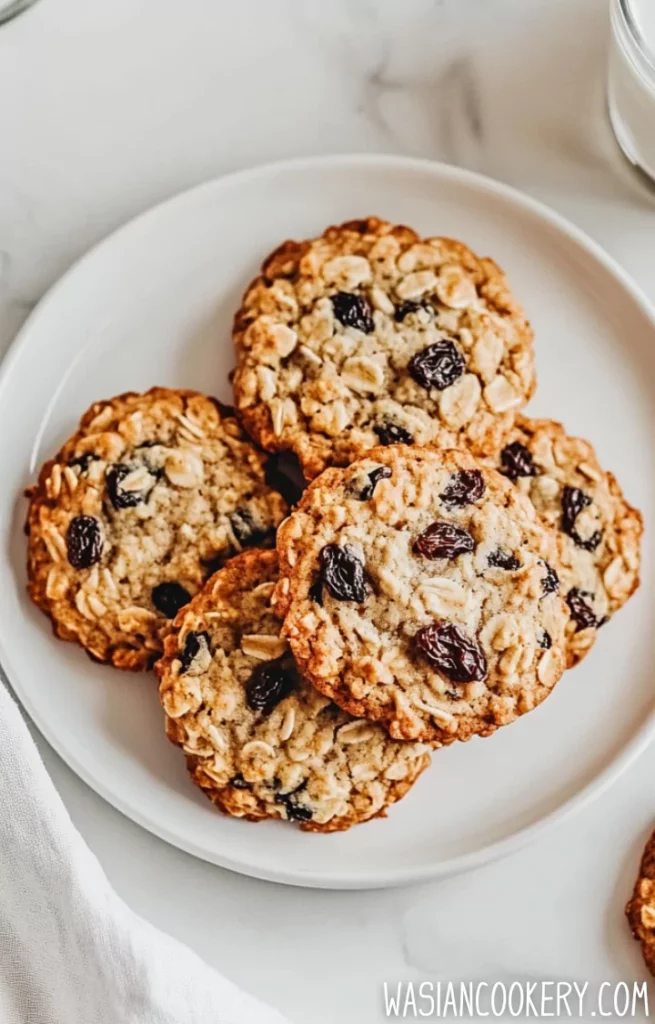
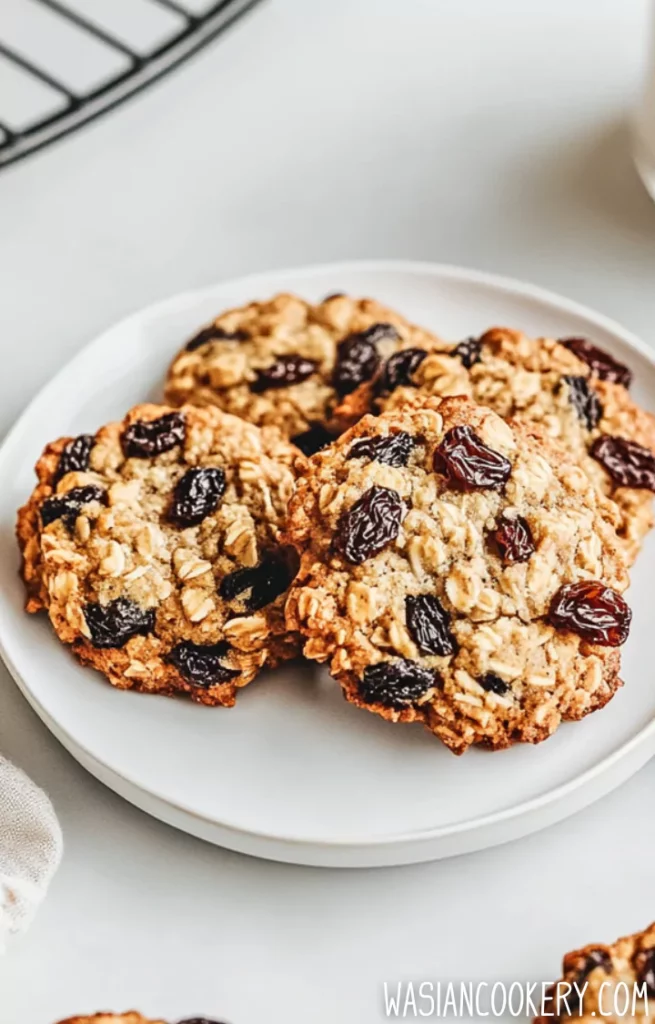
I love oatmeal raisin cookies for their chewy oats, sweet raisins, and warm cinnamon flavor. This recipe brings back memories of cozy afternoons, with a simple dough and familiar ingredients. A cookie with a cold glass of milk is such a lovely little break.
The combination of oats, butter, and brown sugar creates the soft, chewy texture that makes these cookies so comforting. The dough is easy to mix, but the small details matter: softened butter, carefully measured flour, equal portions, and enough room on the baking sheet.
I serve these Oatmeal Raisin Cookies with a cold glass of milk or a hot cup of coffee for a cozy snack. They are also easy to pack once completely cool. The recipe makes 24 generous cookies, with clear portioning and time for every batch to bake.
Why These Cookies Are Great
- Old-fashioned rolled oats give a hearty texture that stays noticeable in every bite, even after the cookies have cooled.
- Brown sugar and white sugar work together for a sweet, buttery cookie with soft centers and lightly golden edges.
- Raisins add little chewy bursts of sweetness that pair naturally with the cinnamon already mixed into the dough.
- The recipe uses pantry ingredients and a straightforward mixing method, making it approachable when you want a familiar homemade treat.
- Dividing the dough equally makes the cookies bake more evenly and keeps the stated batch size clear.
- Cooled cookies freeze well, so you can put a few away for another day instead of leaving the whole batch on the counter.
What Are the Best Oats for Oatmeal Raisin Cookies?
Use the old-fashioned rolled oats listed in the recipe. They keep their shape and give the cookies a pleasantly chewy bite. Steel-cut oats are too hard for this quick baking method, while instant oatmeal packets have a different texture and may bring added sugar or flavorings.
Choose raisins that feel pliable rather than hard and dried out. Separate any clumps before folding them in so one cookie does not end up with all the fruit. If your raisins are very tough, a fresher package gives a more predictable dough than adding extra soaking water to this formula.
Ingredients
- 1 cup (230g) unsalted butter, softened
- 1 cup (200g) brown sugar, packed
- 1/2 cup (100g) granulated sugar
- 2 large eggs
- 1 tsp vanilla extract
- 1 1/2 cups (190g) all-purpose flour
- 1 tsp baking soda
- 1/2 tsp salt
- 1 1/2 tsp ground cinnamon
- 3 cups (240g) old-fashioned rolled oats
- 1 cup (150g) raisins
Start with softened butter that gives slightly when pressed but still holds its shape. Melted or greasy butter can make the dough spread too much. Weigh the ingredients using the listed amounts if possible; otherwise spoon flour into the measuring cup and level it, and pack the brown sugar as directed. Keep the butter, sugars, flour, and oats in their stated balance.
Kitchen Equipment You Will Need
As an Amazon Associate I earn from qualifying purchases.
- Large baking sheets
- Parchment paper
- Mixing bowls
- Electric hand mixer
- Measuring cups
- Measuring spoons
- Kitchen scale
- Whisk
- Sturdy spatula
- Cookie scoop
- Thin cookie spatula
- Wire cooling rack
- Airtight storage containers
- Ice cream scoop
- Serving plate
- Kitchen knife
- Cutting board
- Food wrap
- Oven mitts
How To Make Oatmeal Raisin Cookies
Allow about 115 minutes for the full batch: 20 minutes of preparation, up to 72 minutes for four batches, about 3 minutes for tray changes, and 20 minutes for the last batch to cool. Earlier batches cool while later ones bake. This starts with softened butter; allow extra time to soften cold butter or to chill a very soft dough.
Step 1
Preheat the oven to 350°F (175°C) with a rack in the center. Line two large 13×18-inch baking sheets with parchment paper. Plan to bake one sheet at a time in four batches of six cookies, alternating the sheets so each can cool before reuse.
Step 2
In a large bowl, beat the softened butter, brown sugar, and granulated sugar with an electric mixer until creamy and a little fluffy, about 2–3 minutes. Scrape down the bowl. Beat in the eggs one at a time, then the vanilla, until well combined.
Step 3
In a separate bowl, whisk together the flour, baking soda, salt, and cinnamon. Add the dry mixture to the butter mixture and mix on low speed just until no dry flour remains. Scrape the sides and bottom of the bowl without continuing to beat the dough.
Step 4
Fold in the oats and raisins with a sturdy spatula until evenly distributed. The dough should be thick enough to scoop. If it feels very soft or greasy, cover and refrigerate it for 30 minutes before portioning; this optional chilling adds 30 minutes to the total.
Step 5
Divide the actual dough into 24 equal portions. About 50 g, or roughly 3 tablespoons per portion, is a planning estimate; dividing the whole dough equally controls the yield. Place six portions on a prepared sheet with about 3 inches between them. Gently flatten the tops to roughly ½-inch thickness. Keep the remaining dough covered in the refrigerator between batches.
Step 6
Bake one sheet at a time for about 14–18 minutes, beginning to check at 12 minutes. The edges should be golden and set, with centers that are soft but no longer wet or shiny with raw dough. Continue in short intervals if needed. Repeat for all four batches, using cooled sheets and keeping the same portion size and spacing.
Step 7
Let each batch stand on its baking sheet for 5 minutes, then use a thin spatula to transfer the cookies to a wire rack. Allow about 15 minutes more for the final batch to cool, or longer until completely cool before sealing in a container. The full-batch timing is about 115 minutes with softened butter, including baking, tray changes, and cooling; optional chilling or extra baking adds time.
Notes
- Cream the butter and sugars until smoothly blended and slightly fluffy. Very long beating is unnecessary and can make the dough spread differently.
- Scrape the bowl after adding the eggs. Butter stuck at the bottom can leave greasy pockets if it does not mix into the dough.
- Stop mixing once the flour disappears. Folding in the oats and raisins finishes the mixing without overworking the flour.
- Use the whole dough to make 24 equal portions. The approximate weight is a guide, not a reason to leave a small amount of dough unused.
- Give the cookies generous space. If your sheets are smaller, use fewer cookies per batch and allow extra baking rounds.
- Use a completely cool sheet for each new batch. A hot sheet begins melting the butter before the cookies enter the oven.
- Do not taste raw dough, which contains uncooked flour and eggs. Bake until the cookies are set, then give them their cooling time before eating.
Ingredients You Can Add
For a small flavor change, choose just one idea. Keep the base recipe as written the first time. Bulky additions are easiest to manage by replacing part of the raisins rather than piling a large amount of extra ingredients into the dough.
- Chocolate chips can replace some raisins for a mix of fruity sweetness and chocolate.
- Chopped walnuts add crunch when used in place of a little of the fruit.
- Chopped pecans give a buttery flavor alongside the oats and cinnamon.
- Dried cranberries bring a tangy note when substituted for some raisins.
- Unsweetened shredded coconut adds another chewy texture in a small amount.
- A pinch of ground nutmeg adds warmth without changing the dough consistency.
What To Serve With Oatmeal Raisin Cookies
These cookies are lovely slightly warm after their first cooling rest, with milk, tea, or coffee. For a chilled afternoon drink, peach tea brings a fruity flavor beside the cinnamon and raisins. Let the cookies firm up before moving them onto a serving plate.
For an indulgent twist, crumble a cooled cookie over ice cream, or make a small sandwich using two completely cool cookies. Strawberry shortcake ice cream offers a fruity filling. Assemble only what you are ready to eat, or return the sandwiches to the freezer promptly.
For a mixed cookie plate, pair these with classic chocolate chip cookies. The oatmeal cookies add a different texture without needing decoration. Keep a few plain cookies in the assortment if you have chosen nuts or other optional additions for only part of the dough.
Variations and Swaps
- Golden raisins: use them for all or part of the listed raisins. They give a milder fruit flavor while keeping the same basic cookie style.
- Chocolate and raisin: replace part of the raisins with chocolate chips, keeping the total fruit-and-chip volume to the original amount.
- Cranberry and walnut: replace a little of the raisin amount with dried cranberries and chopped walnuts. Larger nut pieces can make portioning less even.
- Coconut: replace a small portion of the raisins with unsweetened coconut. Too much can make the dough drier, so keep the change modest.
- Extra spice: add a small pinch of nutmeg or ginger alongside the cinnamon. Strong spices can overwhelm the raisins, so a little goes a long way.
- Darker brown sugar: use the same listed quantity for a deeper molasses flavor. Keep the granulated sugar amount unchanged.
- Crisper edges: bake toward the longer end of the range, watching carefully. Do not wait until the entire cookie is dark, which can make the centers dry.
- Smaller cookies: divide into more portions and begin checking earlier. The yield, number of baking rounds, and total time will differ from the 24-cookie version.
Storage
Cool the cookies completely on the rack before putting them in an airtight container. Warm cookies trap steam and can become sticky when sealed. Keep plain baked cookies at room temperature for about 3–4 days for best quality, away from heat and direct sun. Store them separately from crisp cookies if you want each kind to keep its own texture.
For longer storage, freeze completely cool cookies in a freezer-safe container for up to 3 months for best quality. Separate layers with parchment so you can remove a few at a time. Thaw only the portions you need at room temperature. Ice-cream sandwiches need freezer storage and should not follow the room-temperature instructions for plain cookies.
FAQ
Why did my cookies spread too much?
Butter that was too warm, too little flour, or a hot baking sheet can cause spreading. Chill a very soft dough for 30 minutes and use a cool sheet, while keeping the measured ingredients unchanged.
Why are my cookies dry?
Too much flour or too much baking are common causes. Measure carefully and look for set golden edges with soft, baked centers. The cookies continue firming as they cool, so they need not feel crisp in the oven.
Can I use quick oats?
Quick oats give a finer, softer texture because they are cut smaller. Old-fashioned rolled oats are the intended choice here. Do not substitute steel-cut oats or flavored instant oatmeal packets.
Why are there more than 24 cookies when I use a tablespoon?
Small tablespoon portions make more cookies from this amount of dough. For the stated yield, divide all the dough into 24 equal pieces. The larger portions also need the cue-led baking window given above.
Can I make these gluten-free?
Use a recipe developed for gluten-free flour and certified gluten-free oats. A direct flour replacement can change spreading and texture, so it is not a guaranteed swap for this exact dough.
Can I replace the eggs or butter?
Those ingredients affect the structure, moisture, and spread. Plant-based spreads, oil, or egg substitutes can behave differently, so use a recipe designed for those choices instead of assuming they will give the same result here.
Short Description
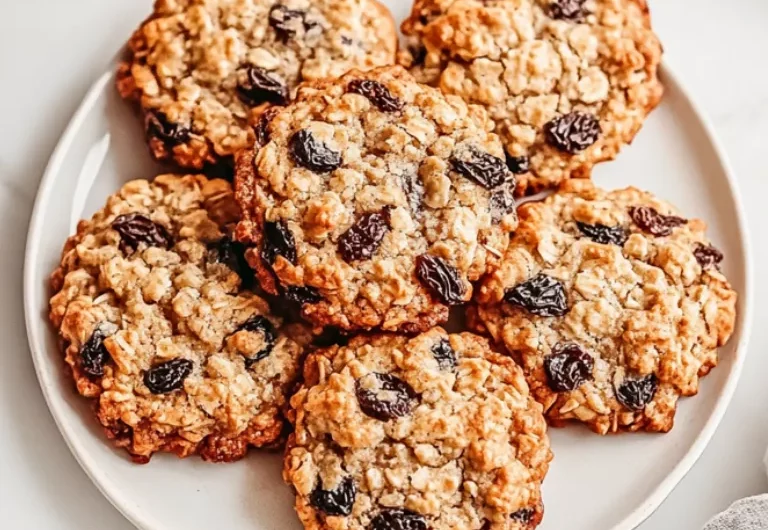
Soft, chewy oatmeal raisin cookies combine rolled oats, brown sugar, butter, and cinnamon for a comforting homemade treat.
Oatmeal Raisin Cookies Recipe
Course: DessertCuisine: AmericanDifficulty: Easy24
cookies20
minutes1
hour12
minutes1
hour55
minutesSoft, chewy oatmeal raisin cookies combine rolled oats, brown sugar, butter, and cinnamon for a comforting homemade treat.
Ingredients
1 cup (230g) unsalted butter, softened
1 cup (200g) brown sugar, packed
1/2 cup (100g) granulated sugar
2 large eggs
1 tsp vanilla extract
1 1/2 cups (190g) all-purpose flour
1 tsp baking soda
1/2 tsp salt
1 1/2 tsp ground cinnamon
3 cups (240g) old-fashioned rolled oats
1 cup (150g) raisins
Directions
- Preheat the oven to 350°F (175°C) with a rack in the center. Line two large 13×18-inch baking sheets with parchment paper. Plan to bake one sheet at a time in four batches of six cookies, alternating the sheets so each can cool before reuse.
- In a large bowl, beat the softened butter, brown sugar, and granulated sugar with an electric mixer until creamy and a little fluffy, about 2–3 minutes. Scrape down the bowl. Beat in the eggs one at a time, then the vanilla, until well combined.
- In a separate bowl, whisk together the flour, baking soda, salt, and cinnamon. Add the dry mixture to the butter mixture and mix on low speed just until no dry flour remains. Scrape the sides and bottom of the bowl without continuing to beat the dough.
- Fold in the oats and raisins with a sturdy spatula until evenly distributed. The dough should be thick enough to scoop. If it feels very soft or greasy, cover and refrigerate it for 30 minutes before portioning; this optional chilling adds 30 minutes to the total.
- Divide the actual dough into 24 equal portions. About 50 g, or roughly 3 tablespoons per portion, is a planning estimate; dividing the whole dough equally controls the yield. Place six portions on a prepared sheet with about 3 inches between them. Gently flatten the tops to roughly ½-inch thickness. Keep the remaining dough covered in the refrigerator between batches.
- Bake one sheet at a time for about 14–18 minutes, beginning to check at 12 minutes. The edges should be golden and set, with centers that are soft but no longer wet or shiny with raw dough. Continue in short intervals if needed. Repeat for all four batches, using cooled sheets and keeping the same portion size and spacing.
- Let each batch stand on its baking sheet for 5 minutes, then use a thin spatula to transfer the cookies to a wire rack. Allow about 15 minutes more for the final batch to cool, or longer until completely cool before sealing in a container. The full-batch timing is about 115 minutes with softened butter, including baking, tray changes, and cooling; optional chilling or extra baking adds time.
Notes
- Divide all the actual dough into 24 equal portions; about 50 g or roughly 3 tablespoons is only a planning estimate.
- Bake four batches of six on large sheets, one sheet at a time. Timing includes tray changes and cooling; optional 30-minute chilling and butter softening are additional.
- Let each batch stand 5 minutes on its sheet, then transfer to a rack. Cool completely before airtight storage.
- Store plain baked cookies airtight for about 3–4 days at room temperature for best quality, or freeze up to 3 months. Do not eat raw dough.