Italian Pastina Soup Recipe
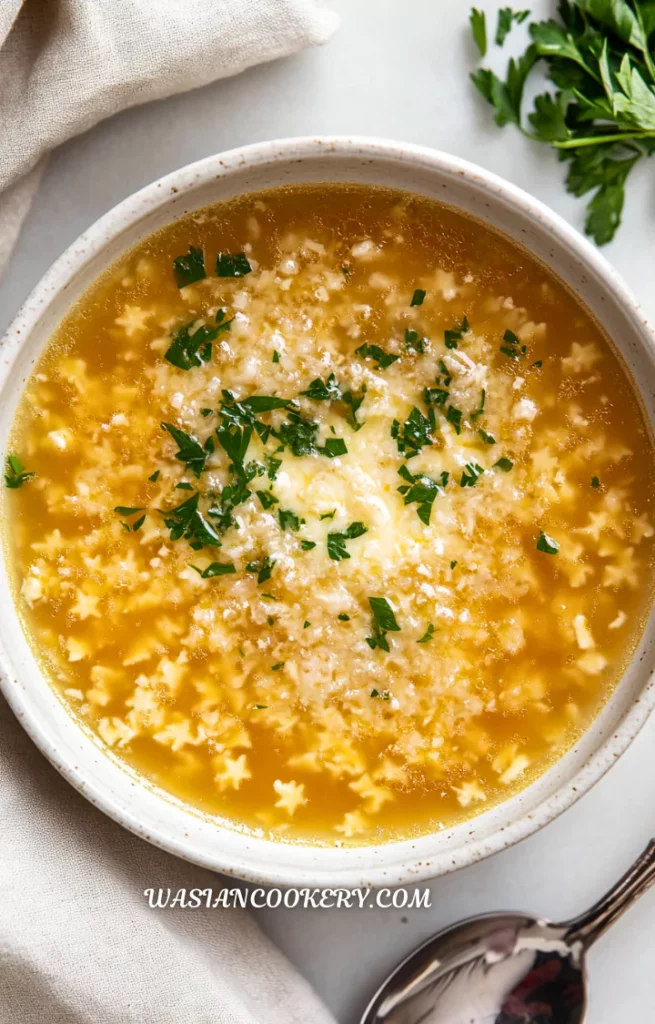
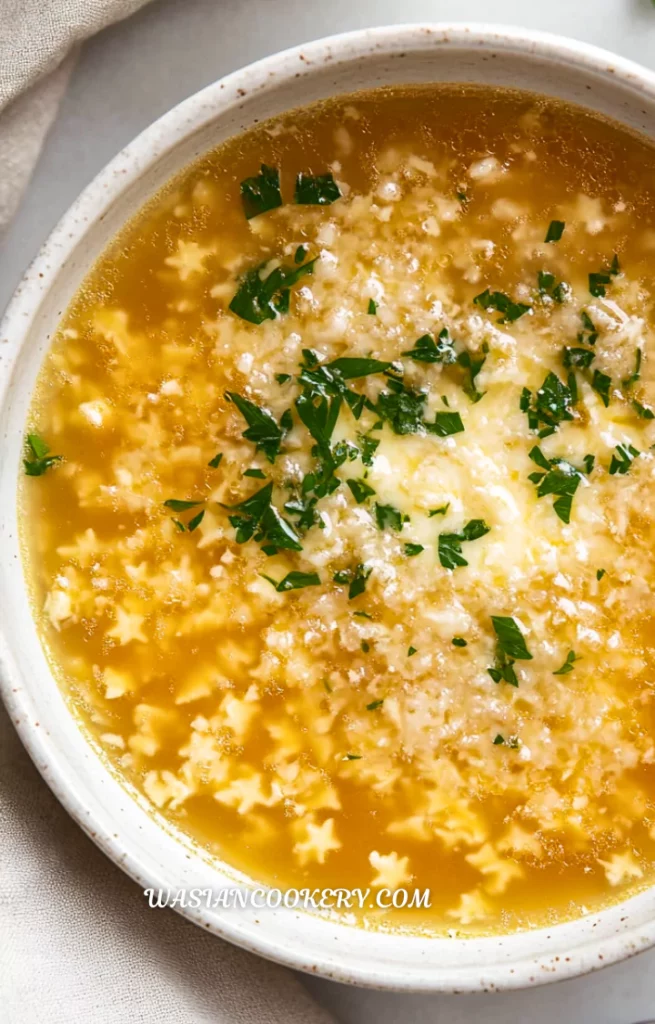
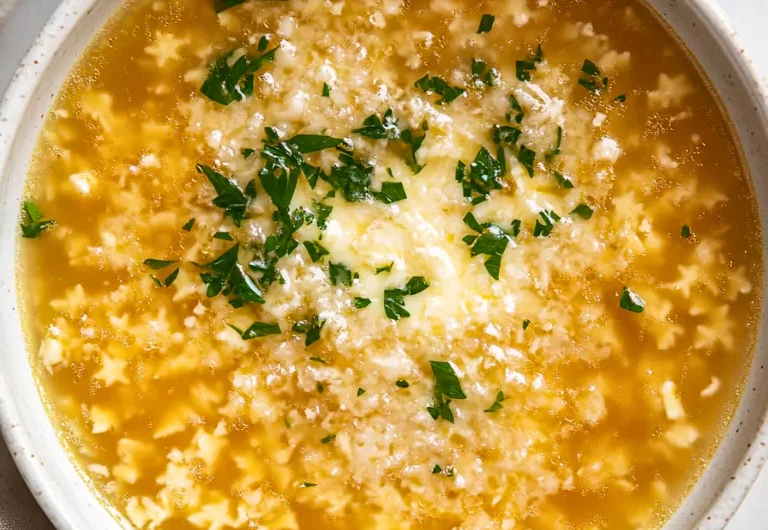
I love how Italian Pastina Soup turns a small handful of everyday ingredients into a warm, comforting bowl. Tiny pasta cooks right in the chicken broth, then butter and grated cheese soften the flavor. The optional egg adds delicate ribbons without making the soup complicated.
This version is pleasantly brothy, with enough room for the little pasta shapes to move around your spoon. The most useful trick is to have the butter, cheese, and optional egg ready before the pasta finishes. Pastina cooks quickly and keeps softening once the pot leaves the heat.
It makes four servings for lunch or a simple supper, with about 25 minutes allowed from preparation to serving. For a longer-simmered dinner with larger pieces of meat, Beef Noodle Soup is another option. This bowl keeps the focus on broth, tiny pasta, and a gentle cheese finish.
Why This Dish Is Great
- A short ingredient list: Broth, pasta, butter, and cheese provide the base without a long shopping list.
- One cooking pot: Cooking the pastina in the broth keeps the method simple and lets the pasta pick up its flavor.
- An optional egg: You can add the original egg for ribbons or leave it out without changing the basic method.
- A flexible finish: Parmesan or Pecorino, black pepper, and parsley let you adjust each bowl to your taste.
- Easy portions: A ladle and a gentle stir help distribute the pasta evenly instead of leaving it at the bottom.
- Useful pantry cooking: Dry tiny pasta and a carton of broth can become a quick meal when fresh ingredients are limited.
Choosing Pastina And Broth
Pastina means very small pasta, and tiny stars are a lovely choice here. Small shapes do not all cook at the same speed. Read the package before starting, especially if you are using orzo or another larger substitute. Measure the pasta dry so the balance of pasta and broth stays consistent.
The broth supplies most of the flavor, so choose one you enjoy on its own. Homemade and store-bought chicken broth both work. A lower-sodium broth leaves more room for the salty cheese. Taste the finished soup before adding salt; the amount needed depends on both the broth and the cheese.
Ingredients
- 6 cups chicken broth (homemade or store-bought)
- ¾ cup pastina (tiny star-shaped pasta or any small pasta)
- 1 tablespoon butter
- 1 egg (optional)
- Grated Parmesan or Pecorino cheese (to taste)
- Salt and pepper (to taste)
- Fresh parsley (optional, for garnish)
The ¾ cup pastina is measured before cooking, and all 6 cups chicken broth go into the pot. The single egg is optional. There is no fixed cheese quantity: add it to taste, starting modestly so the soup stays brothy.
Kitchen Equipment You Will Need
As an Amazon Associate I earn from qualifying purchases.
- Soup pot
- Measuring cups
- Measuring spoons
- Wooden spoon
- Small mixing bowl
- Whisk
- Fine cheese grater
- Food thermometer
- Ladle
- Colander
How To Make Italian Pastina Soup
Plan for about 5 minutes of preparation and 20 minutes of cooking, or 25 minutes total. This allows time to heat the broth, cook the pasta, and safely finish the optional egg. A larger pasta shape may need longer than tiny stars.
Step 1:
Pour all 6 cups chicken broth into a soup pot with room for stirring. Bring it to a gentle boil over medium-high heat. Meanwhile, measure the dry pastina, grate the cheese, and have the butter ready.
Step 2:
Stir in the ¾ cup dry pastina. Return the broth to a gentle simmer and cook according to the package directions, usually about 6–8 minutes for tiny stars. Stir along the bottom occasionally so the pasta does not stick. Taste a piece to check that it is tender.
Step 3:
Reduce the heat to low and stir in the 1 tablespoon butter until it melts. Keep the soup hot while you prepare the optional egg, and stir gently so the small pasta shapes stay intact.
Step 4:
If using the 1 optional egg, beat it thoroughly in a small bowl. Bring the soup back to a gentle simmer and slowly drizzle in the egg while stirring. Continue cooking, stirring gently, until the egg ribbons are fully set and the soup reaches at least 160°F on a food thermometer. Allow about 1–2 minutes, checking temperature rather than relying on time alone. Skip this step if omitting the egg.
Step 5:
Turn off the heat. Gradually stir in grated Parmesan or Pecorino to taste, letting it soften into the broth. Taste, then add salt and pepper as needed. Avoid a hard boil after adding cheese.
Step 6:
Stir once before ladling so each of four bowls receives some pasta. Garnish with the optional parsley and extra cheese if desired. Serve promptly, because the pasta continues absorbing broth as it stands.
Notes
- Read the pasta label: The package time is a better guide than assuming every small shape takes the same number of minutes.
- Use a gentle simmer: Very active boiling can splash broth out of the pot and soften the small pasta too quickly.
- Stir the bottom: Tiny shapes settle easily. A slow sweep with the spoon keeps them moving without rough handling.
- Grate cheese finely: Small shreds soften more evenly. Sprinkle them in gradually rather than adding a compact mound.
- Beat the egg well: Combine the white and yolk before pouring so you get fine ribbons instead of a large piece of white.
- Check the egg temperature: Keep cooking after it goes in. Residual warmth alone is not the method for this soup.
- Serve without a long wait: Set bowls out before the final steps. Freshly cooked pastina has a more distinct texture than pasta held in hot broth.
Ingredients You Can Add
- Egg ribbons: Use the same optional 1 egg listed above, following the fully cooked method. It is not an additional egg.
- Frozen peas: Add them early enough to complete the package cooking time before the butter and cheese finish.
- Cooked chicken: Shredded chicken can make a fuller bowl. If it is refrigerated leftover chicken, heat it to 165°F throughout.
- Spinach: Stir clean, chopped leaves into the simmering soup and cook until wilted before adding cheese.
- Lemon zest: A little finely grated zest can brighten individual bowls without making the whole pot sharply acidic.
- Garlic powder: Add a light sprinkle to the hot broth if you want a mild garlic note, then taste before adding more.
What To Serve
Serve the soup in bowls while the pasta is freshly cooked. Give the pot a gentle stir each time you fill a bowl, since the pasta naturally settles toward the bottom. Let each serving cool to a comfortable eating temperature.
Toast or crusty bread is a simple side for dipping. For something crisp alongside, Tomato Cucumber Salad provides a fresh contrast to the warm broth and soft pasta.
Keep extra grated cheese and pepper at the table so each person can finish their own bowl. If you enjoy making different pasta soups, save Chicken Noodle Sujebi for a day when you feel like preparing hand-torn noodles.
Recipe Variations And Swaps
- Orzo or acini di pepe: Substitute another small dry pasta and follow its package timing. The finished soup may have a different thickness.
- Cooked rice: Add cooked rice to hot broth and heat it through instead of using the dry-pasta cooking step. Refrigerated leftover rice must reach 165°F.
- Vegetable broth: Use it for a meat-free base. If vegetarian suitability matters, choose a cheese labeled as made with vegetarian rennet.
- Olive oil finish: Olive oil can replace butter for a different flavor. For a dairy-free version, also omit the cheese or choose a suitable alternative.
- Cooked lentils: Stir in tender lentils for a fuller soup. Heat refrigerated leftovers to 165°F before adding the final cheese.
- Creamy broth: An optional splash of milk or cream softens the broth. Warm gently and avoid prolonged boiling after adding it.
- Tomato version: Simmer a little crushed tomato in the broth before the pasta goes in. Taste the acidity before deciding on cheese and pepper.
- Melty cheese: Mozzarella or fontina gives a stretchier texture than Parmesan. Add gradually off the heat and expect small strings rather than a perfectly clear broth.
How To Store
Transfer leftovers to shallow containers and refrigerate promptly at 40°F or below, within 2 hours of cooking, or 1 hour when the room or outdoor temperature is above 90°F. Use within 3 days. Do not leave the pot on the counter until completely cool.
Pastina absorbs broth during storage, so leftovers will be thicker and softer. Add a little broth or water while reheating if needed. Stir over moderate heat until the soup reaches 165°F throughout; bring the broth to a brief boil. Reheat only the portion needed and serve promptly.
FAQ
Can I leave out the egg?
Yes. The egg is optional. Melt in the butter, skip the egg step, and finish with cheese and seasoning. The soup will still have its original pasta and broth base.
Why did my pasta turn mushy?
Tiny pasta cooks quickly and continues softening in hot broth. Check it at the package time, then complete the finish and serve without holding the pot on the stove.
Can I cook the pastina separately?
Yes, especially if you want to store broth and pasta apart. Follow the pasta package method, drain it, and combine with the hot broth near serving. The broth will be less starchy.
Why did the cheese clump?
A large handful can gather into a lump before it disperses. Use finely grated cheese and add it gradually after switching off the heat, stirring as you go.
Does this make a thick pasta dish?
The original ratio makes a soup. It becomes thicker as it sits, but it is meant to have broth around the pasta rather than the texture of a risotto.
Can I prepare everything ahead?
Measure the pasta and butter and grate the cheese ahead, keeping perishable ingredients refrigerated. Cook the pasta close to serving for the best texture. Keep the optional egg refrigerated until needed.
Short Description
Italian Pastina Soup is a simple bowl of tiny pasta, chicken broth, butter, and grated cheese, with an optional fully cooked egg stirred in as delicate ribbons.
Italian Pastina Soup
Course: SoupsCuisine: ItalianDifficulty: Easy4
servings5
minutes20
minutes25
minutesItalian Pastina Soup is a simple bowl of tiny pasta, chicken broth, butter, and grated cheese, with an optional fully cooked egg stirred in as delicate ribbons.
Ingredients
6 cups chicken broth (homemade or store-bought)
¾ cup pastina (tiny star-shaped pasta or any small pasta)
1 tablespoon butter
1 egg (optional)
Grated Parmesan or Pecorino cheese (to taste)
Salt and pepper (to taste)
Fresh parsley (optional, for garnish)
Directions
- Pour all 6 cups chicken broth into a soup pot with room for stirring. Bring it to a gentle boil over medium-high heat. Meanwhile, measure the dry pastina, grate the cheese, and have the butter ready.
- Stir in the ¾ cup dry pastina. Return the broth to a gentle simmer and cook according to the package directions, usually about 6–8 minutes for tiny stars. Stir along the bottom occasionally so the pasta does not stick. Taste a piece to check that it is tender.
- Reduce the heat to low and stir in the 1 tablespoon butter until it melts. Keep the soup hot while you prepare the optional egg, and stir gently so the small pasta shapes stay intact.
- If using the 1 optional egg, beat it thoroughly in a small bowl. Bring the soup back to a gentle simmer and slowly drizzle in the egg while stirring. Continue cooking, stirring gently, until the egg ribbons are fully set and the soup reaches at least 160°F on a food thermometer. Allow about 1–2 minutes, checking temperature rather than relying on time alone. Skip this step if omitting the egg.
- Turn off the heat. Gradually stir in grated Parmesan or Pecorino to taste, letting it soften into the broth. Taste, then add salt and pepper as needed. Avoid a hard boil after adding cheese.
- Stir once before ladling so each of four bowls receives some pasta. Garnish with the optional parsley and extra cheese if desired. Serve promptly, because the pasta continues absorbing broth as it stands.
Notes
- Serves 4. Measure ¾ cup pastina dry; use all 6 cups chicken broth. Allow about 5 minutes preparation plus 20 minutes cooking, including heating the broth and finishing the optional egg.
- The 1 egg remains optional. Beat, drizzle into gently simmering soup, and continue cooking until ribbons are set and the soup reaches at least 160°F. Do not rely on residual heat alone.
- Add cheese gradually off the heat and taste before salting. Serve promptly because tiny pasta keeps absorbing broth.
- Refrigerate in shallow containers within 2 hours, or 1 hour above 90°F, at 40°F or below. Use within 3 days and reheat to 165°F throughout; bring the broth to a brief boil.