Chicken Fettuccine Alfredo Recipe
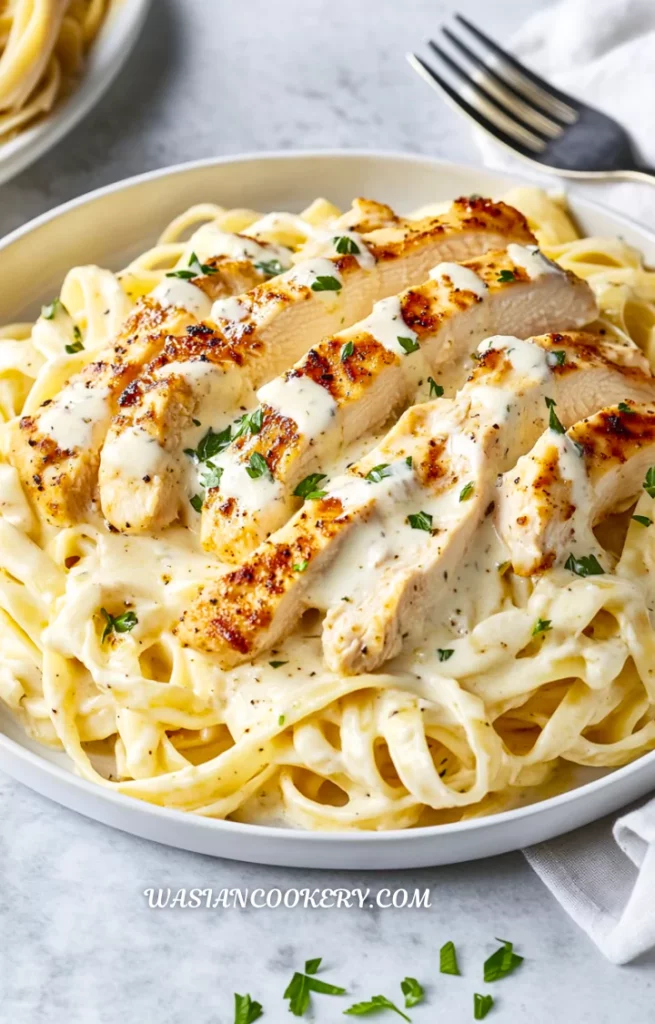
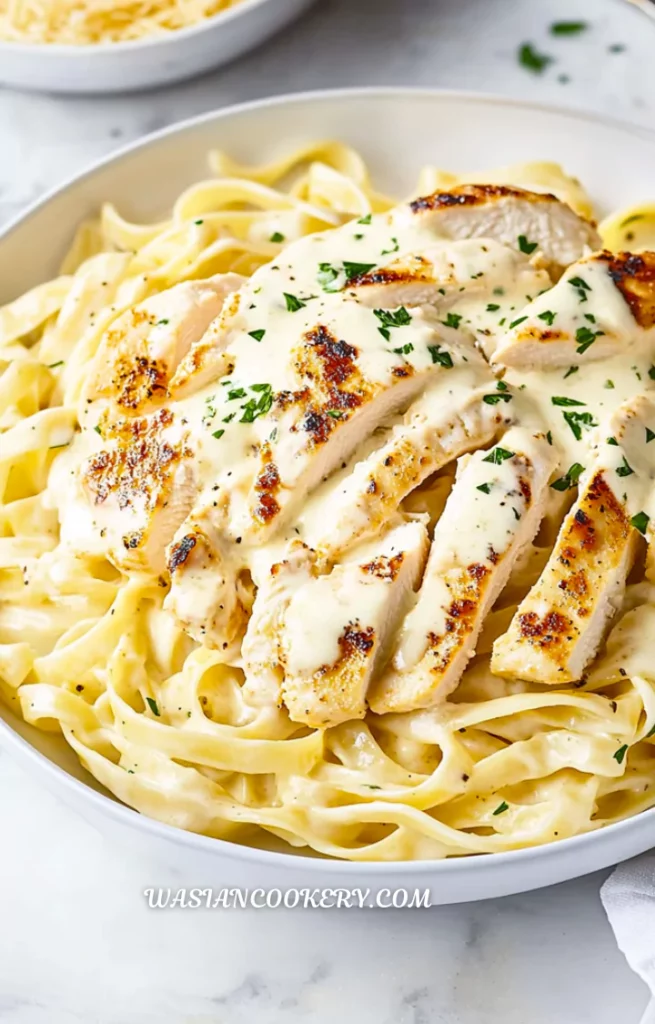
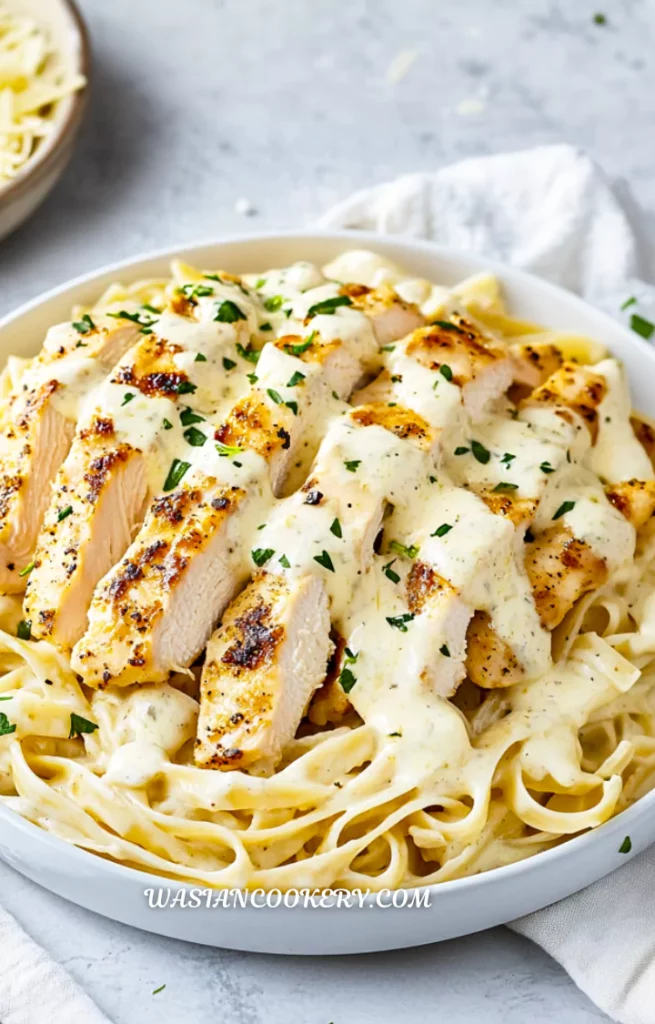
My favorite chicken fettuccine Alfredo has tender chicken, wide noodles, and enough creamy sauce to coat every forkful. Garlic and Parmesan give this version its familiar savory flavor, with parsley at the end for a little freshness.
This is a rich cream-based Alfredo made with butter and heavy cream. The optional mozzarella adds extra cheesiness, and the optional nutmeg gives a gentle warm note. You can leave both out and still have the full garlic-Parmesan flavor of the main recipe.
Allow about 40 minutes for six servings: 15 minutes to slice, grate, and measure, followed by around 25 minutes of cooking with the pasta and chicken underway together. A small pan may require extra chicken batches. Have everyone ready to eat when the pasta is tossed, because the sauce is at its smoothest right away.
Why This Dish Is Great
- Wide fettuccine noodles hold the rich sauce well, giving each bite a pleasing balance of pasta and cream.
- Thin strips of chicken cook more quickly than whole breasts and are easy to distribute through the finished dish.
- The sauce uses cream, butter, and cheese for its body, with no flour-based thickener to prepare separately.
- Garlic cooks in the same skillet as the chicken, so the lightly browned bits can contribute extra savory flavor.
- Optional cheese and nutmeg let you choose a simpler finish or a richer one without changing the main ingredients.
- A crisp salad and bread are enough to turn it into a complete dinner for family or guests.
What Is the Best Parmesan for Alfredo?
Freshly grated Parmesan is a helpful choice because fine shreds melt more easily into warm cream. Grate the measured cup before starting the sauce so you can add it gradually without leaving the skillet unattended. A block of Parmesan also lets you save a little extra for the table, if desired.
Packaged grated cheeses vary: some contain ingredients that keep the pieces separate and may give the sauce a less smooth texture. Heavy cream provides the richness and thickness intended here. Replacing it completely with milk creates a much thinner sauce and is not a direct equivalent. Keep the mozzarella optional, since its stretch changes the texture.
Ingredients
- 12 oz (340g) fettuccine pasta
- 2 large boneless, skinless chicken breasts (sliced into thin strips)
- 2 tbsp olive oil
- 3 tbsp unsalted butter
- 3 cloves garlic, minced
- 2 cups heavy cream
- 1 cup grated Parmesan cheese
- 1/2 cup shredded mozzarella cheese (optional)
- 1/4 tsp ground nutmeg (optional)
- Salt and black pepper to taste
- Fresh parsley (chopped, for garnish)
Slice the chicken into similar thin strips so the pieces finish close together. Prepare parsley and other ready-to-eat ingredients on a clean board, away from raw chicken. Salt is added to taste because Parmesan and pasta water both contribute saltiness. Taste the sauce after the cheese melts before deciding whether it needs more.
Kitchen Equipment You Will Need
As an Amazon Associate I earn from qualifying purchases.
- Large pasta pot
- Deep skillet
- Colander
- Heatproof measuring cup
- Measuring cups
- Measuring spoons
- Chef’s knife
- Cutting boards
- Cheese grater
- Whisk
- Silicone spatula
- Kitchen tongs
- Food thermometer
- Dinner plate
- Serving bowls
- Shallow airtight containers
- Zester
- Steamer basket
- Microwave-safe dish
- Microwave-safe cover
How To Make Chicken Fettuccine Alfredo
Step 1
Bring a large pot of salted water to a boil. Add the fettuccine and cook according to its package directions until al dente, stirring occasionally. Before draining, reserve 1/2 cup of the pasta water. Begin cooking the chicken while the water heats so the pasta and sauce can finish close together.
Step 2
Heat the 2 tablespoons olive oil in a large, deep skillet over medium heat. Season the thin chicken strips with salt and pepper. Cook in an uncrowded layer for about 5-7 minutes, turning occasionally, until golden and at least 165°F in the thickest pieces. If necessary, divide the chicken and the measured oil between batches. Transfer the cooked chicken to a clean plate.
Step 3
In the same skillet, melt the 3 tablespoons butter over medium-low heat. Add the garlic and stir for about 30-60 seconds until fragrant, without letting it brown. Slowly pour in the heavy cream. Bring it just to a gentle simmer, stirring, and cook for about 2-3 minutes before reducing the heat to low.
Step 4
Add the Parmesan gradually, whisking over low heat until melted. Add the optional mozzarella gradually if using, then the optional nutmeg. Keep the sauce below a boil; move the pan off the burner briefly if it bubbles strongly. Taste and add salt and black pepper as needed. Mozzarella makes the sauce thicker and a little stretchy.
Step 5
Add the drained fettuccine and gently toss with tongs until the noodles are coated. If the sauce feels too thick, add the reserved pasta water a little at a time, using only what is needed. The sauce should cling to the pasta while still looking loose and creamy.
Step 6
Return the cooked chicken and its collected juices to the skillet. Toss over low heat just until the chicken and pasta are hot together. Avoid prolonged cooking that dries the chicken or makes the noodles too soft.
Step 7
Garnish with chopped parsley and extra Parmesan if desired, then serve immediately. The sauce thickens as it stands. Plan on about 25 minutes of cooking with the pasta and chicken underway together; additional chicken batches or a slow-boiling pot can take longer.
Notes
- Measure and grate before you start cooking. Once the cheese goes in, the sauce needs steady attention and gentle heat.
- Keep chicken pieces in a single uncrowded layer. If they are piled up, they release moisture and cook unevenly.
- Check the chicken temperature in several thick pieces, inserting the probe from the side when the strips are thin.
- Scrape up golden chicken bits as the cream warms, but discard any burnt residue that would make the sauce bitter.
- Reserve the pasta water before draining. Add it gradually, because you may not need the whole half cup.
- If the sauce becomes oily or grainy, take it off the heat and gently whisk in a little reserved water. Severe separation may not fully reverse.
- Toss the pasta just before serving. Letting it sit in the skillet for a long time absorbs sauce and softens the noodles.
Ingredients You Can Add
- Mushrooms: Cook sliced mushrooms after the chicken, allowing their moisture to evaporate before beginning the sauce. Allow extra time.
- Broccoli: Steam florets separately until tender, drain well, then fold them in near the end.
- Spinach: Stir fresh leaves into the hot pasta until wilted; a large amount may loosen the sauce.
- Crushed red pepper: Sprinkle a little over individual bowls for heat without changing everyone’s dinner.
- Lemon zest: Finely grate only the yellow peel over the finished pasta for a fresh aroma.
- Cooked bacon bits: Use a little as a topping for a smoky variation; taste before adding salt.
What To Serve With Chicken Fettuccine Alfredo
My favorite way to serve this dish is with a fresh green salad and warm garlic bread. The salad gives a crisp contrast to the creamy noodles, and bread catches the sauce left in the bowl. Yats bread is a garlicky option when you want to prepare a separate bread side.
For a fresher plate, try tomato cucumber salad alongside the pasta. Keep its dressing separate from the cream sauce until it reaches the plate. Roasted asparagus or Brussels sprouts are also good choices; prepare them separately and serve a modest pasta portion with plenty of vegetables.
If you are planning a relaxed dinner, House of Prime Rib salad offers another crisp side. A glass of wine can accompany the meal if you like, as can sparkling water. Serve the Alfredo in bowls immediately after tossing and let everyone add parsley or extra Parmesan at the table.
Variations and Swaps
- Shrimp Alfredo: Replace the chicken with shrimp, cooking them to 145°F and until the flesh is pearly and opaque. Cooking time changes.
- Vegetable Alfredo: Omit the chicken and use cooked mushrooms, broccoli, or spinach. Drain vegetables well before combining.
- Spicy Alfredo: Add crushed red pepper or a light pinch of cayenne. Start small and taste the finished sauce.
- Extra-cheesy Alfredo: Include the optional 1/2 cup mozzarella. Expect more stretch and a thicker coating on the noodles.
- Lemon finish: Choose zest for brightness. If adding juice, use only a little off the heat, since acid can affect a dairy sauce.
- Herb Alfredo: Add chopped basil or a little fresh thyme at the end, keeping the garlic and Parmesan as the main flavors.
- Different pasta: Use another long pasta with the same dry weight, following its own package cooking time.
- Gluten-free pasta: Use a suitable fettuccine and check the remaining ingredient labels. Toss gently because some varieties break more readily.
Storage
Refrigerate leftover chicken Alfredo in shallow covered containers within 2 hours, or within 1 hour above 90°F. Keep it at 40°F or below and use within 3 days. Do not leave the pasta and cream sauce cooling in a deep pot on the counter. Separate portions cool more quickly and make it easier to reheat only what you need.
Reheat gently on the stovetop or in a covered, vented microwave-safe dish, stirring and adding a small splash of milk or cream if needed. Check that it reaches 165°F throughout, including the chicken. Freezing for up to 2 months is possible for quality, but the sauce may separate and the noodles soften. Thaw in the refrigerator; if planning ahead, freezing the cooked components separately can help, though it will not guarantee the original smooth texture.
FAQ
Why is my Alfredo sauce grainy?
The heat may be too high, or the cheese may have been added all at once. Reduce the heat or take the pan off the burner and whisk gently. Fine fresh shreds and gradual additions are helpful for the next batch.
Why did the pasta become dry after serving?
Pasta continues absorbing liquid, and a cream sauce thickens as it cools. Keep the sauce slightly loose when tossing and serve promptly. Reserved pasta water is useful before serving; milk or cream can loosen properly stored leftovers.
Can I use cooked chicken?
Yes, but it changes the workflow. Add refrigerated cooked chicken near the end and heat it thoroughly to 165°F. Check its storage age first; adding it to a new sauce does not restart the time it can safely stay refrigerated.
Can I use milk instead of heavy cream?
Milk alone will make a thinner sauce and can behave differently when heated with cheese. Half-and-half is also less rich. For the texture described here, use the listed heavy cream rather than expecting an exact swap.
Do I have to add mozzarella?
No. It is optional in the ingredient list. Parmesan provides the main flavor, while mozzarella adds stretch and thickness. Leaving it out gives a less stretchy sauce without requiring a replacement ingredient.
Can I make Alfredo before guests arrive?
Slice and measure ingredients ahead, keeping raw chicken and dairy refrigerated. Cook and toss the pasta close to mealtime for the best texture. A finished skillet held for a long time tends to thicken, and repeated warming can split the sauce.
Short Description
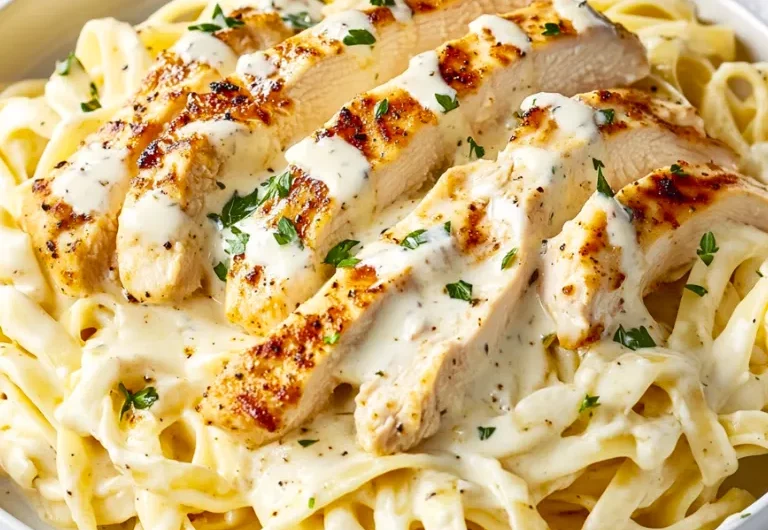
Creamy chicken fettuccine Alfredo with garlic, Parmesan, and a rich cream sauce. Thin chicken strips and a little reserved pasta water help bring the noodles and sauce together.
Chicken Fettuccine Alfredo
Course: MainCuisine: Italian, AmericanDifficulty: Easy6
servings15
minutes25
minutes40
minutesCreamy chicken fettuccine Alfredo with garlic, Parmesan, and a rich cream sauce. Thin chicken strips and a little reserved pasta water help bring the noodles and sauce together.
Ingredients
12 oz (340g) fettuccine pasta
2 large boneless, skinless chicken breasts (sliced into thin strips)
2 tbsp olive oil
3 tbsp unsalted butter
3 cloves garlic, minced
2 cups heavy cream
1 cup grated Parmesan cheese
1/2 cup shredded mozzarella cheese (optional)
1/4 tsp ground nutmeg (optional)
Salt and black pepper to taste
Fresh parsley (chopped, for garnish)
Directions
- Bring a large pot of salted water to a boil. Add the fettuccine and cook according to its package directions until al dente, stirring occasionally. Before draining, reserve 1/2 cup of the pasta water. Begin cooking the chicken while the water heats so the pasta and sauce can finish close together.
- Heat the 2 tablespoons olive oil in a large, deep skillet over medium heat. Season the thin chicken strips with salt and pepper. Cook in an uncrowded layer for about 5-7 minutes, turning occasionally, until golden and at least 165°F in the thickest pieces. If necessary, divide the chicken and the measured oil between batches. Transfer the cooked chicken to a clean plate.
- In the same skillet, melt the 3 tablespoons butter over medium-low heat. Add the garlic and stir for about 30-60 seconds until fragrant, without letting it brown. Slowly pour in the heavy cream. Bring it just to a gentle simmer, stirring, and cook for about 2-3 minutes before reducing the heat to low.
- Add the Parmesan gradually, whisking over low heat until melted. Add the optional mozzarella gradually if using, then the optional nutmeg. Keep the sauce below a boil; move the pan off the burner briefly if it bubbles strongly. Taste and add salt and black pepper as needed. Mozzarella makes the sauce thicker and a little stretchy.
- Add the drained fettuccine and gently toss with tongs until the noodles are coated. If the sauce feels too thick, add the reserved pasta water a little at a time, using only what is needed. The sauce should cling to the pasta while still looking loose and creamy.
- Return the cooked chicken and its collected juices to the skillet. Toss over low heat just until the chicken and pasta are hot together. Avoid prolonged cooking that dries the chicken or makes the noodles too soft.
- Garnish with chopped parsley and extra Parmesan if desired, then serve immediately. The sauce thickens as it stands. Plan on about 25 minutes of cooking with the pasta and chicken underway together; additional chicken batches or a slow-boiling pot can take longer.
Notes
- Cook chicken to 165°F in the thickest strips.
- Add cheese gradually over low heat; keep the sauce below a boil during initial cooking.
- The 40-minute estimate assumes overlapping pasta and chicken cooking; extra batches take longer.
- Refrigerate promptly for up to 3 days and reheat leftovers to 165°F. Freezing can change the sauce texture.