Japanese Curry Recipe
My mother made Japanese curry when I was growing up, and it was one of my favorite meals. Every time she made it, the whole house smelled amazing. She had her special way of adding vegetables and letting everything cook together, and that warm bowl always made me feel good.
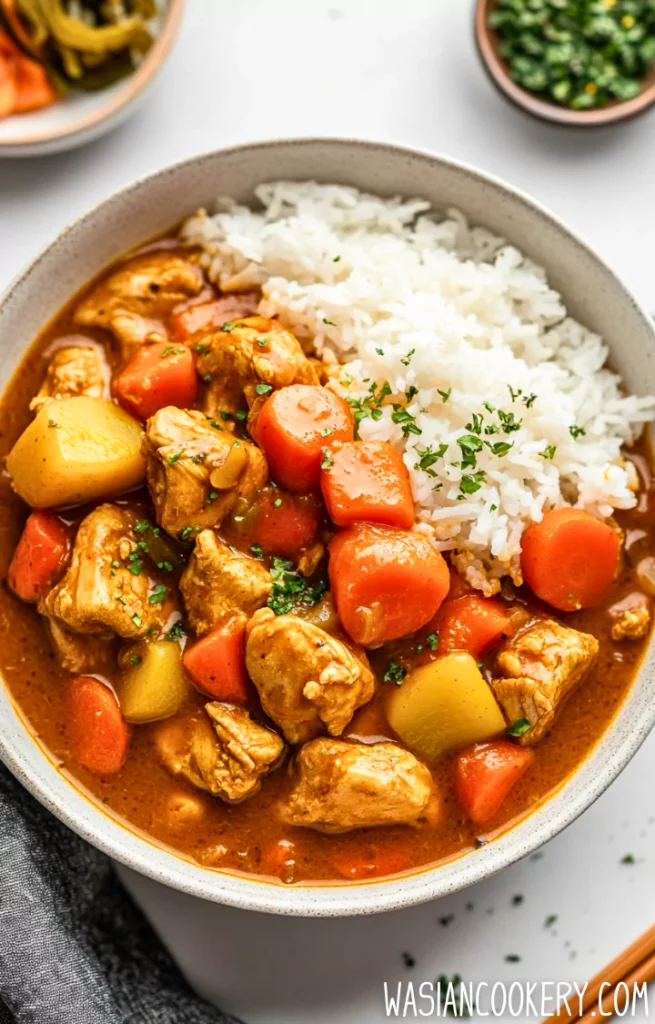
When my mom cooked Japanese curry, she would add a hint of apple or honey to make it a little sweet. The curry was thick, hearty, and filled with tender vegetables, and we always served it over hot white rice. It brings back great memories for me, and I wanted to recreate that comforting dish at home.
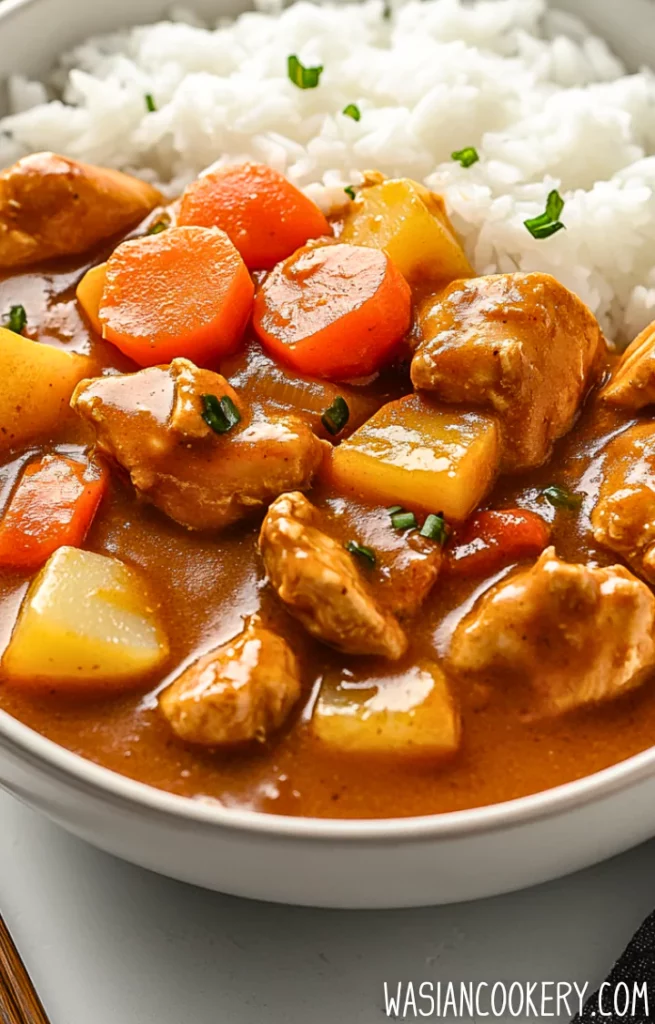
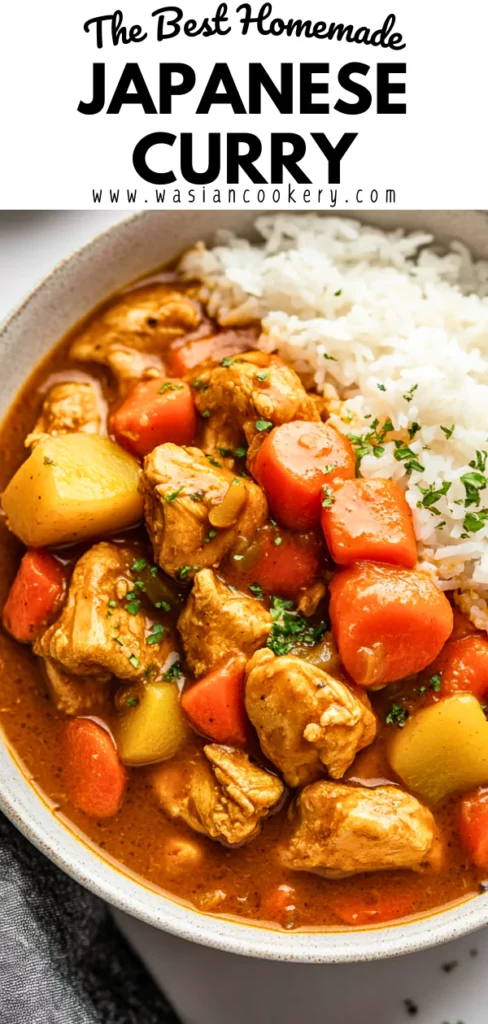
This version uses chicken, onion, carrots, potato, and ready-made Japanese curry roux. I like pickled radishes or shredded cabbage on the side for a crunchy touch. The sauce comes together in one pot, but check the roux package before starting because the size of a curry block varies between brands.
Why This Dish Is Great
- Comforting sauce: Japanese curry roux gives the dish a thick, savory sauce that clings to the vegetables and rice.
- Simple vegetables: Onion, carrots, and potato bring familiar flavors and different textures without a long shopping list.
- Choice of chicken: Boneless thigh or breast works here when cut into similar pieces and cooked to the right temperature.
- Adjustable heat: Choose a mild, medium, or hot roux at the store so the base flavor suits your table.
- Useful portions: The recipe makes four servings, and properly chilled leftovers are easy to reheat for another meal.
What Is the Best Curry Roux?
Choose solid Japanese curry roux, the scored seasoning blocks that contain fat, thickener, and spices. Curry powder, Thai curry paste, and ready-to-eat curry sauce are different products. They will not provide the same thickening in this recipe. The flavor and heat level of the finished dish depend strongly on the roux you choose.
The ingredient list calls for 4 blocks and 3 cups of water, but it does not specify a brand or package weight. Here, blocks means four scored pieces, not four whole trays or packages. Check that your package directions use about this amount of water for four pieces. If they differ substantially, use that package’s complete recipe rather than assuming every block size is interchangeable. The sauce should be thick enough to coat a spoon and still flow around the chicken.
Ingredients
- 1 lb (450 g) boneless chicken thigh or breast (cut into bite-sized pieces)
- 2 tbsp vegetable oil
- 1 large onion (sliced)
- 2 medium carrots (cut into chunks)
- 1 large potato (cut into chunks)
- 3 cups water
- 4 blocks of Japanese curry roux (available in mild, medium, or hot; adjust to your taste)
- 1 tsp grated ginger (optional, for extra flavor)
- 1/2 tsp soy sauce (for extra depth)
Kitchen Equipment You Will Need
As an Amazon Associate I earn from qualifying purchases.
- Large heavy pot with lid
- Chef’s knife
- Cutting board
- Vegetable peeler
- Measuring cups
- Measuring spoons
- Fine grater
- Mixing spoon
- Kitchen tongs
- Plate
- Fork
- Instant-read thermometer
- Small skillet
- Spatula
- Serving ladle
- Shallow storage containers
- Saucepan
How To Make Japanese Curry
Step 1
Cut the chicken into roughly 1-inch pieces and the carrots and potato into similar bite-sized chunks. Slice the onion. Check that your curry roux package calls for about 3 cups of water for 4 scored pieces; pieces are not whole trays or boxes. Heat the 2 tablespoons vegetable oil in a large heavy pot over medium heat. Add the chicken and cook for about 5 minutes, turning to lightly brown the outside. Transfer to a plate; it will finish cooking in the pot shortly.
Step 2
Add the onion to the same pot and cook for about 5 minutes, stirring, until softened. Add the carrots and potato and stir for 2 minutes. Scrape up the golden bits, but lower the heat if the onion starts to burn.
Step 3
Return the chicken and its plate juices to the pot and add all 3 cups water. Bring to a boil, then reduce to a gentle simmer and cover. Cook for 15–20 minutes, or longer as needed, until a fork slides into the carrots and potatoes and the thickest chicken pieces reach 165°F (74°C). Keep the vegetables in the liquid and stir once or twice so they cook evenly.
Step 4
Turn off the heat. Break the 4 scored pieces of Japanese curry roux into smaller bits and stir them into the hot liquid until completely dissolved, checking that none remain on the bottom. Return to low heat and simmer uncovered for 5–10 minutes, stirring often, until the sauce coats a spoon. Keep the heat gentle because thick curry can catch on the bottom.
Step 5
Stir in the 1/2 teaspoon soy sauce and the optional 1 teaspoon grated ginger. Simmer gently for another 1–2 minutes and taste. The roux already supplies salt and spices. If the sauce is thin, simmer briefly while stirring; if it has become too thick, loosen it with a small splash of hot water.
Step 6
Serve the curry hot with separately prepared steamed rice, if desired. Spoon both the vegetables and chicken into each of the 4 servings. Divide leftovers into shallow containers and refrigerate promptly rather than leaving the whole pot on the counter to cool.
Notes
- Cut vegetables evenly. Large carrot chunks can stay firm after the potato softens. Aim for similar bite-sized pieces, with slightly smaller pieces of thick carrot.
- Brown without fully cooking. The chicken gets a little color first, then returns to the pot immediately after the vegetables. Do not refrigerate partially cooked chicken for later.
- Cook vegetables before the roux. Thickened sauce is harder to simmer evenly. Wait until the carrots and potatoes are tender before adding the blocks.
- Turn off the heat. Stirring the roux into hot liquid off the heat helps it dissolve without thick lumps forming around the pieces.
- Stir along the bottom. Once thickened, the sauce needs frequent gentle stirring. A low simmer is enough; a hard boil can break the potatoes apart.
- Allow practical cooking time. The card budgets 15 minutes of preparation and 45 minutes of cooking. Larger vegetables or a slower stove may take longer; rice is prepared separately.
- Watch the seasoning. Roux and soy sauce are already salty. Taste the finished curry before adding any extra seasoning or strongly flavored topping.
Ingredients You Can Add
- Grated apple: About half an apple, stirred in during simmering, brings the gentle sweetness described in my family version.
- Butter: A teaspoon stirred into the finished sauce gives it a slightly richer, rounder taste.
- Garlic chips: Cook thin garlic slices in a small skillet with a little oil until pale golden, then lift them out and sprinkle over a serving.
- Green peas: A small handful added near the end brings color. Let them heat through before serving.
- Sliced green onion: Sprinkle it over each bowl for a fresh bite that contrasts with the soft vegetables.
- Coconut milk: A small splash at the end makes the sauce creamier. It also changes the flavor, so start with a little rather than overwhelming the curry.
What To Serve With Japanese Curry
Japanese curry is traditionally served with steamed rice, which catches the thick sauce. White or brown rice can work, depending on your preference. Prepare it separately and time it to finish near the curry. If you enjoy rice-based meals, Japanese Tuna Mayo Rice Bowl is another easy option for a different day.
A fresh side gives the meal a little crunch and tang. Shredded cabbage, pickled radishes, or Japanese Pickled Onions make a useful contrast to the warm, savory sauce. Serve pickles in small portions so their acidity does not take over the plate.
For a green vegetable alongside, Ohitashi Japanese Spinach offers a simple change from a raw salad. A small bowl of miso soup can complete the meal too. Keep the sides light if you are also serving a generous scoop of rice or a cooked cutlet.
Variations and Swaps
- Chicken thigh: Choose boneless thigh for a richer flavor and tender pieces that hold up well during simmering.
- Chicken breast: Use the same weight and stop extending the simmer once the chicken is safe and the vegetables are tender.
- Sweet potato: Swap it for the regular potato for a sweeter result. Check it early because it may soften faster.
- Dashi flavor: Replace part of the water with unsalted dashi, keeping the total cooking liquid at 3 cups and checking the roux package as described above.
- Mushroom addition: Add a modest amount of sliced mushrooms with the onion. Let their released moisture cook off before adding the measured water.
- Cheese topping: Sprinkle a little grated cheese over a hot serving and let it soften. This gives a richer finish without changing the whole pot.
- Spicier serving: Add a small pinch of cayenne or chili flakes to an individual portion so everyone can choose their own heat.
- Katsu-style plate: Serve with a separately prepared, fully cooked chicken or pork cutlet. The crispy topping is an extra serving option; this recipe’s chicken curry formula stays the same.
Storage
Divide leftovers into shallow containers and refrigerate promptly at 40°F or below. Refrigerate within 2 hours of cooking, or within 1 hour if the room is above 90°F, without waiting for the pot to reach room temperature. Use within 3–4 days. Cool any cooked rice promptly in its own shallow container rather than leaving it beside the stove.
Freeze cooled curry in meal-sized containers for about 1–2 months for best quality. Potatoes can become a little grainy after freezing. Thaw in the refrigerator, then reheat in a saucepan, stirring carefully, until the chicken and sauce reach 165°F throughout. The sauce thickens when cold, so a little water may help it loosen without scorching; heat fully before judging the consistency.
FAQ
Is Japanese curry always mild?
No. Many roux packages offer mild, medium, and hot versions. The sweetness, saltiness, and spice blend also vary. Choose the package that suits your taste rather than assuming all Japanese curry has the same heat.
Can I replace the blocks with curry powder?
Not directly. Powder adds spice but does not contain the same fat and thickener as solid roux. A curry made from scratch needs its own balanced recipe rather than a spoon-for-block swap.
Why did my curry become too thick?
Water evaporates during simmering, and roux block sizes differ. Check the package guidance first. For a slightly over-thickened finished sauce, stir in a small splash of hot water, then heat through and check again.
How can I fix a thin sauce?
Make sure all the roux has dissolved and give it the gentle 5–10-minute simmer. Stir uncovered for a little longer if needed. Do not keep adding blocks blindly, because that can make the sauce too salty.
Which rice works well?
Short-grain Japanese rice has a gently sticky texture that pairs well with the sauce. Other steamed rice is fine too. Cook it separately according to its package; its liquid and timing are not included in the curry formula.
How do I know the chicken and vegetables are ready?
A fork should slide into the carrots and potatoes without a hard center. Check several of the thickest chicken pieces with a thermometer for 165°F before thickening the sauce. Tender vegetables alone do not prove the chicken is ready.
Short Description
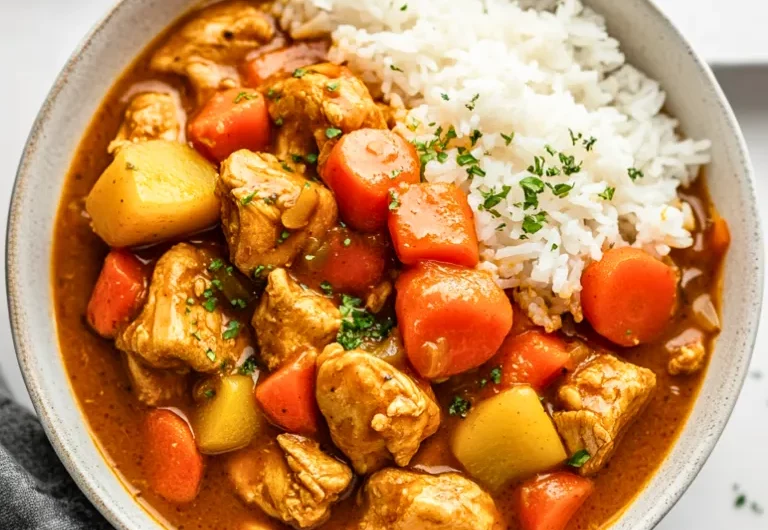
Japanese chicken curry combines tender carrots, potato, and onion with a thick curry-roux sauce. Serve it hot with separately prepared rice and a crisp side.
Japanese Curry Recipe
Course: MainCuisine: JapaneseDifficulty: Easy4
servings15
minutes45
minutes1
hourJapanese chicken curry combines tender carrots, potato, and onion with a thick curry-roux sauce. Serve it hot with separately prepared rice and a crisp side.
Ingredients
1 lb (450 g) boneless chicken thigh or breast (cut into bite-sized pieces)
2 tbsp vegetable oil
1 large onion (sliced)
2 medium carrots (cut into chunks)
1 large potato (cut into chunks)
3 cups water
4 blocks of Japanese curry roux (available in mild, medium, or hot; adjust to your taste)
1 tsp grated ginger (optional, for extra flavor)
1/2 tsp soy sauce (for extra depth)
Directions
- Cut the chicken into roughly 1-inch pieces and the carrots and potato into similar bite-sized chunks. Slice the onion. Check that your curry roux package calls for about 3 cups of water for 4 scored pieces; pieces are not whole trays or boxes. Heat the 2 tablespoons vegetable oil in a large heavy pot over medium heat. Add the chicken and cook for about 5 minutes, turning to lightly brown the outside. Transfer to a plate; it will finish cooking in the pot shortly.
- Add the onion to the same pot and cook for about 5 minutes, stirring, until softened. Add the carrots and potato and stir for 2 minutes. Scrape up the golden bits, but lower the heat if the onion starts to burn.
- Return the chicken and its plate juices to the pot and add all 3 cups water. Bring to a boil, then reduce to a gentle simmer and cover. Cook for 15–20 minutes, or longer as needed, until a fork slides into the carrots and potatoes and the thickest chicken pieces reach 165°F (74°C). Keep the vegetables in the liquid and stir once or twice so they cook evenly.
- Turn off the heat. Break the 4 scored pieces of Japanese curry roux into smaller bits and stir them into the hot liquid until completely dissolved, checking that none remain on the bottom. Return to low heat and simmer uncovered for 5–10 minutes, stirring often, until the sauce coats a spoon. Keep the heat gentle because thick curry can catch on the bottom.
- Stir in the 1/2 teaspoon soy sauce and the optional 1 teaspoon grated ginger. Simmer gently for another 1–2 minutes and taste. The roux already supplies salt and spices. If the sauce is thin, simmer briefly while stirring; if it has become too thick, loosen it with a small splash of hot water.
- Serve the curry hot with separately prepared steamed rice, if desired. Spoon both the vegetables and chicken into each of the 4 servings. Divide leftovers into shallow containers and refrigerate promptly rather than leaving the whole pot on the counter to cool.
Notes
- Use 4 scored pieces of Japanese curry roux, not four trays or packages. Block sizes vary; check that your package directions suit about 3 cups water for that amount. No brand or weight was specified for this recipe.
- Cook the vegetables until tender and the chicken to 165°F before dissolving the roux off the heat. Return to a gentle simmer and stir often.
- The 60-minute estimate covers curry preparation and cooking; rice is prepared separately. Refrigerate leftovers promptly in shallow containers and reheat to 165°F.