Chicken and Stuffing Casserole
My mother made Chicken and Stuffing Casserole when I was growing up, and the whole house filled with amazing smells. It was one of my favorite comfort foods, especially on chilly nights. Tender chicken, savory stuffing, and creamy sauce still make such a comforting plate.
When my mom prepared this dish, she often added her special touch, like mixing in vegetables or using different types of stuffing. Those little variations made each casserole unique and delicious. I loved watching her cook, and it inspired me to experiment with my recipes later on.
I like to serve my Chicken and Stuffing Casserole with a fresh green salad or roasted vegetables for a complete meal. Sometimes, I add cheese on top for extra creaminess. Starting with cooked chicken makes the preparation easy, while the oven gives the stuffing its golden finish.
Why This Dish Is Great
- Cooked chicken keeps the hands-on work short. A properly refrigerated leftover roast or rotisserie chicken works well in the creamy filling.
- Condensed soup and sour cream make a thick sauce without asking you to prepare a separate sauce on the stove.
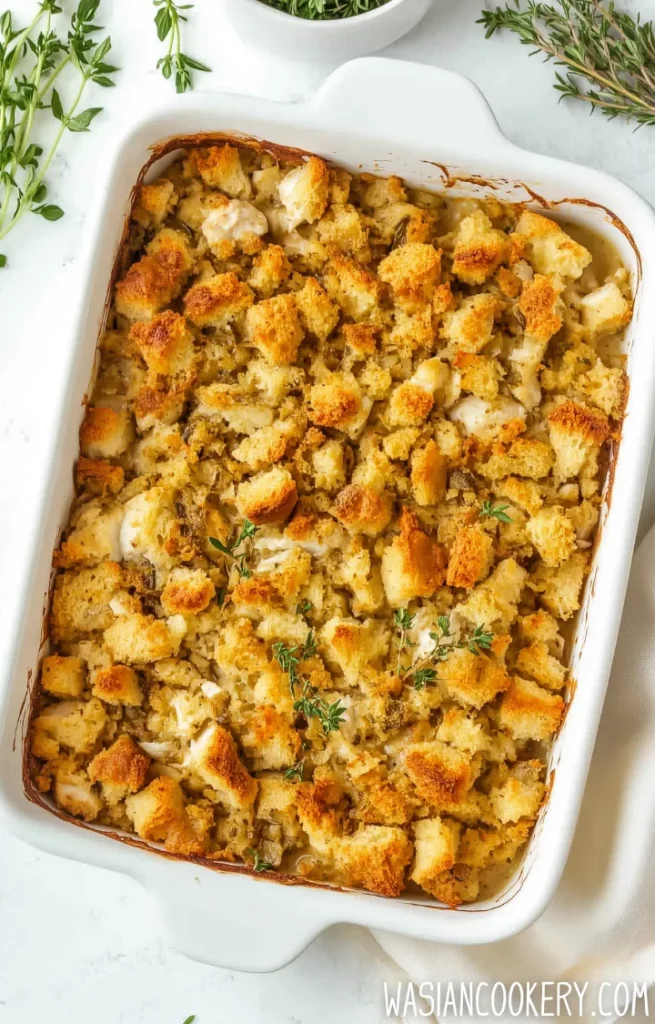
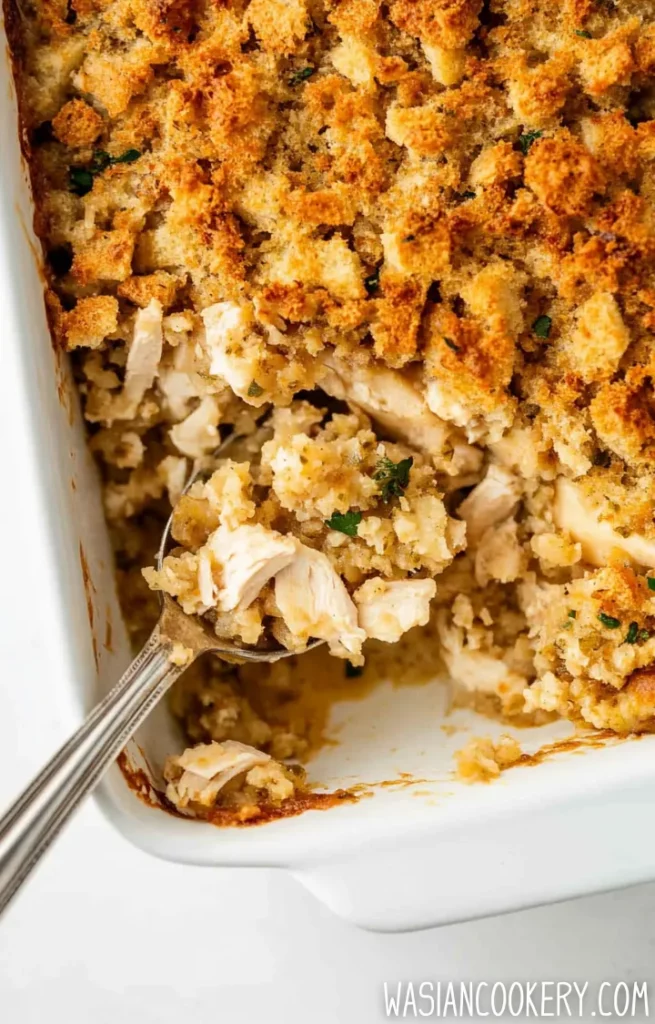
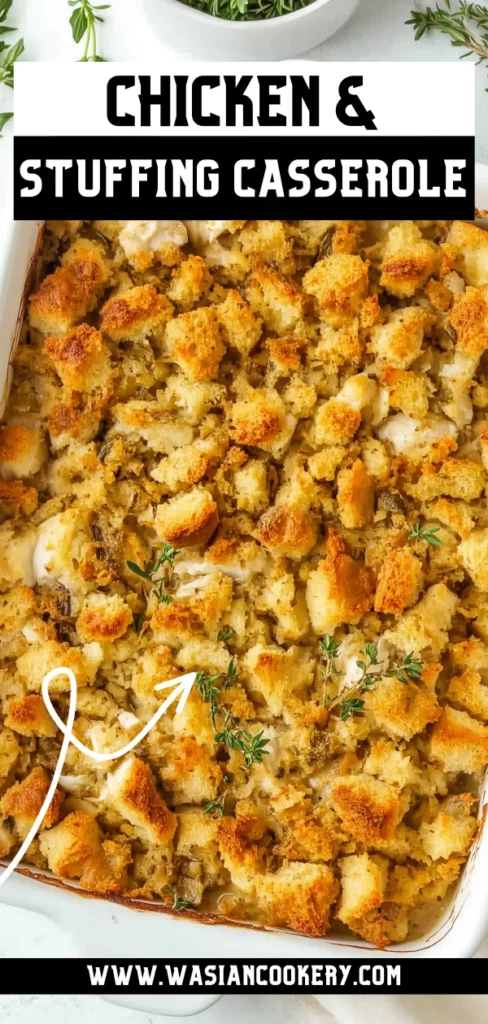
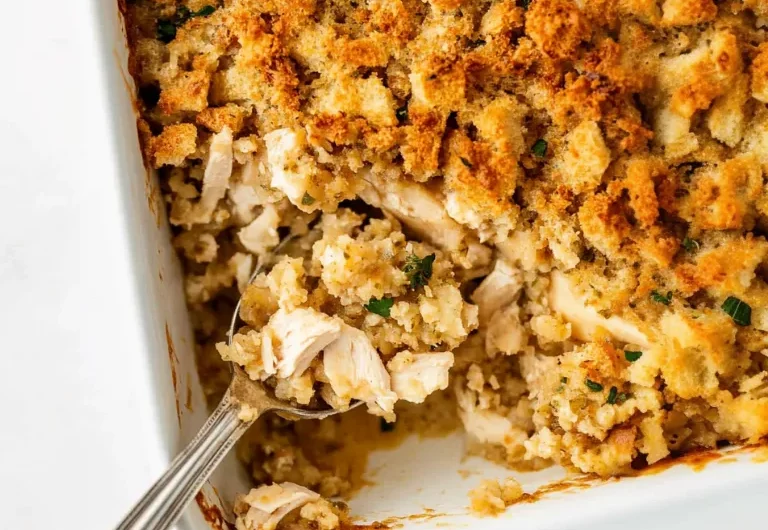
- The stuffing brings a different texture to every forkful, with a softer underside and a golden top after uncovering.
- The casserole is easy to portion at the table, and the original yield makes four generous main-dish servings.
- Optional cheese gives you an easy finishing choice. The casserole still has plenty of richness when you leave it out.
- Simple sides complete dinner, so a bowl of crisp salad or some vegetables is often all you need alongside it.
What Is the Best Chicken for This Casserole?
You can use rotisserie chicken for a quick option or leftover chicken from another meal. Just make sure it is shredded into bite-sized pieces. Breast meat, thigh meat, or a mixture all work. Remove the skin and bones, then measure the shredded meat without compressing it tightly in the cup.
The chicken must already be fully cooked; this recipe is not written for raw pieces. If you are cooking chicken specifically for it, reach 165°F in the thickest part before shredding. That separate cooking and cooling time is additional. Use refrigerated cooked chicken within its safe storage window, and remember that baking it again does not reset the age of older leftovers.
Ingredients
- 3 cups cooked chicken, shredded
- 1 can (10.5 oz) cream of chicken soup
- 1 cup sour cream
- 1 cup chicken broth
- 1 teaspoon garlic powder
- 1 teaspoon onion powder
- 1 teaspoon dried thyme
- 1 teaspoon salt
- ½ teaspoon pepper
- 1 package (6 oz) stuffing mix
- ½ cup butter, melted
- 1 cup shredded cheese (optional)
Choose condensed cream of chicken soup rather than a ready-to-eat thin soup. The broth supplies the added liquid in this recipe. A fine, seasoned dry stuffing mix gives more even coverage than very large bread chunks. The soup, broth, stuffing, and butter can all contribute salt; choosing lower-sodium versions helps manage saltiness while keeping the listed measurements.
Kitchen Equipment You Will Need
As an Amazon Associate I earn from qualifying purchases.
- 9×13-inch baking dish
- Mixing bowls
- Microwave-safe bowl
- Measuring cups
- Measuring spoons
- Mixing spoon
- Forks
- Aluminum foil
- Instant-read thermometer
- Trivet
- Serving spoon
- Shallow storage containers
- Can opener
- Fine-mesh strainer
How To Make Chicken and Stuffing Casserole
Plan on about 65 minutes: 15 minutes of preparation, 45 minutes of baking, and a 5-minute rest. This timing starts with cooked chicken. An especially cold filling or a deeper dish may take longer, so use the temperature check rather than the clock alone.
Step 1
Preheat the oven to 350°F (175°C). Use a 9×13-inch baking dish and a middle oven rack. Start with fully cooked, shredded chicken; remove any skin, bones, or cartilage.
Step 2
In a large bowl, combine the shredded chicken, condensed cream of chicken soup, sour cream, chicken broth, garlic powder, onion powder, thyme, salt, and pepper. Mix until the chicken is evenly coated. Use the soup straight from the can; do not add the water suggested for making a bowl of soup.
Step 3
If the butter is not already melted, melt the measured ½ cup gently in a microwave-safe bowl in short bursts. Use a little of that measured butter to grease the baking dish. In another bowl, combine the dry stuffing mix with all the remaining melted butter and stir until evenly coated. Do not prepare the stuffing according to the package directions.
Step 4
Spread the chicken mixture evenly in the prepared baking dish. Scatter the buttered stuffing over the top without pressing it down. If using the optional cup of shredded cheese, sprinkle it evenly over the stuffing.
Step 5
Cover the dish with aluminum foil and bake for 30 minutes. Uncover and bake for about 15 minutes more, until the filling is bubbling and the stuffing is golden. Check the center and several thick spots with an instant-read thermometer; the casserole must reach 165°F (74°C). Continue baking as needed, loosely covering again if the top browns too quickly.
Step 6
Rest on a heatproof surface for 5 minutes before serving. Refrigerate leftovers promptly in shallow covered containers within 2 hours, or within 1 hour when the room is above 90°F (32°C).
Notes
- Shred the chicken into manageable pieces before mixing. Long strands can make the casserole difficult to scoop and leave uneven pockets of filling.
- Stir the sauce thoroughly so the garlic powder, onion powder, thyme, salt, and pepper are distributed throughout the chicken.
- Keep the stuffing dry until it meets the butter. Adding the package quantities of water or broth would change the liquid balance of this casserole.
- Spread the filling to a similar depth across the dish. A thick mound in the middle takes longer to heat than an even layer.
- Cover firmly for the first baking stage, then uncover for browning. Lift the foil away from your face because hot steam collects underneath.
- If the top is golden but the center is below 165°F, cover it loosely and keep baking. A browned topping is not a substitute for a temperature check.
- Let the casserole stand for its short rest before serving. The filling settles slightly, making it easier to spoon without running across the plate.
Ingredients You Can Add
Small additions let you keep the family-style flexibility of the original recipe. These are optional ideas outside the base ingredients. Drain vegetables well and avoid overloading the baking dish, which can change both its texture and heating time.
- Thawed peas add little sweet bites; drain them before stirring them into the chicken.
- Cooked carrots add color and a gentle sweetness without staying hard in the filling.
- Cooked green beans bring another vegetable option; drain them well before mixing.
- Drained canned mushrooms add an earthy flavor without requiring another pan.
- A little dried rosemary adds a woodsy note alongside the existing thyme.
- Fresh parsley sprinkled on at serving adds color and a fresh herbal finish.
What To Serve With Chicken and Stuffing Casserole
My favorite way to enjoy Chicken and Stuffing Casserole is with a fresh green salad. I like different greens, cherry tomatoes, and cucumbers with a light vinaigrette. tomato cucumber salad also gives the creamy casserole a crisp, refreshing partner without adding another heavy dish.
Another great side is roasted vegetables. Brussels sprouts or carrots bring color and sweetness beside the savory filling. For a prepared side with a little more flavor, try Brussels sprouts. Keep your side portions modest because the casserole already contains both chicken and stuffing.
I also love garlic bread alongside the casserole. Warm, buttery bread is good for soaking up the sauce, and Yats-style bread fits that idea nicely. A small piece is plenty when stuffing is already on the plate; you can let everyone choose their own combination.
Variations and Swaps
- Cheesy topping: use the optional cup of shredded cheese already listed. Cheddar brings a stronger flavor, while mozzarella is milder and stretchy.
- No cheese: omit the optional topping for a more distinct stuffing crust. The soup and sour cream still make a creamy filling.
- Turkey: use the same measured amount of fully cooked shredded turkey. Follow the same 165°F center check and leftover-storage guidance.
- Cornbread stuffing: choose a dry seasoned mix in the same package weight. Texture and absorbency vary, so keep the original liquid amounts and watch the finished consistency.
- Herbed version: add a little rosemary or parsley for a different aroma without changing the chicken or sauce quantities.
- Mushroom version: use well-drained canned mushrooms as a small addition. Extra liquid from a can can make the filling thinner than intended.
- Cranberry pairing: serve a little cranberry sauce beside the casserole for a sweet, tangy holiday flavor instead of stirring a large amount into the sauce.
- Spicy finish: offer a little hot sauce at the table so each person can season their own helping without changing the whole casserole.
Storage
Divide leftovers into shallow containers and refrigerate promptly at 40°F (4°C) or below. Do not wait for the whole casserole to cool to room temperature. Refrigerate within 2 hours, or within 1 hour when the room is above 90°F (32°C). Use within 3–4 days, or sooner if the cooked chicken was already near the end of its storage window.
Freeze promptly cooled portions in freezer-safe containers for about 2–3 months for best quality. Thaw overnight in the refrigerator. Reheat covered in an oven-safe dish at 350°F until the center reaches 165°F; small portions may take around 20–30 minutes, while larger amounts take longer. Uncover briefly at the end if you want to dry the topping slightly.
FAQ
Can I put raw chicken in this casserole?
No. Use the fully cooked chicken specified in the ingredients. Raw chicken would require a different method and baking time, and cannot be swapped into the same instructions.
Do I cook the stuffing mix first?
No. Mix the dry stuffing with the melted butter as directed. The covered baking stage and moisture beneath it soften the underside, while uncovering lets the top brown.
Why does the filling look too thin?
Ready-to-eat soup, extra water, or wet vegetables can add more liquid than intended. Use condensed soup and only the listed broth. Rest for 5 minutes before serving so the hot sauce can settle.
Can I prepare it ahead of time?
You can mix the chicken filling, cover, and refrigerate it up to a day ahead if the chicken is still within its safe storage window. Keep the stuffing separate until assembly. A cold filling needs extra baking time to reach 165°F.
Can I make it gluten-free?
Use a suitable gluten-free stuffing mix and check the soup, broth, and seasonings too. Different mixes absorb liquid differently, so this is a variation and the final texture may change.
Can I make this casserole vegetarian?
It would require changing the chicken, chicken soup, and broth, not just removing the meat. A casserole developed with a vegetable-based filling is a better guide than treating this exact formula as a direct vegetarian swap.
Short Description
Tender cooked chicken, a creamy sauce, and buttery stuffing bake together in this easy family casserole, with optional melted cheese on top.
Chicken and Stuffing Casserole
Course: MainCuisine: AmericanDifficulty: Easy4
servings15
minutes45
minutes1
hour5
minutesTender cooked chicken, a creamy sauce, and buttery stuffing bake together in this easy family casserole, with optional melted cheese on top.
Ingredients
3 cups cooked chicken, shredded
1 can (10.5 oz) cream of chicken soup
1 cup sour cream
1 cup chicken broth
1 teaspoon garlic powder
1 teaspoon onion powder
1 teaspoon dried thyme
1 teaspoon salt
½ teaspoon pepper
1 package (6 oz) stuffing mix
½ cup butter, melted
1 cup shredded cheese (optional)
Directions
- Preheat the oven to 350°F (175°C). Use a 9×13-inch baking dish and a middle oven rack. Start with fully cooked, shredded chicken; remove any skin, bones, or cartilage.
- In a large bowl, combine the shredded chicken, condensed cream of chicken soup, sour cream, chicken broth, garlic powder, onion powder, thyme, salt, and pepper. Mix until the chicken is evenly coated. Use the soup straight from the can; do not add the water suggested for making a bowl of soup.
- If the butter is not already melted, melt the measured ½ cup gently in a microwave-safe bowl in short bursts. Use a little of that measured butter to grease the baking dish. In another bowl, combine the dry stuffing mix with all the remaining melted butter and stir until evenly coated. Do not prepare the stuffing according to the package directions.
- Spread the chicken mixture evenly in the prepared baking dish. Scatter the buttered stuffing over the top without pressing it down. If using the optional cup of shredded cheese, sprinkle it evenly over the stuffing.
- Cover the dish with aluminum foil and bake for 30 minutes. Uncover and bake for about 15 minutes more, until the filling is bubbling and the stuffing is golden. Check the center and several thick spots with an instant-read thermometer; the casserole must reach 165°F (74°C). Continue baking as needed, loosely covering again if the top browns too quickly.
- Rest on a heatproof surface for 5 minutes before serving. Refrigerate leftovers promptly in shallow covered containers within 2 hours, or within 1 hour when the room is above 90°F (32°C).
Notes
- Start with fully cooked chicken; heat the assembled casserole to 165°F in the center and several thick spots.
- The 65-minute total includes a 5-minute rest and starts with cooked chicken. A cold filling may take longer.
- Refrigerate promptly in shallow containers within 2 hours, or 1 hour above 90°F; use within 3–4 days or sooner based on the age of the chicken. Reheat to 165°F.