Grape Jelly Recipe
My favorite part of grape jelly is the deep fruit flavor it brings to a simple piece of toast. This version begins with fresh grapes, regular powdered pectin, and granulated sugar. Concord grapes give a familiar grape flavor and rich color, while other varieties can produce a lighter, milder result.
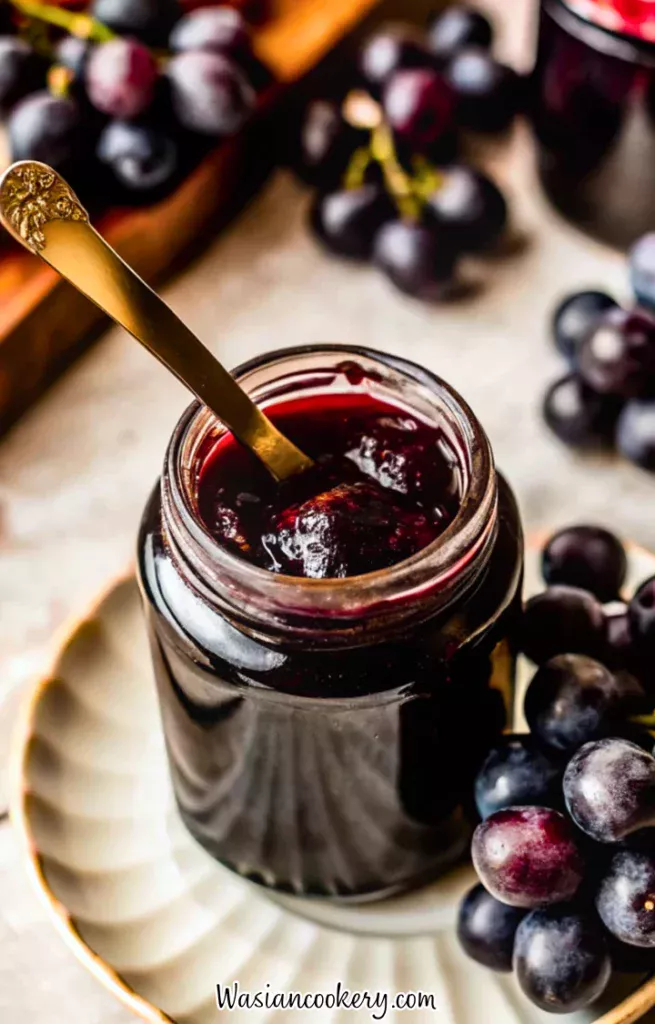
Making grape jelly is a satisfying home project. I used to make it for my kids when they were younger, and they enjoyed the sweet, fruity flavor. Straining the cooked grapes removes the skins and seeds, leaving juice that becomes the base of the spread.
This particular formula is for refrigerator storage only. Four pounds of grapes do not always give the same amount of juice, so a firm jelly and an exact jar yield cannot be promised. Plan for a soft spread or fruit sauce if necessary, and use the batch within a conservative 3–4-day period.
Why This Dish Is Great
- Fresh grapes supply the fruit flavor, while straining keeps the skins and seeds out of the finished spread.
- Only three measured ingredients are needed. Choosing the right kind of powdered pectin is more useful than adding extra ingredients at the end.
- Preparing the juice ahead gives naturally occurring grape crystals time to settle before the second straining.
- A timed boil keeps the cooking manageable. You do not need to keep boiling a pectin mixture indefinitely to chase a wrinkle on a plate.
- The finished batch has several uses, whether it becomes softly spreadable or remains loose enough to spoon over breakfast.
- Small refrigerated containers make it easier to cool the mixture promptly and take out just one portion for serving.
What Are the Best Grapes for Grape Jelly?
Concord grapes have a strong flavor that suits this sweet recipe. Choose sound, ripe grapes and discard moldy, damaged, or spoiled fruit. Very mild table grapes can make a less flavorful spread, and their juice yield and acidity can differ from Concord grapes. Color alone does not tell you how well the mixture will set.
Weigh four pounds of grapes as listed, wash them, and remove the stems. About five cups of strained juice is a rough guide, but not a guaranteed extraction. Record how much your fruit actually produces. Even careful cooking cannot guarantee the same firmness or finished volume each time.
Ingredients
- 4 pounds of grapes
- 1 package (1.75 ounces) powdered pectin
- 7 cups granulated sugar
Use a fresh package of traditional, full-sugar powdered pectin weighing 1.75 ounces. Liquid pectin, instant freezer pectin, and low-sugar pectin have different formulas and methods and are not interchangeable here. Read the package before starting so you know which product you have.
Keep the seven cups of granulated sugar. Measure it into a bowl before bringing the juice to a boil, since it needs to go in all at once. The sugar helps the pectin mixture form its texture as well as sweetening the fruit. Do not replace it with an unmeasured sweetener or add guessed amounts of acid.
Kitchen Equipment You Will Need
As an Amazon Associate I earn from qualifying purchases.
- Kitchen scale
- 8-quart heavy-bottomed pot
- Potato masher
- Heat-resistant stirring spoon
- Fine-mesh strainer
- Cheesecloth
- Large heat-safe bowl
- Measuring cups
- Kitchen timer
- Ladle
- Oven mitts
- Shallow heat-safe storage containers
- Refrigerator thermometer
- Small serving bowls
- Serving spoon
- Chef’s knife
- Cutting board
How To Make Grape Jelly for the Refrigerator
Allow about 17 hours 20 minutes as a planning estimate: 20 minutes of preparation, 30 minutes of cooking, 30 minutes of draining, about 12 hours of overnight juice chilling, and at least 4 hours of final refrigerator chilling. Heating and draining vary. The cold mixture may need longer to thicken, and this formula may remain a sauce.
Step 1: Wash and crush the grapes
Wash the grapes, remove the stems, and discard spoiled fruit. Put the grapes in a large heavy-bottomed pot and crush them thoroughly with a potato masher to release juice before applying heat. An 8-quart pot leaves useful space for the later foaming boil.
Step 2: Cook the fruit
Heat the crushed grapes gently at first, stirring so they release more juice without scorching. Once bubbling, reduce the heat and simmer for about 10 minutes, stirring occasionally, until the fruit is soft. No added water is included in this formula; keep the heat gentle enough to prevent sticking.
Step 3: Drain and chill the juice
Set a fine-mesh strainer lined with damp cheesecloth over a large heat-safe bowl. Carefully pour in the cooked grapes and let the juice drain for about 30 minutes without squeezing the cloth. Divide the juice into shallow heat-safe containers and refrigerate promptly at 40°F or below, within 2 hours of cooking or 1 hour above 90°F. Chill overnight, about 12 hours, so grape crystals can settle.
Step 4: Strain again and add pectin
Pour the chilled juice through two layers of clean, damp cheesecloth, leaving settled crystals behind. Measure the extracted juice and record the amount; about 5 cups is an estimate, not a guaranteed yield. Return all the strained juice to the clean pot and stir in the regular powdered pectin. Bring to a full rolling boil that cannot be stirred down, stirring constantly. Do not top up with guessed water or change the listed sugar or pectin amounts.
Step 5: Add the sugar and time the boil
Add all 7 cups of sugar at once and stir until dissolved. Bring the mixture back to a full rolling boil that cannot be stirred down, then boil hard for exactly 1 minute while stirring constantly. Start timing only when that full boil returns. Remove the pot from the heat.
Step 6: Fill refrigerator containers
Skim off surface foam with the spoon. Carefully ladle the hot mixture into clean, shallow, heat-safe storage containers, leaving enough space to handle them without spilling. Do not pour hot syrup into ordinary glass that is not rated for it. Filling containers is not a canning process.
Step 7: Refrigerate promptly
Refrigerate promptly at 40°F or below, within 2 hours of the final cooking or 1 hour above 90°F. Do not wait for the whole batch to cool on the counter. Leave space for cold air around the containers and cover once cooled. Chill for at least 4 hours, or longer as needed, before assessing the texture. Keep all containers refrigerated, opened or unopened.
Step 8: Check the chilled texture
After chilling, spoon out a small portion. If it is soft or pourable, use it as a refrigerated grape spread or sauce; a firm set is not guaranteed with the variable juice yield. Do not keep reboiling it or add unmeasured pectin. Label the date the grapes were first cooked and use within 3–4 days of that date. This is not a canning or pantry-storage recipe.
Notes
- Crush the grapes before heating so liquid is available at the bottom of the pot. Stir during the first few minutes to help prevent scorching.
- Let the juice drain naturally for a clearer result. Squeezing the cloth pushes more pulp through and can make the jelly cloudy.
- Chill the extracted juice overnight and strain it again. Small grape crystals can form as juice stands, even when the first straining looked clear.
- Prepare the sugar and containers before the final boil. Once the timed minute ends, remove the pot from heat and move straight to filling and cooling.
- Use a large pot and watch it throughout the rolling boil. The mixture expands and foams, and hot sugar syrup can cause serious burns.
- Do not use a fixed 220°F target or repeated cold-plate tests to extend the boil. This method uses added pectin and a timed final boil.
- The listed yield is one batch, not four individual servings. Measure the finished volume after preparation if you need that information; juice extraction and evaporation determine how much you get.
Ingredients You Can Add
Keep the stored grape mixture unchanged. For variety, pair a small serving with one of these foods instead of adding extra ingredients to the entire batch.
- Peanut butter gives toast or a sandwich a familiar nutty partner for the grape spread.
- Plain yogurt balances the sweetness and works particularly well with a softer batch.
- Cream cheese adds a creamy, tangy layer under a thin spoonful of jelly.
- Fresh sliced pear gives a crisp contrast when served beside a small bowl of grape spread.
- Chopped walnuts add crunch to oatmeal with a little grape sauce on top.
- A little mustard mixed into only the portion being served makes a sweet, tangy condiment for already cooked meat.
What To Serve
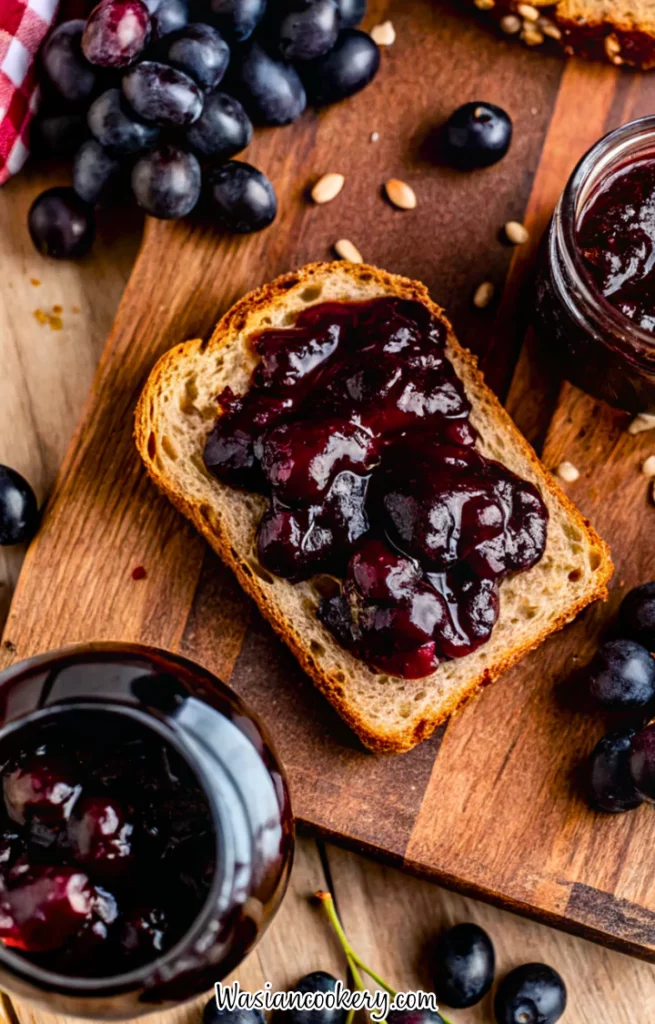
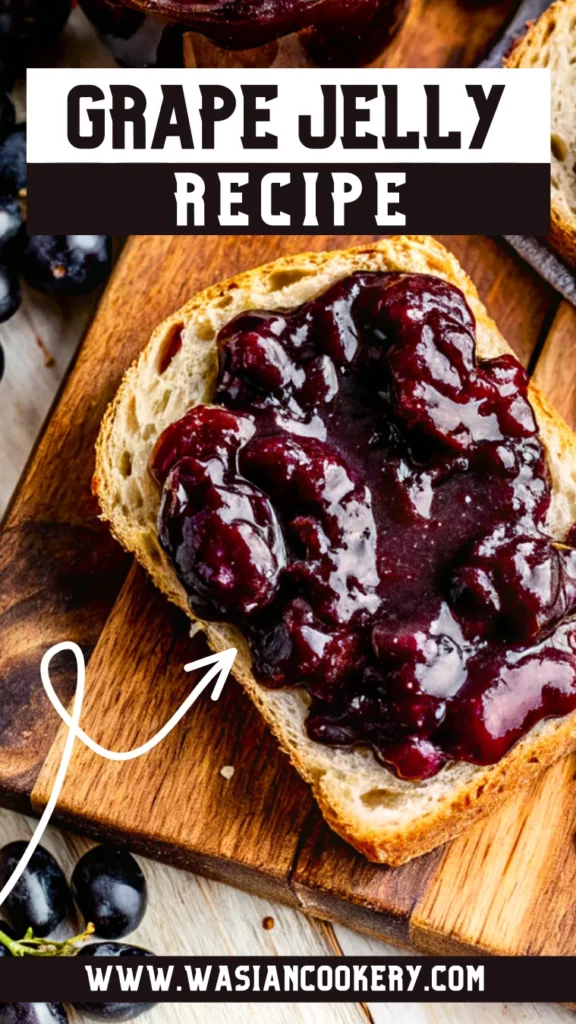
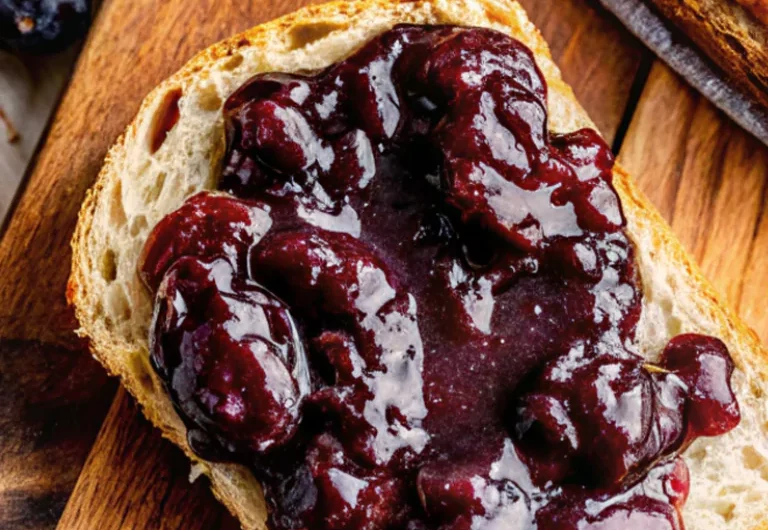
Toast a slice of Grandma Sycamore bread and add a thin layer of grape spread. If the batch is very loose, spoon it onto the toast just before eating so the bread does not become soggy.
A softly set batch is also nice over fluffy pancakes. Use a small serving bowl and keep the remaining containers in the refrigerator. The grape mixture is sweet enough that you may not want another syrup on the same plate.
Stir a little through La Michoacana yogurt or ordinary oatmeal. You can also serve it with chicken or pork; mix a separate serving with mustard if you like, and avoid dipping utensils that have touched meat back into the storage container.
Variations and Swaps
- Concord grapes give a strong, familiar grape flavor while keeping the listed fruit weight.
- Red grapes make a milder version; expect both the color and the final texture to differ.
- Green grapes produce a paler spread with a different flavor. They do not establish a safe canning formula.
- Use the natural-drip straining method for the clearest juice you can get from your fruit.
- Serve a softly set batch as a spread, keeping the portion thin because the formula is quite sweet.
- Use a loose batch as a sauce for pancakes or yogurt rather than adding unmeasured thickener.
- Pair a portion with a savory food when you want contrast, keeping that mixture separate from the stored batch.
- For a low-sugar or shelf-stable version, choose a different complete recipe developed for that purpose. Do not adapt this formula by guessing sugar, pectin, acid, or processing changes.
Storage
This is refrigerator food from start to finish. Cool both the extracted juice and the cooked spread promptly in shallow heat-safe containers, at 40°F or below. Refrigerate within two hours of each cooking stage, or one hour above 90°F. Never leave the entire pot on the counter until cold, and never move a sealed container to the pantry.
Label the date the grapes were first cooked and use the batch within 3–4 days of that date, including the overnight juice preparation. This conservative fresh-food period is not a validated extended jelly shelf life. Use clean utensils and keep every container refrigerated. Discard food held unrefrigerated beyond the safe cooling window without tasting it; discard the entire container for mold or spoilage. A sealed lid or normal smell cannot prove safety.
FAQ
Will this recipe make a firm jelly?
It may, but a firm set is not guaranteed. The fruit weight is fixed while the amount and composition of extracted juice vary. A soft batch can still be served as a refrigerated fruit spread or sauce.
Can I reduce the seven cups of sugar?
Keep that measured amount with this full-sugar powdered pectin formula. A lower-sugar version needs a different complete recipe and the appropriate pectin; changing the sweetener alone can prevent a set.
Should I add more pectin if it is runny?
Do not guess an extra amount or keep reheating the batch. Chill it first, then use a loose result as a sauce. Improvised repairs do not validate a canning process or extend storage.
Why did crystals appear in the juice?
Grapes can form tartrate crystals as their juice stands. Overnight refrigerator chilling followed by another careful straining helps remove them before the pectin and sugar are cooked into the juice.
Can I store sealed jars in the pantry?
No. This complete formula and method are not validated for shelf-stable canning. A hot fill or a lid that seals does not make the contents safe for room-temperature storage.
How many jars does one batch fill?
That depends on the juice extracted, how much evaporates, and the container size. The card states one batch because an exact cup or jar yield is not established. Choose containers after measuring the finished volume.
Short Description
Fresh-grape refrigerator spread made with 4 pounds of grapes, regular powdered pectin, and sugar. Makes one batch with variable volume and set. Keep refrigerated and use within 3–4 days of the initial fruit cooking; not for canning.
Grape Jelly Recipe
Course: CondimentCuisine: AmericanDifficulty: Easy1
batch20
minutes30
minutes17
hours20
minutesFresh-grape refrigerator spread made with 4 pounds of grapes, regular powdered pectin, and sugar. Makes one batch with variable volume and set. Keep refrigerated and use within 3–4 days of the initial fruit cooking; not for canning.
Ingredients
4 pounds of grapes
1 package (1.75 ounces) powdered pectin
7 cups granulated sugar
Directions
- Wash the grapes, remove the stems, and discard spoiled fruit. Put the grapes in a large heavy-bottomed pot and crush them thoroughly with a potato masher to release juice before applying heat. An 8-quart pot leaves useful space for the later foaming boil.
- Heat the crushed grapes gently at first, stirring so they release more juice without scorching. Once bubbling, reduce the heat and simmer for about 10 minutes, stirring occasionally, until the fruit is soft. No added water is included in this formula; keep the heat gentle enough to prevent sticking.
- Set a fine-mesh strainer lined with damp cheesecloth over a large heat-safe bowl. Carefully pour in the cooked grapes and let the juice drain for about 30 minutes without squeezing the cloth. Divide the juice into shallow heat-safe containers and refrigerate promptly at 40°F or below, within 2 hours of cooking or 1 hour above 90°F. Chill overnight, about 12 hours, so grape crystals can settle.
- Pour the chilled juice through two layers of clean, damp cheesecloth, leaving settled crystals behind. Measure the extracted juice and record the amount; about 5 cups is an estimate, not a guaranteed yield. Return all the strained juice to the clean pot and stir in the regular powdered pectin. Bring to a full rolling boil that cannot be stirred down, stirring constantly. Do not top up with guessed water or change the listed sugar or pectin amounts.
- Add all 7 cups of sugar at once and stir until dissolved. Bring the mixture back to a full rolling boil that cannot be stirred down, then boil hard for exactly 1 minute while stirring constantly. Start timing only when that full boil returns. Remove the pot from the heat.
- Skim off surface foam with the spoon. Carefully ladle the hot mixture into clean, shallow, heat-safe storage containers, leaving enough space to handle them without spilling. Do not pour hot syrup into ordinary glass that is not rated for it. Filling containers is not a canning process.
- Refrigerate promptly at 40°F or below, within 2 hours of the final cooking or 1 hour above 90°F. Do not wait for the whole batch to cool on the counter. Leave space for cold air around the containers and cover once cooled. Chill for at least 4 hours, or longer as needed, before assessing the texture. Keep all containers refrigerated, opened or unopened.
- After chilling, spoon out a small portion. If it is soft or pourable, use it as a refrigerated grape spread or sauce; a firm set is not guaranteed with the variable juice yield. Do not keep reboiling it or add unmeasured pectin. Label the date the grapes were first cooked and use within 3–4 days of that date. This is not a canning or pantry-storage recipe.
Notes
- Yield is 1 batch; extracted juice volume and finished set vary. A soft or pourable result can be used as refrigerated grape sauce.
- Timing estimate includes 20 minutes prep, 30 cooking, 30 draining, 12 hours overnight juice chilling, and at least 4 hours final chilling. Chill longer if needed; a firm set is not guaranteed.
- Refrigerate the juice and final spread promptly at 40°F or below, within 2 hours of each cooking stage or 1 hour above 90°F. Use within 3–4 days of the initial fruit cooking, including overnight preparation. This is a conservative fresh-food limit, not a validated extended jelly shelf life. Do not can or store in a pantry.