Cabbage Roll Soup
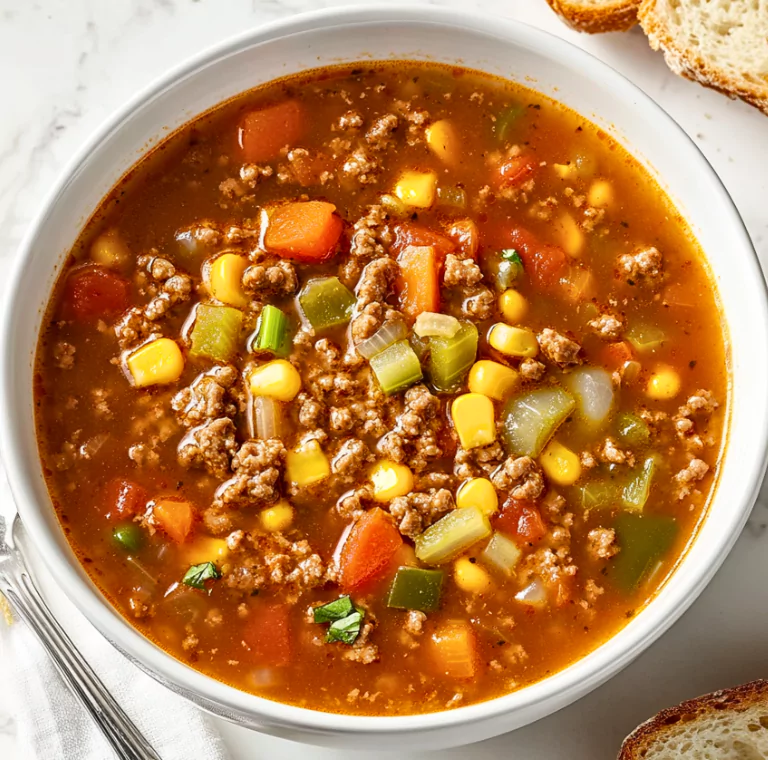
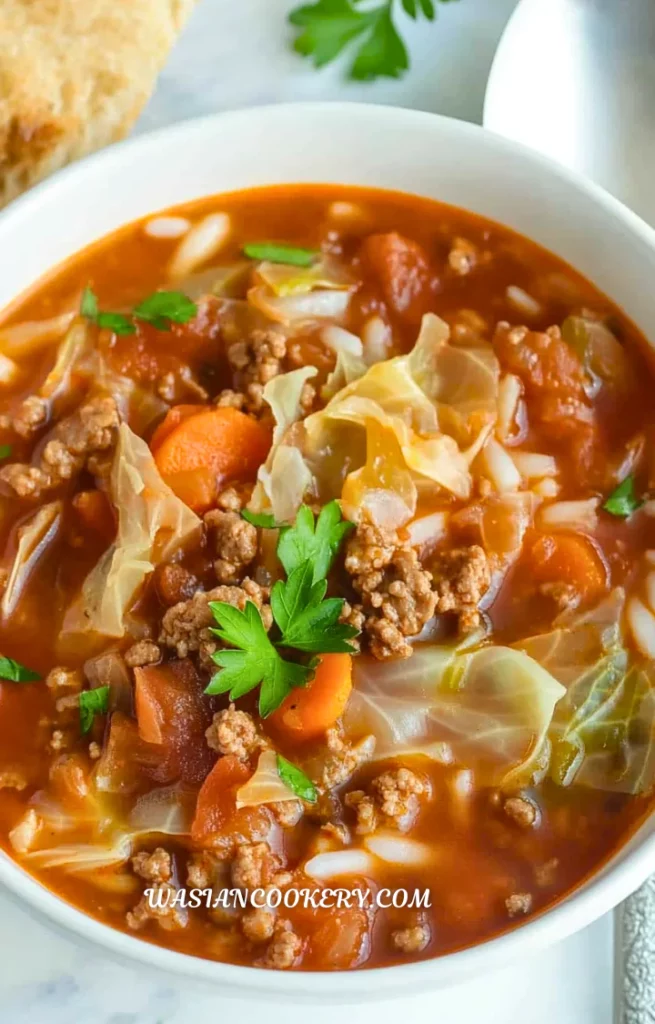
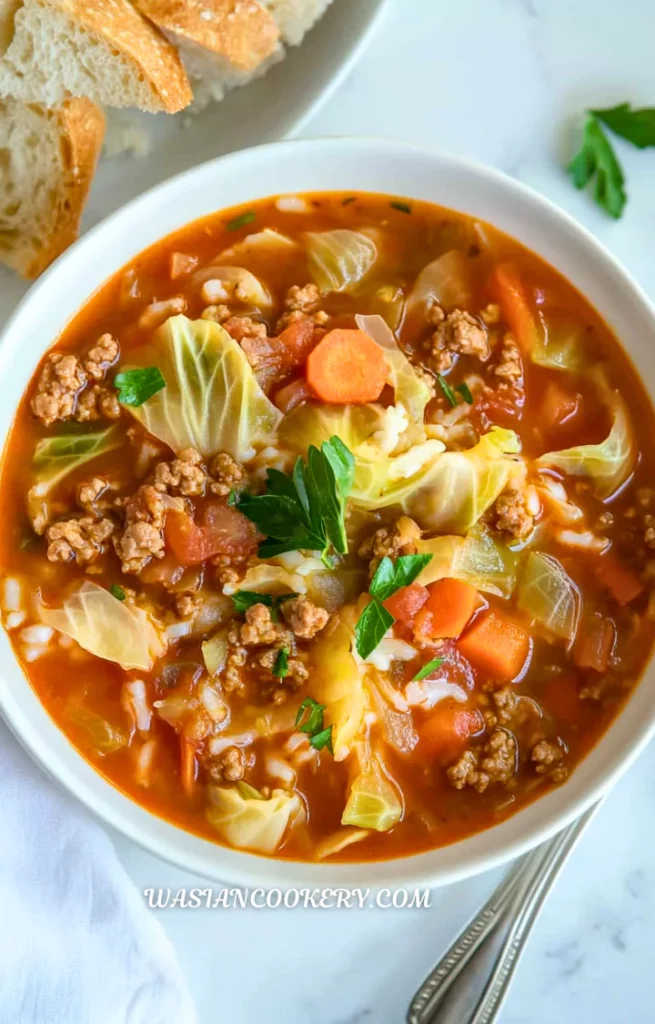
I love how cabbage roll soup brings meat, rice, and tender cabbage together in one warm bowl. The tomato broth has plenty of flavor from onion, garlic, oregano, and Worcestershire sauce, with no leaves to fill or roll.
This version starts with ground beef or turkey and uncooked white rice. Brown the meat, soften the vegetables, then let the rice cook in the broth. A steady, gentle simmer gives the cabbage time to soften without boiling the liquid away too quickly.
The pot makes four generous servings, with about 15 minutes of preparation and 50 minutes of cooking. The rice and vegetables decide when it is ready, so allow a little extra time if their centers are still firm at the first check.
Why This Dish Is Great
- Chopped cabbage is easy to prepare. You can skip separating and stuffing the leaves while still enjoying their sweet, tender flavor in the broth.
- The meat, vegetables, and rice cook in one pot. A sturdy spoon and occasional stirring help keep the rice from sticking underneath.
- Canned tomatoes and broth make the base convenient. Keeping these pantry ingredients ready leaves only the meat and vegetables to prepare.
- The recipe offers a beef or turkey choice from the start. Both fit the tomato broth; each needs its own safe cooking temperature.
- White rice adds body as it cooks. The finished soup is hearty enough for a main dish without requiring a separate side of grains.
- Individual portions are useful for lunch. Cool them promptly and add a little liquid when reheating if the rice has thickened the broth.
Choosing The Best Cabbage And Rice
Choose firm green cabbage with crisp leaves. Remove damaged outer leaves and cut away the dense core, then chop the leafy parts into small pieces. Measure the three cups after chopping, without packing them down. Similar-sized pieces are easier to stir, cook, and scoop onto a spoon.
Use ordinary uncooked white rice for the stated timing. Brown rice and quick-cooking rice absorb liquid on different schedules. The rice may need a little longer in a tomato broth than in plain water, so taste a few grains before serving. Tender grains should have no chalky center.
Ingredients
- 1 lb ground beef (or turkey)
- 1 small onion, diced
- 2 garlic cloves, minced
- 3 cups green cabbage, chopped
- 1 carrot, peeled and chopped
- 1 can (15 oz) diced tomatoes
- 1 can (8 oz) tomato sauce
- 4 cups beef or chicken broth
- ½ cup uncooked white rice
- 1 tablespoon Worcestershire sauce
- 1 teaspoon dried oregano
- Salt and pepper, to taste
- Optional: fresh parsley for garnish
Kitchen Equipment You Will Need
As an Amazon Associate I earn from qualifying purchases.
- Soup pot with lid
- Wooden spoon
- Chef’s knife
- Cutting board
- Measuring cups
- Measuring spoons
- Food thermometer
- Ladle
- Slow cooker
- Small saucepan with lid
How To Make Cabbage Roll Soup
Step 1
Put the ground beef or turkey and diced onion in a large heavy soup pot over medium heat. Break up the meat and cook for about 8–10 minutes. Check several thick clumps with a food thermometer: ground beef must reach 160°F and ground turkey 165°F. Drain excess fat carefully. Browning alone does not tell you whether the meat is cooked.
Step 2
Add the garlic, chopped cabbage, and carrot. Stir and cook for about 5 minutes, until the cabbage starts to soften. Keep the garlic moving so it does not burn, and scrape up the flavorful brown bits as the vegetables release moisture.
Step 3
Pour in the diced tomatoes with their juices, tomato sauce, all 4 cups broth, Worcestershire sauce, and dried oregano. Add salt and pepper lightly, keeping the saltiness of the broth in mind. Stir well to combine the tomato sauce with the broth.
Step 4
Stir in the ½ cup uncooked white rice and bring the soup to a boil. Reduce to a gentle simmer, cover, and cook for about 25–30 minutes, stirring occasionally across the bottom. Check that the rice has no hard center and the cabbage and carrot are tender. If needed, continue simmering, adding a splash of water only if the broth becomes too thick before the rice is ready.
Step 5
Taste the finished soup and adjust salt and pepper if needed. Ladle into four generous bowls, distributing the meat, vegetables, rice, and broth evenly. Garnish with the optional fresh parsley and serve hot.
Notes
- Break the meat into small clumps, but leave a few thick enough to check accurately with your thermometer before breaking them up further.
- Lean meat produces less fat to drain. If turkey starts to catch, lower the heat and stir with the onion as it releases moisture.
- Keep the tomato juices. They are part of the broth here, and draining them would make the finished soup thicker than intended.
- Stir along the bottom during simmering. Rice can settle beneath the vegetables, especially once the tomato broth begins to thicken.
- Use a lid that fits the pot. Too much evaporation can leave the rice short of liquid before its center has softened.
- Season near the finish. Worcestershire sauce, canned tomatoes, and broth all contribute salt, and brands can taste quite different.
- For a slightly smoky broth, choose fire-roasted diced tomatoes in the original can size. Keep the remaining ingredients and method the same.
Ingredients You Can Add
- Diced bell pepper can cook with the cabbage and carrot, adding a sweet note and another color to the pot.
- A bay leaf or fresh thyme can simmer in the broth. Remove the bay leaf or woody stems before ladling.
- Red pepper flakes can add gentle heat. Stir them into the broth so they spread evenly through the soup.
- A spoonful of sour cream can top a serving. Stir it into the bowl rather than boiling it in the pot.
- Shredded cheese makes an optional topping for those who want it. Add it just before serving so it softens over the hot soup.
- Chopped spinach or kale can join the vegetables. Spinach wilts quickly; give kale enough simmering time to become tender.
What To Serve
Serve a small piece of Yats bread beside the bowl for dipping into the tomato broth. The soup already has rice, so bread can be a modest extra.
A cool carrot ribbon salad adds a fresh texture alongside the cooked vegetables. Keep it on a separate plate so the dressing does not mix with the soup.
For another hearty meal later in the week, beef noodle soup gives you a different broth and noodle combination. This cabbage soup also works alone when you want a simple dinner.
Recipe Variations And Swaps
- For a meatless version, use cooked beans or lentils and vegetable broth. Choose a vegetarian Worcestershire sauce, since many regular versions contain anchovies.
- Cauliflower rice can replace the white rice for a different texture. Add it near the end; the broth will stay thinner because it does not absorb liquid like grain.
- Brown rice, barley, or quinoa should be cooked separately according to the package before adding. Their timing and absorption differ from the white rice in the main recipe.
- Ground pork or sausage can replace some or all of the ground meat. Cook pork and beef to 160°F, or ground chicken and poultry sausage to 165°F.
- Tomato juice or vegetable juice can replace part of the broth for a stronger tomato flavor. Choose carefully and taste before salting because packaged juices vary.
- Hot sauce or cayenne can make individual bowls spicier. Smoked paprika offers another warm flavor without needing a large change to the base.
- For a stuffed-pepper variation, add chopped mixed bell peppers with the cabbage. Keep the rice amount unchanged so the soup does not become overly thick.
- For a slow cooker version, fully cook thawed meat with the onion first, then transfer it immediately with the remaining soup ingredients except rice and parsley. Cook on low for 6–8 hours or high for 3–4, until vegetables are tender. Cook the original ½ cup dry rice separately and stir it in near serving. Heat through; this optional method has a longer total time.
How To Store
Divide hot soup into shallow containers and refrigerate promptly, within two hours, or within one hour above 90°F. Do not leave the whole pot on the counter to cool completely. Store refrigerated for up to four days, or freeze portions for up to three months for best quality.
Thaw frozen portions in the refrigerator. Reheat on the stove or in the microwave, stirring until the center reaches 165°F. Add a splash of broth or water if the rice has absorbed too much liquid. Use the stove or microwave for reheating rather than warming cold soup slowly in a slow cooker.
FAQ
Does the rice need cooking first?
No. The main recipe uses ½ cup dry white rice, which cooks directly in the broth. The separately cooked option belongs to the alternate-grain and slow cooker variations.
Can I use Savoy cabbage?
Yes. Its leaves are more tender than standard green cabbage and may soften sooner. Keep the same chopped measure and check their texture during simmering.
Why is the soup thick the next day?
Rice continues absorbing broth during storage. Stir in a little water or broth as the soup reheats, then taste it again before adding seasoning.
Can I use ground turkey?
Yes, it is an original option. Cook it to 165°F before adding the other ingredients. Ground beef and pork need 160°F; color alone is not a reliable check.
What if the broth tastes too sharp?
First check the salt and let the vegetables finish cooking. If needed, the original optional pinch of sugar can soften sharpness. Add vinegar only when the broth needs extra tang.
Can I make it ahead?
Yes. Prepare the soup, portion it, and refrigerate promptly. The rice will soften further, so keep the first simmer gentle and reheat only the amount you plan to eat.
Short Description
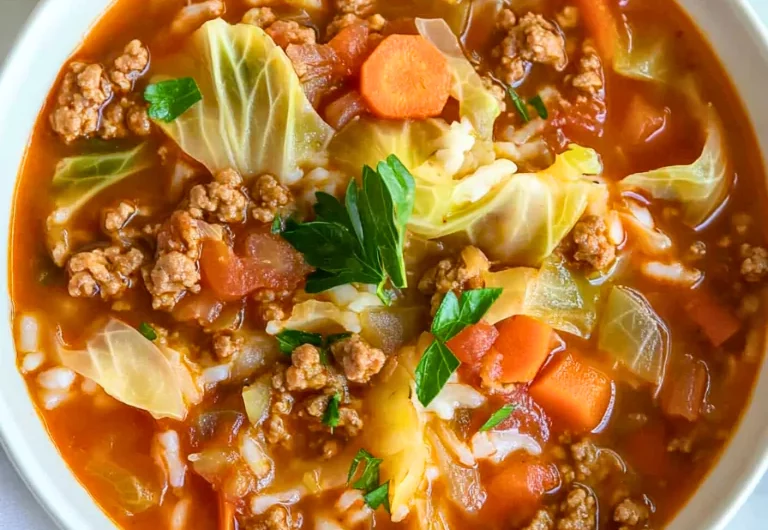
Cabbage Roll Soup brings ground beef or turkey, chopped cabbage, white rice, and tomatoes together in a hearty one-pot meal with a savory broth.
Cabbage Roll Soup
Course: MainCuisine: EuropeanDifficulty: Easy4
servings15
minutes50
minutes1
hour5
minutesCabbage Roll Soup brings ground beef or turkey, chopped cabbage, white rice, and tomatoes together in a hearty one-pot meal with a savory broth.
Ingredients
1 lb ground beef (or turkey)
1 small onion, diced
2 garlic cloves, minced
3 cups green cabbage, chopped
1 carrot, peeled and chopped
1 can (15 oz) diced tomatoes
1 can (8 oz) tomato sauce
4 cups beef or chicken broth
½ cup uncooked white rice
1 tablespoon Worcestershire sauce
1 teaspoon dried oregano
Salt and pepper, to taste
Optional: fresh parsley for garnish
Directions
- Put the ground beef or turkey and diced onion in a large heavy soup pot over medium heat. Break up the meat and cook for about 8–10 minutes. Check several thick clumps with a food thermometer: ground beef must reach 160°F and ground turkey 165°F. Drain excess fat carefully. Browning alone does not tell you whether the meat is cooked.
- Add the garlic, chopped cabbage, and carrot. Stir and cook for about 5 minutes, until the cabbage starts to soften. Keep the garlic moving so it does not burn, and scrape up the flavorful brown bits as the vegetables release moisture.
- Pour in the diced tomatoes with their juices, tomato sauce, all 4 cups broth, Worcestershire sauce, and dried oregano. Add salt and pepper lightly, keeping the saltiness of the broth in mind. Stir well to combine the tomato sauce with the broth.
- Stir in the ½ cup uncooked white rice and bring the soup to a boil. Reduce to a gentle simmer, cover, and cook for about 25–30 minutes, stirring occasionally across the bottom. Check that the rice has no hard center and the cabbage and carrot are tender. If needed, continue simmering, adding a splash of water only if the broth becomes too thick before the rice is ready.
- Taste the finished soup and adjust salt and pepper if needed. Ladle into four generous bowls, distributing the meat, vegetables, rice, and broth evenly. Garnish with the optional fresh parsley and serve hot.
Notes
- Use ½ cup uncooked white rice for the main stovetop method. Cook until the rice has no hard center and the cabbage and carrot are tender.
- Ground beef or pork must reach 160°F; ground turkey or chicken must reach 165°F. Reheat leftovers to 165°F.
- Refrigerate in shallow containers within 2 hours, or within 1 hour above 90°F. Use refrigerated soup within 4 days; the optional slow cooker method needs its own longer cooking window.