Chicken Lo Mein Recipe
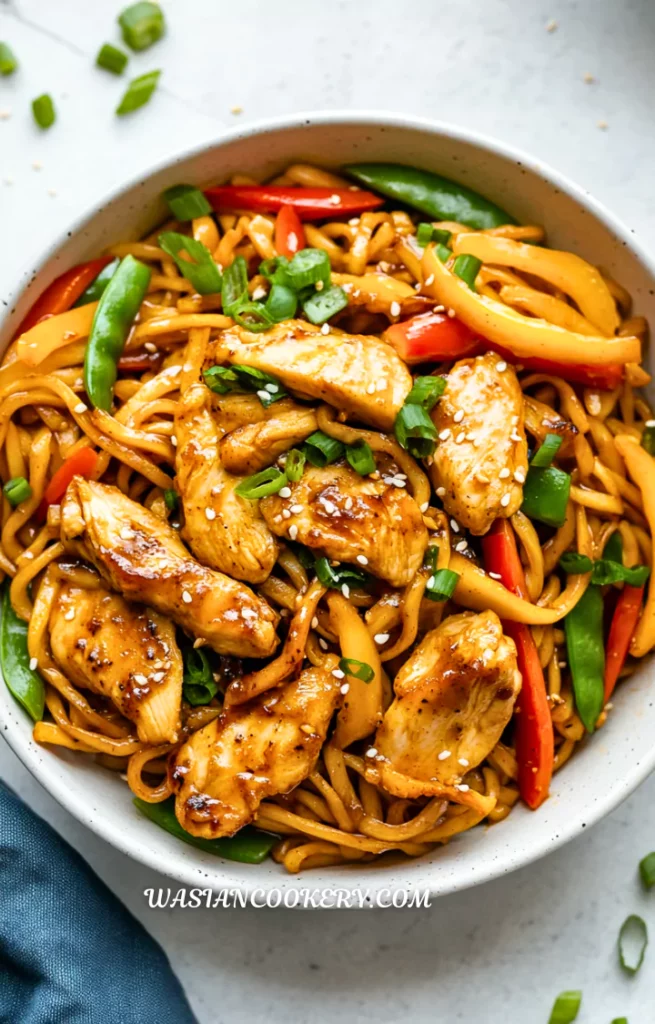
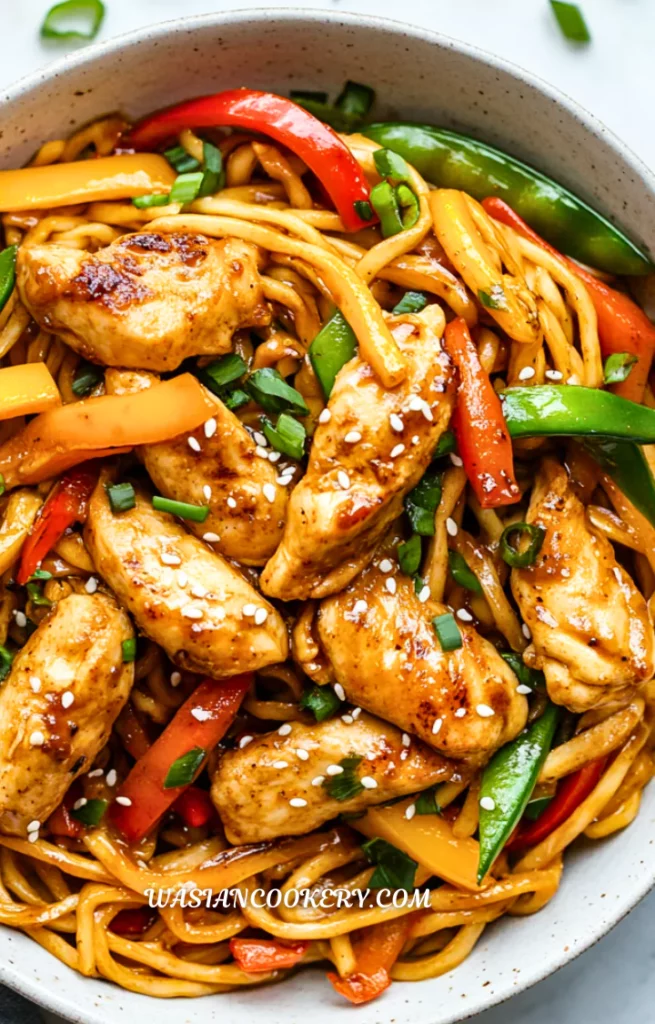
My favorite part of Chicken Lo Mein is the mix of tender noodles, savory chicken, and vegetables with a little crunch. Soy sauce, oyster sauce, hoisin, and sesame oil make a full-flavored coating without needing a separate long-simmered sauce.
This home version keeps the original simple ingredients and uses dry noodles or spaghetti for consistent portions. The chicken gets a short cornstarch marinade, then cooks separately from the vegetables. Everything comes together in smaller batches so a regular skillet can handle the generous amount of food.
Plan about 50 minutes, including chopping, a 10-minute marinade that overlaps with preparation, and batch cooking. You will have four servings, with the chicken amount depending on the size of the two breasts. Have the bowls and garnishes ready before the final toss so dinner can be served hot.
Why This Dish Is Great
- The short marinade coats thin chicken strips while you prepare the vegetables, fitting naturally into the cooking routine.
- A mix of familiar sauces gives the noodles savory depth, gentle sweetness, and a sesame finish.
- Carrots, peppers, and snow peas or broccoli bring color and contrasting textures to each serving.
- Dry spaghetti is an easy option if you cannot find dry lo mein noodles at your usual store.
- Cooking the components separately gives you more control over the chicken’s doneness and the vegetables’ texture.
- Smaller finishing batches make it easier to coat the noodles evenly without spilling food over the skillet’s edges.
What Are the Best Noodles?
Use 8 ounces of dry lo mein noodles, weighed before boiling, or the same weight of dry spaghetti. Choose sturdy wheat noodles that can be lifted and tossed without falling apart. Refrigerated fresh noodles already contain more water, so 8 ounces of fresh noodles is not the same dry starting amount. For these proportions, use the dry option and follow its package cooking time.
Drain well and stop boiling while the noodles still have a slight bite, since they will warm again with the sauce. A tablespoon taken from the mixed sauce lightly coats them while the rest of the cooking finishes. Avoid automatically adding oil to the drained noodles; the recipe’s tablespoon of vegetable oil is already allocated to the chicken and vegetables.
Ingredients
For the Chicken
- 2 boneless, skinless chicken breasts (thinly sliced)
- 1 tablespoon soy sauce
- 1 teaspoon cornstarch
- ½ teaspoon garlic powder
- ½ teaspoon black pepper
For the Sauce
- ¼ cup soy sauce
- 1 tablespoon oyster sauce
- 1 tablespoon hoisin sauce
- 1 teaspoon sesame oil
- 1 teaspoon sugar
- ½ teaspoon ground ginger
For the Lo Mein
- 8 ounces lo mein noodles (or spaghetti noodles)
- 1 tablespoon vegetable oil
- 2 cloves garlic, minced
- 1 small onion, sliced
- 1 cup bell peppers (red, yellow, or green), sliced
- 1 cup carrots, julienned
- 1 cup snow peas or broccoli florets
- 2 green onions, sliced (for garnish)
- 1 teaspoon sesame seeds (optional)
Regular all-purpose soy sauce suits this recipe; avoid replacing it cup-for-cup with a thick dark soy sauce. Oyster and hoisin sauces vary in salt and sweetness, so taste a noodle after the final toss before adding any extra seasoning. This recipe does not need added salt. Check labels if serving someone avoiding wheat, soy, sesame, or shellfish.
Kitchen Equipment You Will Need
As an Amazon Associate I earn from qualifying purchases.
- Deep 12-inch nonstick skillet
- Large pot
- Colander
- Tongs
- Spatula
- Cutting board
- Chef knife
- Kitchen scale
- Measuring cups
- Measuring spoons
- Mixing bowls
- Whisk
- Clean plate
- Instant-read food thermometer
- Serving bowls
- Shallow food storage containers
- Microwave-safe dish with vented lid
- Freezer containers
- Reusable bowl covers
- Can opener
- Oven mitts
How To Make Chicken Lo Mein
Step 1
Thinly slice the chicken across the grain into bite-size strips, about ¼ inch thick. In a bowl, mix it with the marinade's 1 tablespoon soy sauce, 1 teaspoon cornstarch, garlic powder, and black pepper. Cover and refrigerate for 10 minutes while slicing the vegetables and preparing the sauce. Keep raw chicken utensils separate from those used for cooked food.
Step 2
In a separate small bowl, whisk together the sauce's ¼ cup soy sauce, oyster sauce, hoisin sauce, sesame oil, sugar, and ground ginger. Keep this sauce separate from the raw chicken. The tablespoon of soy sauce used in the marinade is additional to this quarter cup, and the teaspoon sesame oil belongs entirely in the sauce.
Step 3
Bring a large pot of water to a boil. Measure 8 ounces of dry lo mein noodles or dry spaghetti before cooking. Boil according to the package until just tender with a little bite, then drain well. Transfer to a bowl and toss gently with 1 tablespoon of the prepared sauce; reserve all remaining sauce. If comfortable managing two burners, cook the chicken while the noodles boil.
Step 4
Heat a deep 12-inch nonstick skillet over medium-high heat. Divide the 1 tablespoon vegetable oil into 3 teaspoons. Cook half the chicken with 1 teaspoon oil for about 4–5 minutes, turning, until the thickest strips reach 165°F. Transfer to a clean plate, then repeat with the second half and another teaspoon oil. Use more batches if needed for very large breasts, dividing the same 2 teaspoons among them. Discard any raw marinade left in the bowl.
Step 5
Add the last 1 teaspoon vegetable oil to the skillet. Stir-fry the onion and carrots for about 3 minutes. If using broccoli, cut small florets and add them now for 2–3 minutes. Add the bell peppers and, if using, snow peas, then cook for 2–3 minutes until crisp-tender. Add the garlic for the final 30 seconds. If the vegetables stick, lower the heat and loosen with a small splash of water; do not add extra oil. Transfer the vegetables to a clean bowl.
Step 6
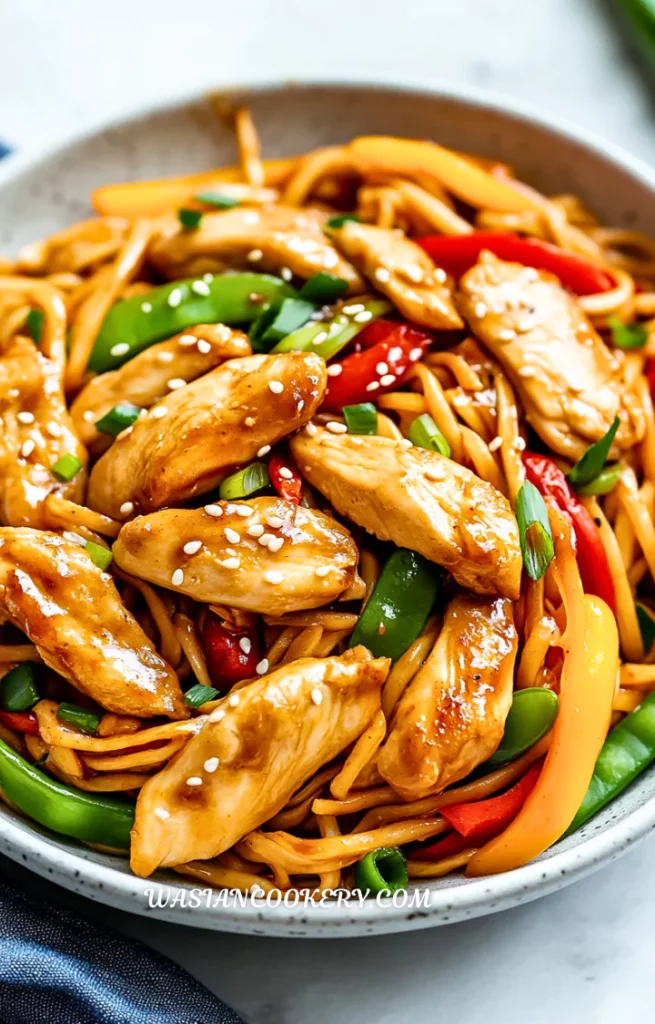
Finish in two batches so the skillet stays manageable. Return half the cooked vegetables, half the chicken and its plate juices, half the noodles, and half the remaining prepared sauce. Toss gently over medium-high heat for 1–2 minutes until evenly coated and steaming hot, with chicken at 165°F. Transfer to serving bowls and repeat with the other halves. If noodles cling tightly together, add a small splash of water and lift gently with tongs instead of tearing them apart.
Step 7
Divide the green onions and optional sesame seeds over the finished portions. Serve promptly while the vegetables still have a little bite. Allow about 20 minutes preparation, including the overlapping 10-minute marinade, and 30 minutes cooking with noodles and chicken cooked concurrently. Extra chicken batches or cooking everything sequentially will take longer.
Notes
- Slice the chicken thinly and evenly. Thick chunks take longer and can leave the thinner pieces overcooked by the time the center is safe.
- Keep the marinade refrigerated. Preparing sauce and vegetables during those ten minutes saves time without leaving raw chicken on the counter.
- Cut carrots into thin matchsticks and broccoli into small florets. Large pieces need more cooking than the peppers and snow peas.
- Use the measured oil in three portions: two teaspoons for chicken and one for vegetables. The separate sesame oil stays in the sauce.
- Keep the prepared sauce away from the raw marinade. Use a clean spoon when taking the tablespoon for the drained noodles.
- Cook over lively but controlled heat. If the cornstarch coating catches or darkens quickly, reduce the heat instead of adding more oil.
- Toss by lifting and folding. Pressing down on the noodles or stirring in tight circles can break them into short pieces.
Ingredients You Can Add
- Mushrooms: Cook them separately until excess moisture evaporates, then fold into the finished vegetables.
- Baby corn: Drain well and slice into manageable pieces before adding near the end of vegetable cooking.
- Water chestnuts: Drained slices add a crisp bite without needing a long cook.
- Chili garlic sauce: Add a little to individual portions for heat, keeping its extra salt in mind.
- Cashews or peanuts: Scatter a small handful over the finished bowls for crunch, after checking for allergies.
- Pineapple: Well-drained chunks offer a sweet contrast. Add modestly so they do not make the noodles watery.
What To Serve With Chicken Lo Mein
The chicken, noodles, and vegetables make a complete bowl on their own. A small helping of spicy Korean cucumber salad adds a cool, crisp contrast when you want something fresh alongside the savory sauce.
For a larger shared dinner, offer small portions of hibachi fried rice beside the noodles. Prepare dishes in a manageable order so finished food is served hot, and avoid crowding two full recipes into one skillet.
Steamed bok choy or green beans make an easy vegetable side. Egg rolls or dumplings also work if you are already preparing them, but keep portions small; the lo mein is filling. Set out bowls and any extra chili sauce before finishing the noodles.
Variations and Swaps
- Spicy lo mein: Add a little sriracha or red pepper flakes at serving time rather than making the whole batch hotter.
- Beef noodles: For a version with its own meat quantities and method, use the beef lo mein recipe instead of guessing a direct chicken substitution.
- Shrimp noodles: Cook peeled shrimp separately to 145°F, with opaque, pearly flesh, then fold through near the end. The chicken timing will not apply.
- More vegetables: Replace some of the peppers or carrots with thinly sliced cabbage or zucchini, keeping the overall amount manageable.
- Tofu version: Use firm tofu in place of chicken and a vegetarian mushroom-style sauce in place of oyster sauce. Cook tofu separately before combining.
- Peanut flavor: Stir a small spoonful of smooth peanut butter into the prepared sauce if you want a richer coating.
- Lower-sodium choice: Use lower-sodium soy sauce for both measured portions. Other sauces still contain salt, so the finished dish is not sodium-free.
- Gluten-free choice: Use suitable noodles and check every sauce and seasoning label. Both oyster sauce and hoisin may contain wheat, even when the soy sauce is replaced.
Storage
Refrigerate leftovers promptly in shallow covered containers at 40°F or below, within 2 hours of cooking or within 1 hour when the surrounding temperature is above 90°F. Do not wait for the noodles to cool completely on the counter. Use within 3–4 days. Freeze small portions promptly for up to 2 months for best quality; the vegetables may be softer after thawing.
Thaw frozen portions in the refrigerator. Reheat in a covered, vented microwave-safe dish with a small splash of water added before heating. Stir partway through, let the food stand briefly, and check several places for 165°F. Water loosens the sauce without adding more salt. Reheat only the portion you need, and discard food that was left at room temperature beyond the safe time limits.
FAQ
Are the eight ounces of noodles dry or cooked?
Use 8 ounces weighed dry before boiling. The same weight of cooked or refrigerated fresh noodles gives a different amount of food. Dry lo mein noodles or dry spaghetti keep the recipe’s proportions consistent.
Can I cook everything in one batch?
The noodles, two chicken breasts, and vegetables make a large mixture. A deep 12-inch skillet works better with two finishing batches. A larger wok may hold more, but it still needs room for food to move and heat evenly.
Why are my vegetables too soft?
They may have been cut too small, cooked too long, or trapped under a crowded pile of noodles. Cook the firmer pieces first, stop at crisp-tender, and add them back only for the quick final toss.
Why are my noodles sticking together?
They may have sat too long after draining or cooked beyond tender. Toss them gently with the measured spoonful of prepared sauce, then finish soon. A small splash of water can loosen a tight clump without extra oil.
Can I double the sauce?
Start with the listed amount and taste first. Doubling it can make the dish much saltier and leave liquid pooling in the skillet. If the noodles simply need loosening, use a little water rather than another dose of soy sauce.
How do I know the chicken is done?
Check the thickest strips for 165°F with an instant-read thermometer. Thin pieces cook quickly, but their color alone is not a reliable guide. Cook each batch fully before placing it on the clean plate.
Short Description
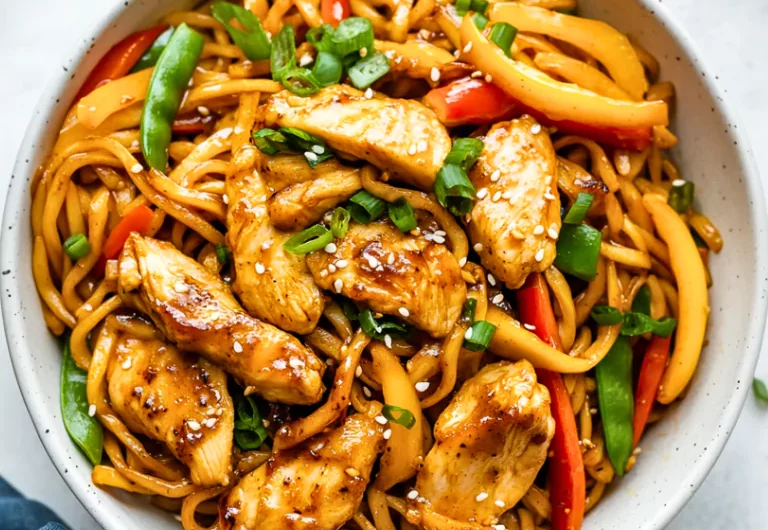
Chicken lo mein combines thin chicken strips, dry noodles, colorful vegetables, and a savory soy, oyster, and hoisin sauce. Cook in manageable skillet batches, then toss and serve hot.
Chicken Lo Mein
Course: MainCuisine: ChineseDifficulty: Easy4
servings20
minutes30
minutes50
minutesChicken lo mein combines thin chicken strips, dry noodles, colorful vegetables, and a savory soy, oyster, and hoisin sauce. Cook in manageable skillet batches, then toss and serve hot.
Ingredients
- For the Chicken:
2 boneless, skinless chicken breasts (thinly sliced)
1 tablespoon soy sauce
1 teaspoon cornstarch
½ teaspoon garlic powder
½ teaspoon black pepper
- For the Sauce:
¼ cup soy sauce
1 tablespoon oyster sauce
1 tablespoon hoisin sauce
1 teaspoon sesame oil
1 teaspoon sugar
½ teaspoon ground ginger
- For the Lo Mein:
8 ounces lo mein noodles (or spaghetti noodles)
1 tablespoon vegetable oil
2 cloves garlic, minced
1 small onion, sliced
1 cup bell peppers (red, yellow, or green), sliced
1 cup carrots, julienned
1 cup snow peas or broccoli florets
2 green onions, sliced (for garnish)
1 teaspoon sesame seeds (optional)
Directions
- Marinate the Chicken:
- Thinly slice the chicken across the grain into bite-size strips, about ¼ inch thick. In a bowl, mix it with the marinade’s 1 tablespoon soy sauce, 1 teaspoon cornstarch, garlic powder, and black pepper. Cover and refrigerate for 10 minutes while slicing the vegetables and preparing the sauce. Keep raw chicken utensils separate from those used for cooked food.
- Make the Sauce:
- In a separate small bowl, whisk together the sauce’s ¼ cup soy sauce, oyster sauce, hoisin sauce, sesame oil, sugar, and ground ginger. Keep this sauce separate from the raw chicken. The tablespoon of soy sauce used in the marinade is additional to this quarter cup, and the teaspoon sesame oil belongs entirely in the sauce.
- Cook the Noodles:
- Bring a large pot of water to a boil. Measure 8 ounces of dry lo mein noodles or dry spaghetti before cooking. Boil according to the package until just tender with a little bite, then drain well. Transfer to a bowl and toss gently with 1 tablespoon of the prepared sauce; reserve all remaining sauce. If comfortable managing two burners, cook the chicken while the noodles boil.
- Cook the Chicken:
- Heat a deep 12-inch nonstick skillet over medium-high heat. Divide the 1 tablespoon vegetable oil into 3 teaspoons. Cook half the chicken with 1 teaspoon oil for about 4–5 minutes, turning, until the thickest strips reach 165°F. Transfer to a clean plate, then repeat with the second half and another teaspoon oil. Use more batches if needed for very large breasts, dividing the same 2 teaspoons among them. Discard any raw marinade left in the bowl.
- Stir-Fry the Vegetables:
- Add the last 1 teaspoon vegetable oil to the skillet. Stir-fry the onion and carrots for about 3 minutes. If using broccoli, cut small florets and add them now for 2–3 minutes. Add the bell peppers and, if using, snow peas, then cook for 2–3 minutes until crisp-tender. Add the garlic for the final 30 seconds. If the vegetables stick, lower the heat and loosen with a small splash of water; do not add extra oil. Transfer the vegetables to a clean bowl.
- Combine Everything:
- Finish in two batches so the skillet stays manageable. Return half the cooked vegetables, half the chicken and its plate juices, half the noodles, and half the remaining prepared sauce. Toss gently over medium-high heat for 1–2 minutes until evenly coated and steaming hot, with chicken at 165°F. Transfer to serving bowls and repeat with the other halves. If noodles cling tightly together, add a small splash of water and lift gently with tongs instead of tearing them apart.
- Serve and Garnish:
- Divide the green onions and optional sesame seeds over the finished portions. Serve promptly while the vegetables still have a little bite. Allow about 20 minutes preparation, including the overlapping 10-minute marinade, and 30 minutes cooking with noodles and chicken cooked concurrently. Extra chicken batches or cooking everything sequentially will take longer.
Notes
- Measure noodles dry: 8 ounces dry lo mein noodles or dry spaghetti. Fresh or cooked noodle weight is not an equivalent starting amount.
- The 10-minute refrigerated marinade overlaps with preparation. Cooking time allows two chicken batches and two finishing batches with noodles boiled concurrently; extra batches or sequential cooking take longer.
- Divide the tablespoon vegetable oil into 2 teaspoons for chicken and 1 teaspoon for vegetables. Put all sesame oil in the sauce. Toss noodles with 1 tablespoon prepared sauce and use all remaining sauce in the final batches.
- Cook chicken to 165°F. Refrigerate promptly in shallow containers, use within 3–4 days, and reheat leftovers to 165°F.