Cracker Barrel Beef Stew Recipe
I love a bowl of Cracker Barrel Beef Stew with tender beef, soft root vegetables, and enough savory broth for a piece of bread. This homemade, restaurant-inspired version brings those comforting flavors to the kitchen with a simple stovetop method.
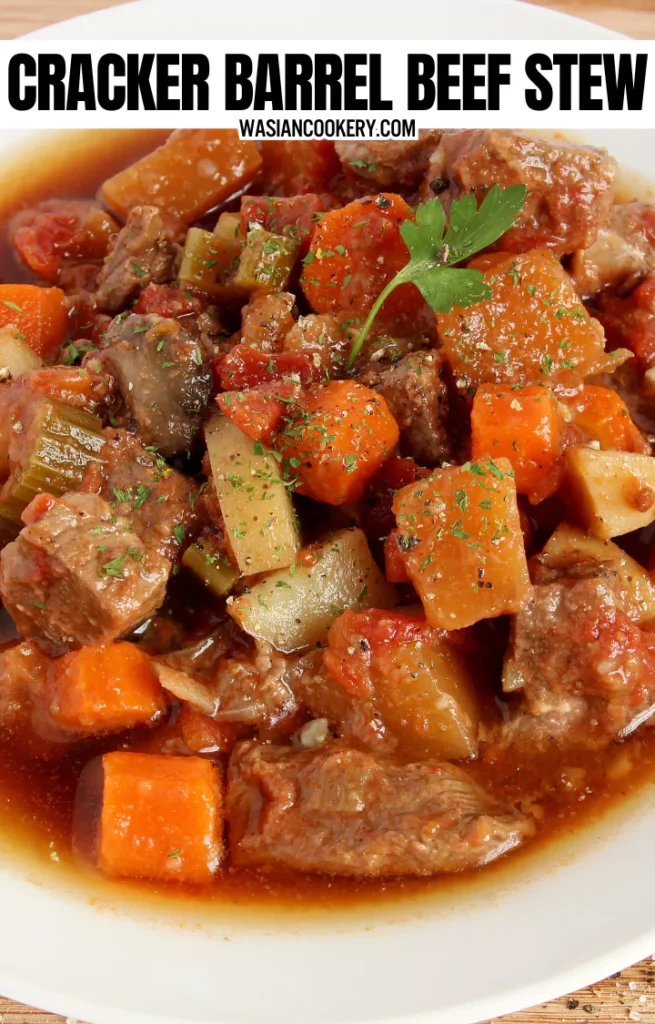
The mixture of potatoes, carrots, celery, and turnips makes it a filling meal. Turnips give the stew a gentle earthy bite, while onion, garlic, thyme, and rosemary season the broth. If you enjoy this kind of dinner, Ninja Foodi Beef Stew is another way to make a cozy beef-and-vegetable meal.
Most of the work happens before the lid goes on. Brown the meat, build the broth, then let the beef soften before adding the root vegetables. Plan for about 20 minutes of preparation, 150 minutes of cooking, and a 5-minute rest, with extra simmering time if your beef needs it.
Why This Dish Is Great
- It makes four generous servings from one pot, with meat and vegetables already together in each bowl.
- Browning builds a deeper savory flavor before the broth goes into the pot.
- A modest amount of flour lightly thickens the liquid without making it a heavy gravy.
- Adding the vegetables after the first simmer helps them keep their shape while the beef becomes tender.
- The flavors settle nicely overnight, so it is a useful dinner to prepare ahead and reheat carefully.
What Is the Best Beef for Stew?
Choose beef chuck with some visible marbling, or stew meat labeled as chuck. This cut has connective tissue that softens during a long, gentle simmer. Very lean cubes can become dry before they feel tender, so do not choose meat simply because it has no fat. Trim hard outer fat and tough silvery pieces, then keep the cubes similar in size.
For the vegetables, firm carrots and small, smooth turnips are good choices. Older, oversized turnips can taste stronger. Gold or red potatoes tend to hold their shape better than very starchy potatoes, although either can work if you handle the stew gently. Use a beef broth you enjoy; a lower-sodium broth gives you more control over the final seasoning.
Ingredients
- 1 1/2 lbs beef stew meat, cubed
- 4 cups beef broth
- 1 onion, chopped
- 3 carrots, peeled and sliced
- 2 potatoes, peeled and cubed
- 2 celery stalks, sliced
- 2 turnips, peeled and cubed
- 2 cloves garlic, minced
- 1 teaspoon dried thyme
- 1 teaspoon dried rosemary
- 1 bay leaf
- Salt and pepper to taste
- 2 tablespoons vegetable oil
- 2 tablespoons all-purpose flour
- Chopped fresh parsley for garnish (optional)
Kitchen Equipment You Will Need
As an Amazon Associate I earn from qualifying purchases.
- Dutch oven with lid
- Chef knife
- Cutting board
- Vegetable peeler
- Measuring cups
- Measuring spoons
- Kitchen tongs
- Wooden spoon
- Dinner plate
- Fork
- Ladle
- Instant-read thermometer
- Shallow storage containers
How To Make Cracker Barrel Beef Stew
- Pat the beef dry and cut any large pieces into roughly 1-inch cubes. Heat the 2 tablespoons vegetable oil in a large Dutch oven over medium-high heat. Brown the beef in two uncrowded batches, about 5 minutes per batch, turning to color several sides. Transfer to a plate; it will finish cooking in the stew.
- Reduce the heat to medium. Add the chopped onion to the same pot and cook for about 3 minutes, stirring. Add the minced garlic and cook for another minute, until fragrant. Keep the browned bits on the bottom, but avoid scorching the garlic.
- Sprinkle the 2 tablespoons flour over the onion and garlic. Stir for 1 to 2 minutes, until no dry patches remain. Gradually stir in the 4 cups beef broth, scraping the bottom until the flour blends smoothly into the liquid.
- Return the beef and its juices to the pot. Add the dried thyme, dried rosemary, bay leaf, and a little salt and pepper. Bring to a boil, then immediately reduce to a gentle simmer. Cover and cook for 75 to 90 minutes, until the beef begins to soften. Stir occasionally and check that the liquid is not boiling hard.
- Add the carrots, potatoes, celery, and turnips. Cut the potatoes and turnips into roughly 1-inch pieces and the carrots and celery into thick slices so they cook evenly. Return to a gentle simmer, cover, and cook for another 30 to 45 minutes.
- Check several beef pieces with a fork: they should give way easily. The potatoes and turnips should be tender through the middle without falling apart. Continue simmering as needed; tough beef needs more time. If the vegetables finish first, lift them out and return them once the beef is tender.
- Remove and discard the bay leaf. Taste and adjust salt and pepper. If the broth is thinner than you like, simmer uncovered briefly, stirring gently. If too much liquid has evaporated, stir in a small splash of water. Allow about 150 minutes total cooking, including browning and simmering; tenderness decides the finish.
- Turn off the heat and let the stew settle for 5 minutes before serving. Ladle into bowls and garnish with the optional chopped parsley. Divide leftovers into shallow containers and refrigerate promptly within 2 hours; do not leave the full pot on the counter to cool.
Notes
- Dry the beef well before browning. Wet surfaces release steam and delay the brown crust you want.
- Leave room between the cubes. Divide the measured oil between batches if your pot needs it, keeping the total at 2 tablespoons.
- Keep the simmer quiet. A rolling boil can break up the vegetables and drive off the broth too quickly.
- Stir down to the bottom occasionally once the flour is in the pot; thickened broth can catch there.
- Judge the beef with a fork, not just the clock. Different packages of stew meat do not soften at exactly the same rate.
- Season lightly at first, especially with salted broth. As liquid evaporates, the existing salt tastes stronger.
- Remove the bay leaf before serving. It flavors the broth but stays firm and is not pleasant to eat.
Ingredients You Can Add
These are optional additions to a future batch, rather than changes needed for the main recipe. Keep additions modest so the beef, vegetables, and broth still fit comfortably in the pot.
- Peas bring sweetness and color; stir them in near the end so they do not lose their fresh look.
- Mushrooms add an earthy flavor. Brown them in the same pot before the beef if you want a firmer texture.
- Parsnips bring a sweeter root-vegetable note and can cook alongside the turnips.
- Bell peppers soften quickly, so add them during the final part of the vegetable simmer.
- A little tomato paste can deepen the broth; cook it briefly with the onions before adding flour.
- Green beans add a different texture and are best added late enough to stay intact.
What To Serve With Beef Stew
My favorite way to serve this stew is with crusty French bread or warm dinner rolls. Tear the bread into pieces for soaking up the broth, or keep it on a side plate so it stays crisp until you want it.
A crisp salad gives a welcome change of texture beside the soft beef and vegetables. Nish Nosh Salad is an option when you want something crunchy alongside a warm bowl.
For a heartier plate, spoon a modest amount of stew over Texas Roadhouse Mashed Potatoes. Since the stew already contains potatoes, a small scoop is enough. Plain rice or warm cornbread also works well with the savory broth.
Variations and Swaps
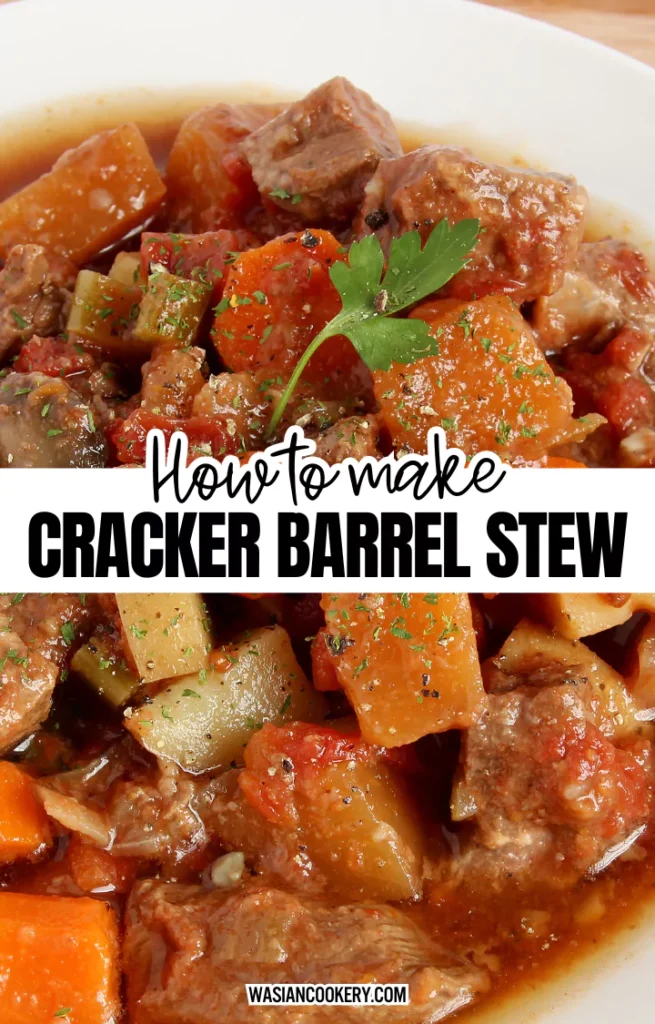
- Chunkier stew: keep the vegetables in larger pieces and give them the extra time they need to become tender.
- Smaller spoonfuls: use evenly cut, smaller vegetable pieces, checking them earlier to prevent them from falling apart.
- More broth at serving: use the covered simmer to limit evaporation, then loosen individual bowls if necessary.
- Thicker finish: uncover only after the meat is tender and reduce the liquid gently, watching the salt level.
- Fresh-herb finish: add a little fresh thyme or parsley near serving time for a brighter aroma.
- Peppery finish: offer black pepper at the table so each person can adjust their own bowl.
- Make-ahead dinner: refrigerate the finished stew promptly and reheat the next day, stirring from the bottom.
- Freezer portions: pack individual helpings rather than one large container, making later thawing more manageable.
Storage
Refrigerate leftovers at 40°F or below in shallow containers within 2 hours after cooking, or within 1 hour above 90°F. Count serving time in this limit. You can refrigerate small portions while still warm; do not wait for a large pot to reach room temperature. Keep refrigerated stew for 3 to 4 days.
Freeze well-sealed portions for up to 3 months for best quality, leaving room for expansion. Thaw in the refrigerator. Reheat the stew on the stove, stirring regularly, until it reaches 165°F throughout and the broth comes to a full boil. Potato texture may become softer after freezing, but the stew will still be enjoyable.
FAQ
Why is my beef still tough?
It usually needs a longer gentle simmer. Keep the lid on and check the liquid level. Raising the heat sharply does not make the connective tissue soften instantly and can leave the meat dry.
Can I put all the vegetables in at the beginning?
The original method cooked everything together, but the vegetables may become very soft before the beef is ready. Adding them later gives you better control and keeps recognizable pieces in the bowl.
Why is the broth lumpy?
Flour needs to be stirred into the onions before liquid is added gradually. If a few lumps remain, press them against the side with your spoon. Avoid sprinkling dry flour directly into the finished stew.
Can I use a slow cooker?
This version is written for a stovetop pot. Slow cookers heat differently and lose much less moisture, so the cooking time and broth consistency will change. Use a method specifically written for your appliance rather than copying the stovetop timing.
Does this taste exactly like the restaurant stew?
It is a homemade interpretation with beef, broth, and root vegetables. Restaurant formulas and menus can differ, so the recipe is best enjoyed as a comforting stew rather than a promise of an exact match.
Can I prepare the vegetables early?
Yes. Keep cut vegetables covered in the refrigerator until needed. If potatoes are cut ahead, hold them in cold water in the refrigerator and drain before adding them. Keep raw beef separate from ready-to-use vegetables.
Short Description
A homemade Cracker Barrel-inspired beef stew with tender beef, potatoes, carrots, celery, turnips, and a lightly thickened herb broth.
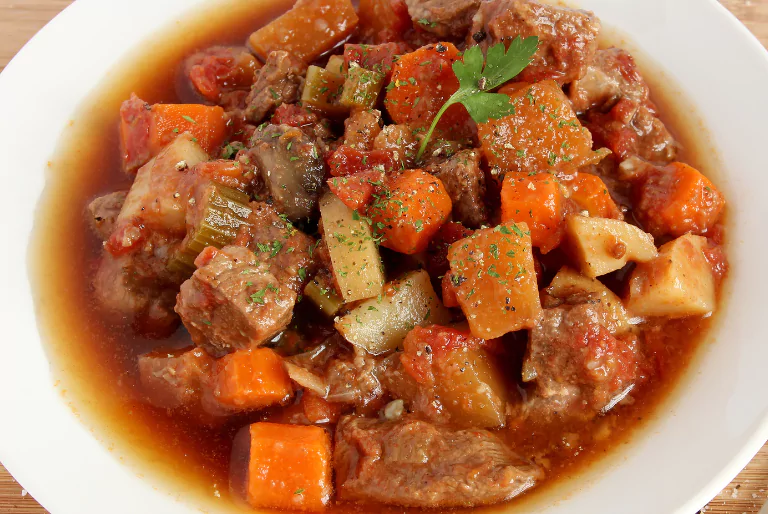
Cracker Barrel Beef Stew
Course: MainCuisine: AmericanDifficulty: Medium4
servings20
minutes2
hours30
minutes2
hours55
minutesA homemade Cracker Barrel-inspired beef stew with tender beef, potatoes, carrots, celery, turnips, and a lightly thickened herb broth.
Ingredients
1 1/2 lbs beef stew meat, cubed
4 cups beef broth
1 onion, chopped
3 carrots, peeled and sliced
2 potatoes, peeled and cubed
2 celery stalks, sliced
2 turnips, peeled and cubed
2 cloves garlic, minced
1 teaspoon dried thyme
1 teaspoon dried rosemary
1 bay leaf
Salt and pepper to taste
2 tablespoons vegetable oil
2 tablespoons all-purpose flour
Chopped fresh parsley for garnish (optional)
Directions
- Pat the beef dry and cut any large pieces into roughly 1-inch cubes. Heat the 2 tablespoons vegetable oil in a large Dutch oven over medium-high heat. Brown the beef in two uncrowded batches, about 5 minutes per batch, turning to color several sides. Transfer to a plate; it will finish cooking in the stew.
- Reduce the heat to medium. Add the chopped onion to the same pot and cook for about 3 minutes, stirring. Add the minced garlic and cook for another minute, until fragrant. Keep the browned bits on the bottom, but avoid scorching the garlic.
- Sprinkle the 2 tablespoons flour over the onion and garlic. Stir for 1 to 2 minutes, until no dry patches remain. Gradually stir in the 4 cups beef broth, scraping the bottom until the flour blends smoothly into the liquid.
- Return the beef and its juices to the pot. Add the dried thyme, dried rosemary, bay leaf, and a little salt and pepper. Bring to a boil, then immediately reduce to a gentle simmer. Cover and cook for 75 to 90 minutes, until the beef begins to soften. Stir occasionally and check that the liquid is not boiling hard.
- Add the carrots, potatoes, celery, and turnips. Cut the potatoes and turnips into roughly 1-inch pieces and the carrots and celery into thick slices so they cook evenly. Return to a gentle simmer, cover, and cook for another 30 to 45 minutes.
- Check several beef pieces with a fork: they should give way easily. The potatoes and turnips should be tender through the middle without falling apart. Continue simmering as needed; tough beef needs more time. If the vegetables finish first, lift them out and return them once the beef is tender.
- Remove and discard the bay leaf. Taste and adjust salt and pepper. If the broth is thinner than you like, simmer uncovered briefly, stirring gently. If too much liquid has evaporated, stir in a small splash of water. Allow about 150 minutes total cooking, including browning and simmering; tenderness decides the finish.
- Turn off the heat and let the stew settle for 5 minutes before serving. Ladle into bowls and garnish with the optional chopped parsley. Divide leftovers into shallow containers and refrigerate promptly within 2 hours; do not leave the full pot on the counter to cool.
Notes
- The 175-minute total includes a 5-minute rest. Simmer longer if the beef is not fork-tender.
- Add root vegetables after the initial beef simmer so they hold their shape.
- Refrigerate leftovers in shallow containers within 2 hours and use within 3 to 4 days.