Buttermilk Pancake Recipe
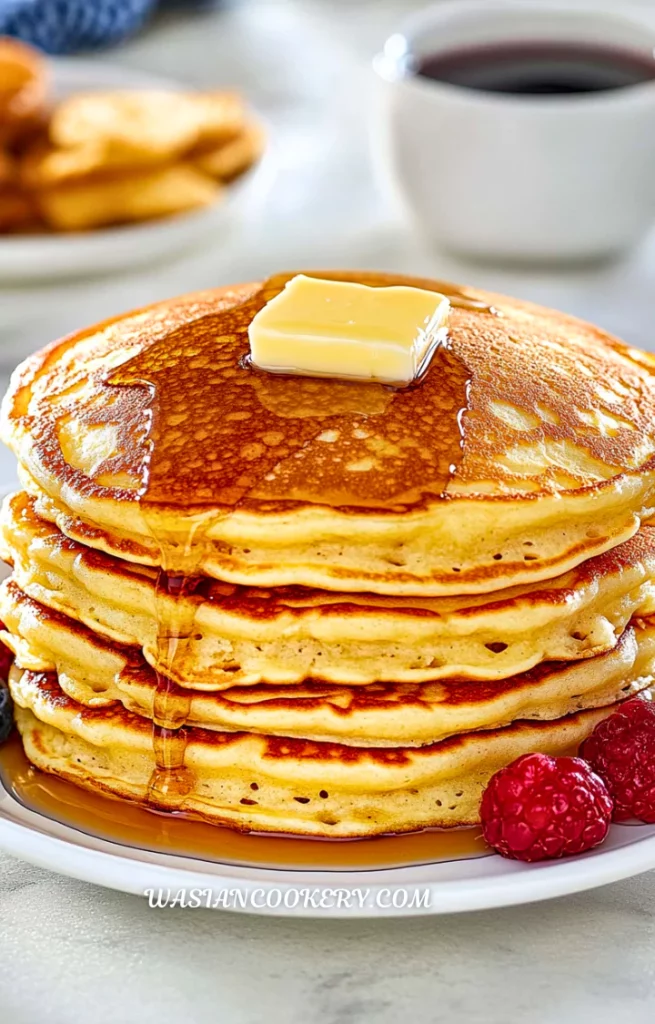
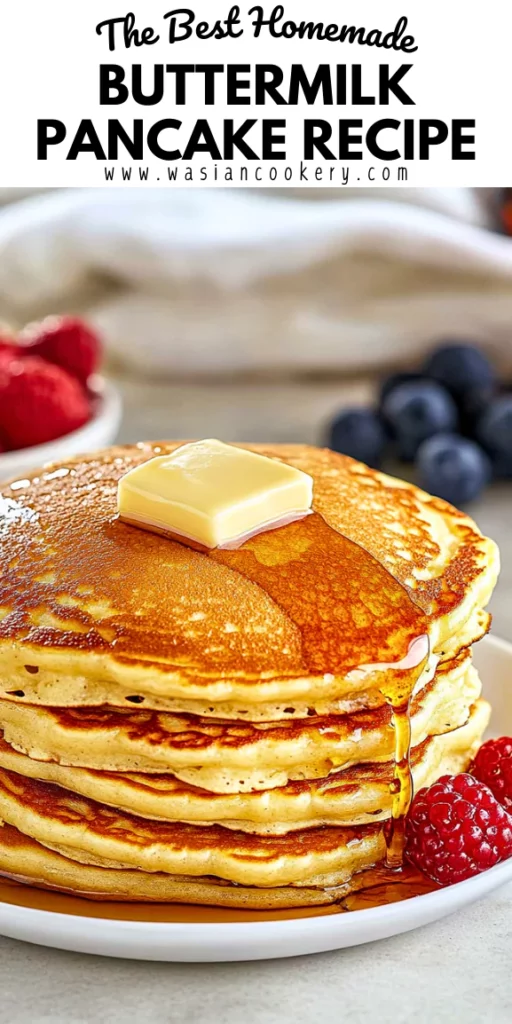
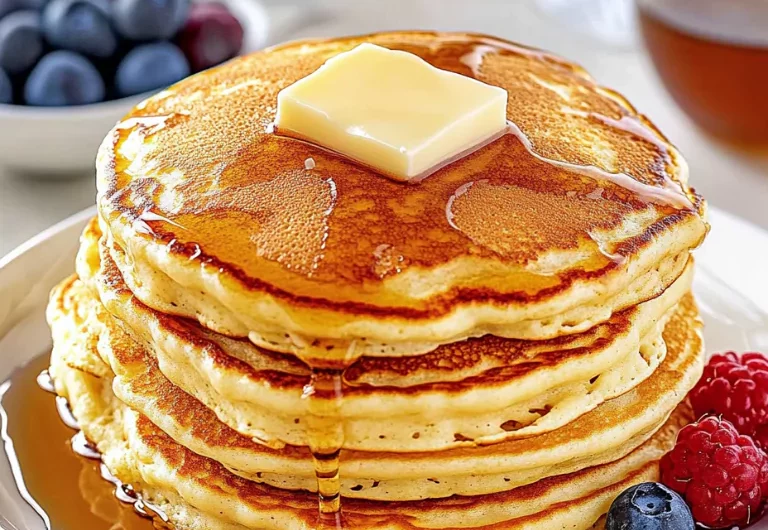
I love these pancakes’ soft and fluffy texture and the little tang that buttermilk brings to every bite. Golden edges, a tender middle, and a touch of vanilla make them a comforting breakfast with very simple ingredients.
Buttermilk pancakes are a timeless choice for family breakfasts or brunch gatherings. They are light, buttery, and easy to serve with fruit, maple syrup, or a spoonful of jam. Keep the batter gently mixed and give the pan steady heat for the best texture.
This recipe makes approximately twelve pancakes, depending on their size. Allow about forty-five minutes when cooking three at a time, including the batter rest. A broad griddle can finish the batch sooner; a small skillet needs extra time, so have the toppings ready before cooking.
Why This Dish Is Great
- Gentle tang: Buttermilk balances the butter and sweet toppings without making the pancakes taste sharply sour.
- Tender texture: A lightly mixed batter gives the pancakes a soft middle while the surface turns golden.
- Simple ingredients: Flour, eggs, butter, and a few pantry staples make a breakfast that feels special.
- Flexible toppings: Set out fruit, syrup, and nuts so everyone can put together their favorite stack.
- Useful leftovers: Cooked pancakes can be chilled or frozen for a quick breakfast on another day.
- Easy portions: Make smaller pancakes for a breakfast spread or keep the approximate twelve-pancake size for larger stacks.
What Is the Best Buttermilk to Use?
Use fresh, plain cultured buttermilk from the refrigerated dairy section. Shake the carton before measuring because it can separate as it sits. Its acidity works with the baking soda, while its thickness helps make a batter that spreads gently rather than running across the pan. Avoid flavored buttermilk or sweetened dairy drinks.
All-purpose flour keeps the pancakes familiar and tender. Spoon it lightly into the measuring cup and level the top; scooping a packed cup can make the batter unnecessarily heavy. Check that both leaveners are fresh. They have different jobs here, so keep the baking powder and baking soda as listed.
Ingredients
- 2 cups all-purpose flour
- 2 tablespoons granulated sugar
- 2 teaspoons baking powder
- 1 teaspoon baking soda
- 1/2 teaspoon salt
- 2 cups buttermilk
- 2 large eggs
- 1/4 cup unsalted butter, melted
- 1 teaspoon vanilla extract
Have a little additional butter or nonstick spray available for lightly greasing the pan, as needed. This is separate from the melted butter mixed into the batter. Toppings are optional and are added after cooking.
Kitchen Equipment You Will Need
As an Amazon Associate I earn from qualifying purchases.
- Mixing bowls
- Heatproof bowl
- Whisk
- Measuring cups
- Measuring spoons
- Rubber spatula
- Nonstick griddle or skillet
- Pancake turner
- Baking sheet
- Oven mitts
- Cooling rack
- Food thermometer
- Airtight containers
- Parchment paper
- Freezer bags
- Fine zester
- Knife
- Cutting board
- Measuring jug
How To Make Buttermilk Pancakes
Step 1
In a large bowl, whisk together the flour, sugar, baking powder, baking soda, and salt until evenly combined. Spoon flour into the measuring cup and level it rather than packing it down.
Step 2
In another bowl, whisk the buttermilk, eggs, melted butter, and vanilla extract until smooth. Let the melted butter cool until just warm before combining it with the eggs.
Step 3
Pour the wet ingredients into the dry ingredients. Stir gently until no dry pockets remain; small lumps are fine. Let the batter rest for 15 minutes. Avoid beating it smooth or stirring it repeatedly during the rest.
Step 4
While the batter rests, heat a nonstick griddle or skillet over medium heat; start an electric griddle around 350°F. Lightly grease with butter or nonstick spray. Cook a small test pancake and adjust the heat if it browns before the middle sets.
Step 5
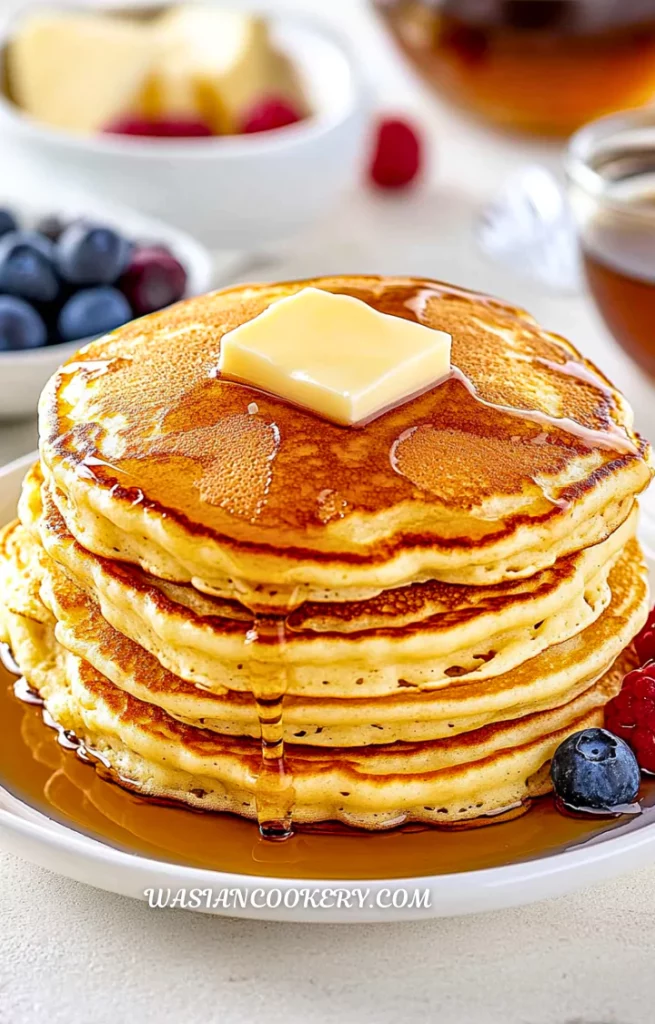
For about 12 pancakes, divide the batter into 12 portions, roughly 1/3 cup each. Cook in uncrowded batches for 2–3 minutes on the first side, until bubbles open and the edges look set. Flip once and cook 1–2 minutes more, until golden and the center has no wet batter. Allow about 20 minutes for four batches of three; a smaller skillet takes longer. Using 1/4-cup portions makes more, smaller pancakes.
Step 6
Serve immediately with maple syrup, fresh berries, whipped cream, or nuts. If needed, hold the first batches briefly in a single layer on a baking sheet in a 200°F oven while the remaining pancakes cook. The estimated 45-minute total includes 10 minutes preparation, 15 minutes resting, and 20 minutes batch cooking.
Notes
- Keep small lumps in the batter. Stirring until perfectly smooth develops a tougher texture and can knock out some of the air.
- Use a small test pancake to judge the pan. If it darkens quickly while the top stays very wet, lower the heat before continuing.
- Leave space between portions. Crowding makes it harder to slide the turner underneath without folding or tearing an edge.
- Flip when bubbles stay open and the outer edge loses its wet shine. The pancake should lift cleanly from the pan.
- Do not press down after flipping. A gentle turn preserves the soft middle better than flattening it against the cooking surface.
- Reduce the heat between batches if necessary. A heavy skillet can become hotter as cooking continues even when the burner setting stays the same.
- Keep finished pancakes in a single layer while holding them warm. A tightly covered pile traps steam and softens the surface.
Ingredients You Can Add
- Blueberries: Sprinkle a few onto each newly poured pancake for little pockets of fruit without tinting the whole batter.
- Chocolate chips: Mini chips distribute easily. Add them sparingly so the pancake still cooks evenly in the middle.
- Cinnamon: A little ground cinnamon mixed with the dry ingredients adds warm flavor that suits apples and maple syrup.
- Banana slices: Use thin slices as a topping or press a few gently into the wet surface before flipping.
- Lemon zest: Finely grate only the yellow skin and stir it into the wet mixture for a bright citrus note.
- Nuts: Chopped pecans or walnuts give a pleasant crunch. Keep pieces small and mention the addition when serving guests.
What To Serve With Buttermilk Pancakes
Stack the warm pancakes on plates and add maple syrup just before eating. Fresh berries, sliced banana, whipped cream, or a light dusting of powdered sugar all work well. A spoonful of peach jam brings a fruity topping without needing a separate sauce.
For a larger breakfast, serve eggs, crispy bacon, or sausage on the side, with coffee or orange juice. Keep the savory foods separate so everyone can choose their own balance. The pancakes are already buttery, so a modest amount of extra butter is usually enough.
If you are planning a pancake breakfast for several people, offer one style at a time so the cook can keep up. My fluffy pancake recipe is another simple option, while blueberry pancakes suit a fruit-focused brunch.
Variations and Swaps
- Classic: Leave the batter plain and put the toppings on the table. This keeps the buttermilk flavor easy to notice.
- Berry: Add berries to individual pancakes instead of folding them through the entire bowl, especially when using frozen fruit.
- Chocolate: Pair a few mini chocolate chips with sliced banana after cooking for a sweeter breakfast.
- Citrus: Use lemon zest in the batter and serve with berries. Avoid pouring extra juice into the measured batter.
- Warm spice: Choose cinnamon or a small pinch of nutmeg, keeping the spices gentle enough for the vanilla to come through.
- Nutty: Sprinkle chopped nuts over the finished stack if you prefer to keep the cooking surface free of loose pieces.
- Smaller pancakes: Use 1/4-cup portions and expect more than twelve. Smaller pancakes can be easier to turn in a compact skillet.
- Different flour needs: A flour change can alter liquid absorption and texture. Choose a recipe developed for the flour you need instead of expecting coconut or almond flour to behave like wheat flour.
Storage
Move leftover pancakes to a cooling rack, then refrigerate in an airtight container within two hours of cooking, or within one hour in temperatures above 90°F. Keep the refrigerator at 40°F or colder and use them within three days. Do not leave a large breakfast stack on the counter until later in the day.
For longer storage, separate cooled pancakes with parchment paper and freeze in a sealed freezer bag for up to two months for best quality. Thaw overnight in the refrigerator, then reheat in a low oven or microwave until hot throughout, reaching 165°F. Add syrup after reheating so the pancakes do not become soggy in storage.
FAQ
Can I replace the buttermilk with regular milk?
Plain milk alone changes the acidity and thickness. For a quick substitute, put 2 tablespoons lemon juice or vinegar in a measuring jug and add milk to the 2-cup line. Let it stand about five minutes. It will be thinner than cultured buttermilk, so the pancakes may spread more.
Why are my pancakes dense?
Packed flour, stale leaveners, and heavy mixing are common causes. Measure gently, check the baking powder and soda, and stop stirring once the flour is moistened. Extra stirring will not make a heavy batter lighter.
Why is the outside brown but the middle wet?
The pan is usually too hot for the portion size. Lower the heat and allow more time for the center to set. Cut open a test pancake before serving the rest; there should be no shiny, uncooked batter inside.
Can I mix the batter the night before?
For the best rise, combine the wet and dry mixtures shortly before cooking. You can measure the dry ingredients ahead and keep the wet ingredients separately refrigerated, then stir them together in the morning.
Should I stir the batter again after resting?
Only fold it gently if you find a dry pocket. Avoid beating it or trying to remove every lump. Scoop from the bowl without repeatedly stirring the whole mixture between batches.
Why does the pancake count vary?
The yield depends on the scoop size, how thick the batter is, and how much remains in the bowl. Dividing the bowl into twelve roughly equal portions gives the listed approximate yield; 1/4-cup scoops produce more small pancakes.
Short Description
Soft, golden buttermilk pancakes with a gentle tang, buttery flavor, and a tender middle. Serve warm with maple syrup, fruit, or your favorite jam.
Buttermilk Pancake Recipe
Course: BreakfastCuisine: AmericanDifficulty: Easy12
pancakes10
minutes20
minutes45
minutesSoft, golden buttermilk pancakes with a gentle tang, buttery flavor, and a tender middle. Serve warm with maple syrup, fruit, or your favorite jam.
Ingredients
2 cups all-purpose flour
2 tablespoons granulated sugar
2 teaspoons baking powder
1 teaspoon baking soda
1/2 teaspoon salt
2 cups buttermilk
2 large eggs
1/4 cup unsalted butter, melted
1 teaspoon vanilla extract
Directions
- In a large bowl, whisk together the flour, sugar, baking powder, baking soda, and salt until evenly combined. Spoon flour into the measuring cup and level it rather than packing it down.
- In another bowl, whisk the buttermilk, eggs, melted butter, and vanilla extract until smooth. Let the melted butter cool until just warm before combining it with the eggs.
- Pour the wet ingredients into the dry ingredients. Stir gently until no dry pockets remain; small lumps are fine. Let the batter rest for 15 minutes. Avoid beating it smooth or stirring it repeatedly during the rest.
- While the batter rests, heat a nonstick griddle or skillet over medium heat; start an electric griddle around 350°F. Lightly grease with butter or nonstick spray. Cook a small test pancake and adjust the heat if it browns before the middle sets.
- For about 12 pancakes, divide the batter into 12 portions, roughly 1/3 cup each. Cook in uncrowded batches for 2–3 minutes on the first side, until bubbles open and the edges look set. Flip once and cook 1–2 minutes more, until golden and the center has no wet batter. Allow about 20 minutes for four batches of three; a smaller skillet takes longer. Using 1/4-cup portions makes more, smaller pancakes.
- Serve immediately with maple syrup, fresh berries, whipped cream, or nuts. If needed, hold the first batches briefly in a single layer on a baking sheet in a 200°F oven while the remaining pancakes cook. The estimated 45-minute total includes 10 minutes preparation, 15 minutes resting, and 20 minutes batch cooking.
Notes
- The estimated 45-minute total includes 15 minutes of batter resting and about 20 minutes of cooking in batches of three. A small skillet needs longer.
- Yield is approximately 12 pancakes when the batter is divided into twelve portions. Using 1/4-cup scoops produces more, smaller pancakes.
- For a buttermilk substitute, put 2 tablespoons lemon juice or vinegar in a measuring jug, then add milk to the 2-cup line; stand 5 minutes. Texture will differ.