Frisch’s vegetable soup recipe
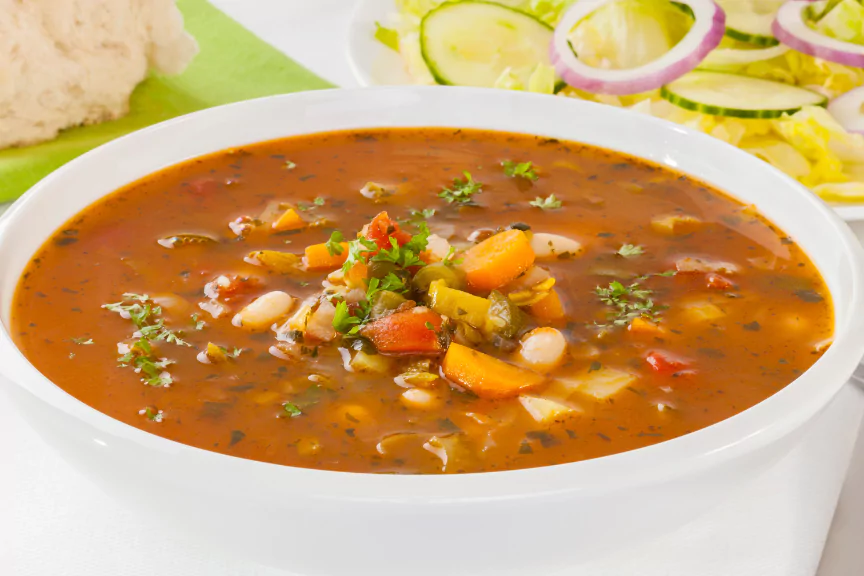
I love making vegetable soup for my two sons during the cold months. After trying my Zuppa Del Giorno Soup, I wanted to share my home-style take on Frisch’s vegetable soup: a colorful pot of vegetables in a gently seasoned broth.

With celery, carrots, onions, potatoes, green beans, peas, and corn, this is a hearty soup made from familiar ingredients. Thyme and oregano give the broth a warm flavor, while the vegetables bring their own sweetness and texture.
Serve it with crusty bread or crackers, just like I do, for a comforting meal. This is a homemade version inspired by the name, with vegetable broth and a clear, herb-seasoned base; it is not an official restaurant formula.
Why This Dish Is Great
- Everyday vegetables: A small selection of fresh produce and frozen vegetables makes a generous, colorful pot without a long shopping list.
- A light but satisfying broth: Potatoes give each bowl substance while the soup stays brothy and easy to enjoy with a sandwich.
- Simple seasoning: Dried thyme and oregano are easy to keep on hand, and their flavors have time to settle into the broth.
- Flexible serving size: The recipe works as four generous main-dish portions or several smaller bowls alongside another dish.
- Useful leftovers: Once chilled safely, the soup is handy for another lunch. Keep any optional grains separate for a looser broth.
What Are the Best Vegetables for This Soup?
Choose firm potatoes without green areas, crisp celery, and carrots that are easy to cut into even pieces. Waxy or all-purpose potatoes hold their shape well in broth. Mealy potatoes can work, but become softer and may make the soup cloudier as they break apart.
Fresh green beans should snap rather than bend limply. Frozen peas and corn are convenient because they need little preparation. You can use frozen green beans too; check their tenderness as the soup simmers. Cut away damaged produce and wash everything before peeling or chopping.
Ingredients
- 2 stalks celery, diced
- 2 carrots, diced
- 1 onion, diced
- 2 potatoes, peeled and diced
- 1 cup green beans, trimmed and chopped
- 1 cup peas
- 1 cup frozen corn kernels
- 6 cups vegetable broth
- 2 tablespoons olive oil
- 1 teaspoon dried thyme
- 1 teaspoon dried oregano
- Salt and pepper to taste
- Optional: Sprouts grains (e.g., quinoa, barley, or rice)
The optional grain line refers to quinoa, barley, or rice, including packaged sprouted versions. The base soup needs none of them. Since no grain quantity is specified, add only as much fully cooked grain as you want in your own bowl rather than letting an unknown amount absorb the whole pot of broth.
Kitchen Equipment You Will Need
As an Amazon Associate I earn from qualifying purchases.
- Large soup pot
- Small saucepan
- Cutting board
- Chef knife
- Vegetable peeler
- Measuring cups
- Measuring spoons
- Colander
- Wooden spoon
- Dinner fork
- Soup ladle
- Instant-read thermometer
- Shallow storage containers
How To Make Frisch’s Vegetable Soup
Plan on about 15 minutes of preparation and 40 minutes of cooking, or roughly 55 minutes total. The cooking estimate includes softening the base, heating the broth, and simmering. Optional grains may need extra time according to their package, so start those separately if you want them.
Step 1: Soften the soup base
Heat the 2 tablespoons olive oil in a large pot over medium heat. Add the diced celery, carrots, and onion. Cook for about 5 minutes, stirring often, until the onion looks translucent and the vegetables begin to soften. They will finish cooking in the broth.
Step 2: Add the remaining vegetables
Add the peeled, diced potatoes, chopped green beans, peas, and frozen corn kernels. Keep the potatoes and carrots in small, even pieces, about 1/2 inch, so the larger pieces do not remain hard after the smaller ones soften.
Step 3: Pour in the broth and herbs
Pour in all 6 cups vegetable broth and stir in the dried thyme and oregano. Raise the heat and bring the soup to a gentle boil. Allow roughly 5–10 minutes for heating, depending on the pot and the starting temperature of the broth.
Step 4: Simmer until tender
Reduce the heat to a steady simmer and cook uncovered for about 20–25 minutes, stirring occasionally. Check a large potato cube and a carrot piece with a fork: it should slide through the center easily. Green beans should be tender enough to bite, without a tough, squeaky texture. Continue simmering if needed.
Step 5: Prepare optional grains separately
If using the optional quinoa, barley, or rice, cook it separately according to its package directions, including any rinsing instructions. Sprouted grain products also need their stated cooking method. Stir the fully cooked grains into the soup near the end and heat through; different grains cannot all be cooked in the same 10-minute window.
Step 6: Season the finished broth
Taste with a clean spoon, then season with salt and pepper to taste. The broth may already contain plenty of salt, so add a little at a time. Stir and taste again before adding more.
Step 7: Check before serving
Check the vegetables once more and remove the pot from the heat as soon as they are tender. The potatoes should hold their shape when lifted with a spoon. If they begin to break apart, stop stirring vigorously and serve the soup soon.
Step 8: Ladle into bowls
Serve the vegetable soup hot in four generous portions, or divide it into smaller bowls as a side dish. Fresh parsley or thyme is an optional finishing touch. Crusty bread or crackers make a simple accompaniment.
Step 9: Put away leftovers promptly
Divide leftover soup into shallow containers and refrigerate promptly, within 2 hours of cooking or within 1 hour when the room is above 90°F. Do not leave the whole pot on the counter to cool completely. Keep refrigerated at 40°F or below.
Notes
- Chop vegetables evenly. A large potato cube can stay hard while tiny pieces start to fall apart; consistent cuts help everything finish together.
- Use a gentle simmer. Fast boiling can break the potatoes and evaporate the broth before the vegetables have softened properly.
- Stir along the bottom occasionally. Potatoes and small pieces of onion can settle there while the soup cooks.
- Taste before adding salt. Broth brands vary, and their seasoning becomes stronger as some liquid evaporates.
- Judge tenderness as well as time. Older green beans and larger carrots can need a few more minutes than the estimate.
- Keep cooked grains separate for leftovers. Rice and barley continue absorbing broth, even after the soup has been refrigerated.
- If the soup tastes too salty, avoid simmering it down further. Serve smaller portions with plain bread, and choose a less salty broth next time.
Ingredients You Can Add
- Parsley: A little chopped parsley brings a fresh finish to each bowl.
- Spinach: Stir in a small handful near the end, just until the leaves wilt.
- Zucchini: Small pieces soften quickly, so add them toward the end of simmering.
- White beans: Drained, rinsed canned beans can make a bowl more substantial; heat them through.
- Tomatoes: A little chopped tomato gives a different, tangier broth. Let the potatoes soften before adding it.
- Green cabbage: Thinly sliced cabbage can simmer with the firmer vegetables for another layer of sweetness.
What To Serve with Frisch’s Vegetable Soup
For a classic combination, serve a bowl with crusty bread or a grilled cheese sandwich. Jimmy Johns Bread is another homemade bread option if you want to plan a baking day around lunch.
A side salad gives the meal a fresh crunch. Imo’s Salad offers a fuller salad pairing; serve a modest portion so the soup still has room on the table. Simple greens with vinaigrette work well too.
Crackers or garlic bread bring a crisp contrast to the soft vegetables. Apple slices, grapes, or a small cheese plate can round out the meal without another hot dish to prepare.
Variations and Swaps
- Frozen green beans: Use them in place of fresh beans and check their texture during cooking.
- Mixed frozen vegetables: Measure the individual vegetables where possible to keep the original balance of peas, beans, and corn.
- Lower-sodium broth: This gives you more control over the final salt level.
- Homemade vegetable broth: Use a well-flavored broth; a weak one can make the finished soup taste thin.
- Skin-on potatoes: Scrub sound, thin-skinned potatoes well if you prefer to leave their peels on.
- Thicker texture: Mash a few cooked potato pieces against the pot, then stir them back through.
- Grain bowls: Spoon separately cooked quinoa, rice, or barley into bowls before adding soup.
- Smaller portions: Serve the same pot in cups as a starter, keeping the ingredient amounts unchanged.
Storage
Refrigerate the soup promptly in shallow containers at 40°F or below, and use it within 3–4 days. Hot soup can go into the refrigerator in small portions; there is no need to wait for the entire pot to become cold. Discard soup left out longer than 2 hours, or 1 hour above 90°F.
For longer storage, freeze cooled portions in freezer-safe containers with space for expansion. Aim to enjoy them within 2–3 months for good texture. Thaw overnight in the refrigerator or reheat from frozen in a saucepan. Stir while reheating, bring the broth to a rolling boil, and check that the soup reaches 165°F throughout. Potatoes may be a little softer after freezing.

FAQ
Is this vegetable soup vegetarian?
This homemade recipe uses vegetable broth and no meat. Check the broth label and any toppings or optional additions to make sure they fit your needs. The recipe does not establish the ingredients in a restaurant’s version.
Is this soup gluten-free?
The vegetable base can be gluten-free when the broth and seasonings are suitable. Barley contains gluten, so omit that optional grain. Check packaged ingredients and use appropriate preparation practices for anyone who needs to avoid gluten.
Why are the potatoes still firm?
The pieces may be too large, or the soup may not be simmering steadily. Continue cooking and test a large piece with a fork. Let tenderness guide you instead of stopping because the timer has finished.
Can I make it in a slow cooker?
This version gives stovetop directions. A slow cooker heats at a different rate, so the same times will not work. For a reliable result with these instructions, use the large pot and check the vegetables as they simmer.
Can I freeze it with grains?
You can freeze fully cooked grains with the soup, but they absorb liquid and change the texture. Freezing the soup and grains separately makes it easier to keep a generous amount of broth in each bowl.
Does it need tomatoes?
No. This recipe has a clear vegetable broth with thyme and oregano. Tomatoes are an optional variation, so the base recipe is complete without them. Keep the original version simple before changing its flavor.
Short Description
A comforting homemade vegetable soup with potatoes, carrots, celery, green beans, peas, and corn in an herb-seasoned vegetable broth. Serve it hot with bread, and save extra portions for another easy meal.
Frisch’s vegetable soup recipe
Course: SoupsCuisine: AmericanDifficulty: Easy4
servings15
minutes40
minutes55
minutesA home-style vegetable soup inspired by Frisch’s, with potatoes, carrots, celery, green beans, peas, and corn in a thyme-and-oregano broth.
Ingredients
2 stalks celery, diced
2 carrots, diced
1 onion, diced
2 potatoes, peeled and diced
1 cup green beans, trimmed and chopped
1 cup peas
1 cup frozen corn kernels
6 cups vegetable broth
2 tablespoons olive oil
1 teaspoon dried thyme
1 teaspoon dried oregano
Salt and pepper to taste
Optional: Sprouts grains (e.g., quinoa, barley, or rice)
Directions
- Heat the 2 tablespoons olive oil in a large pot over medium heat. Add the diced celery, carrots, and onion. Cook for about 5 minutes, stirring often, until the onion looks translucent and the vegetables begin to soften. They will finish cooking in the broth.
- Add the peeled, diced potatoes, chopped green beans, peas, and frozen corn kernels. Keep the potatoes and carrots in small, even pieces, about 1/2 inch, so the larger pieces do not remain hard after the smaller ones soften.
- Pour in all 6 cups vegetable broth and stir in the dried thyme and oregano. Raise the heat and bring the soup to a gentle boil. Allow roughly 5–10 minutes for heating, depending on the pot and the starting temperature of the broth.
- Reduce the heat to a steady simmer and cook uncovered for about 20–25 minutes, stirring occasionally. Check a large potato cube and a carrot piece with a fork: it should slide through the center easily. Green beans should be tender enough to bite, without a tough, squeaky texture. Continue simmering if needed.
- If using the optional quinoa, barley, or rice, cook it separately according to its package directions, including any rinsing instructions. Sprouted grain products also need their stated cooking method. Stir the fully cooked grains into the soup near the end and heat through; different grains cannot all be cooked in the same 10-minute window.
- Taste with a clean spoon, then season with salt and pepper to taste. The broth may already contain plenty of salt, so add a little at a time. Stir and taste again before adding more.
- Check the vegetables once more and remove the pot from the heat as soon as they are tender. The potatoes should hold their shape when lifted with a spoon. If they begin to break apart, stop stirring vigorously and serve the soup soon.
- Serve the vegetable soup hot in four generous portions, or divide it into smaller bowls as a side dish. Fresh parsley or thyme is an optional finishing touch. Crusty bread or crackers make a simple accompaniment.
- Divide leftover soup into shallow containers and refrigerate promptly, within 2 hours of cooking or within 1 hour when the room is above 90°F. Do not leave the whole pot on the counter to cool completely. Keep refrigerated at 40°F or below.
Notes
- Cut the potatoes and carrots into even 1/2-inch pieces; cook until a fork slides easily through the largest pieces.
- Optional grains are cooked separately according to their package; their cooking time may extend the total.
- Refrigerate promptly in shallow containers within 2 hours, or 1 hour above 90°F. Use within 3–4 days and reheat soup to 165°F and a rolling boil.