Salmon Pesto Pasta
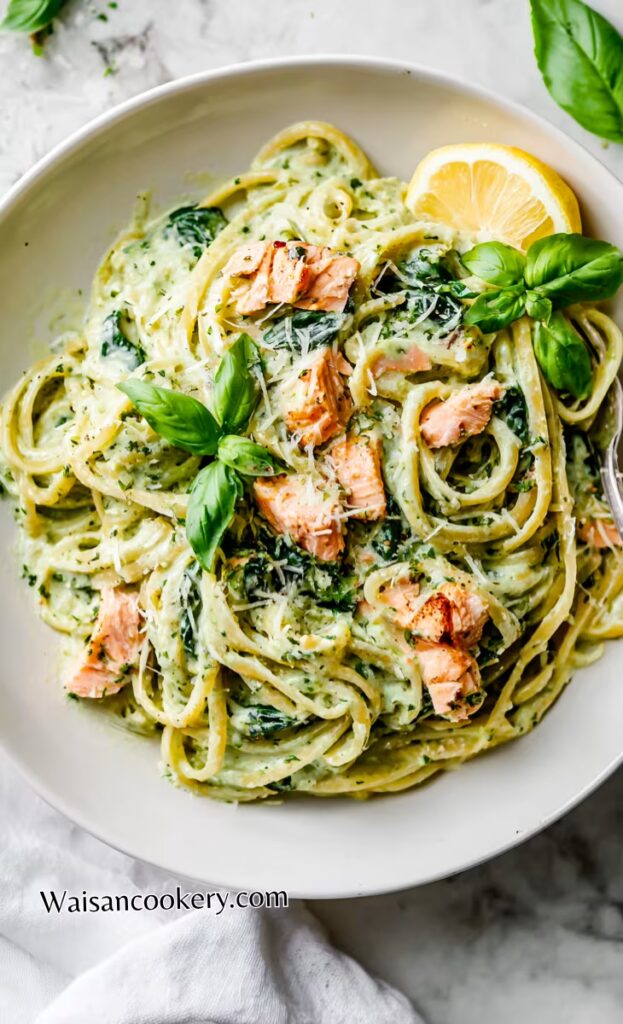
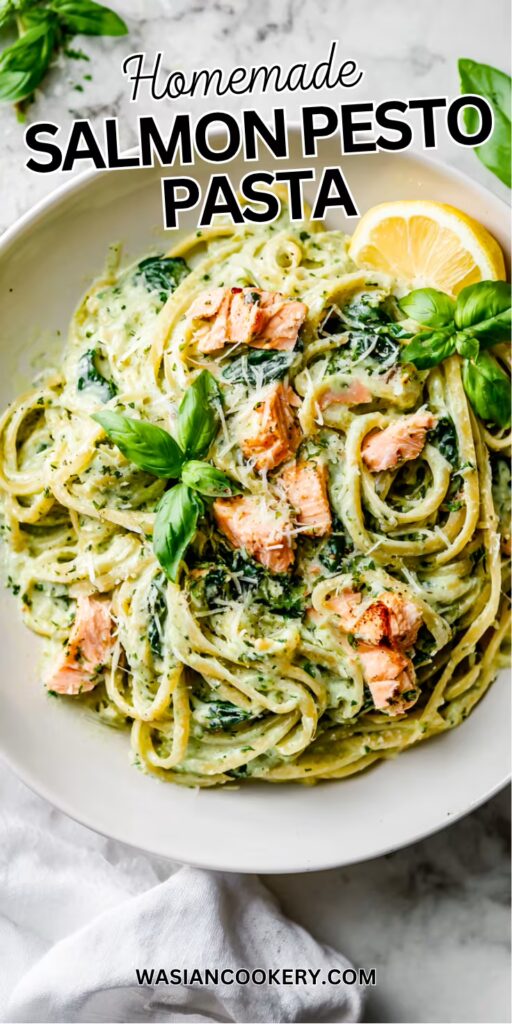
From time to time, I want a pasta dinner that feels special without a long afternoon of cooking. This salmon pesto pasta brings together flaky fish, basil pesto, garlic, and a creamy sauce. Lemon adds a fresh finish that makes the rich ingredients feel nicely balanced.
I have made this recipe many times on busy nights. Fresh salmon, a spoonful of pesto, and a little cream are the combination I return to, especially when I want something comforting for my family. The sauce is quick, so most of the attention goes to cooking the fish carefully.
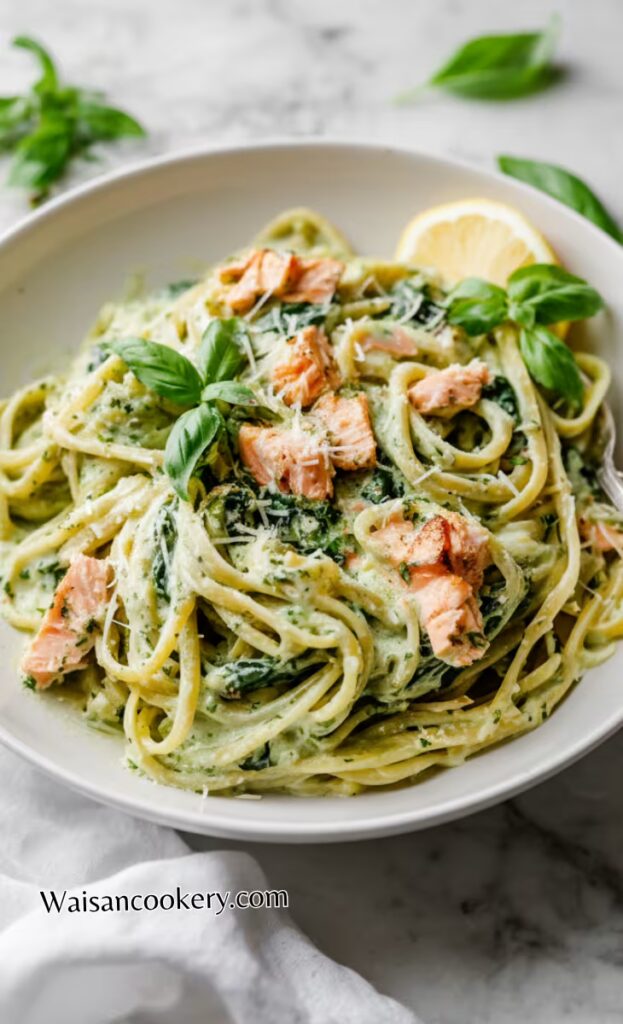
I like a little extra Parmesan and fresh basil at the table. Leave the salmon in generous pieces, and fold it through at the end so it stays recognizable among the noodles. With a crisp salad alongside, this is a lovely dinner to bring straight from the stove.
Why This Dish Is Great
- Pesto brings basil, garlic, and savory flavor together in one ingredient, keeping the sauce preparation simple.
- The salmon cooks in the same skillet used for the sauce, so the browned bits can add flavor to the finished pasta.
- A small amount of reserved pasta water helps the cream and pesto coat the noodles without becoming heavy or sticky.
- Optional spinach wilts into the warm sauce and adds green leaves without needing another pan.
- The recipe makes four servings and works with long noodles or short shapes, depending on what you have available.
Choosing Salmon And Pesto
Choose a skinless salmon fillet of fairly even thickness, checking for any remaining pin bones. A very thin tail section will cook faster than the thick center, so separate it if necessary and remove each piece when it reaches 145°F. For pesto, taste a little before adding extra salt because brands vary widely. Basil should be the main flavor, with the cream softening its intensity. Homemade pesto also works when it has been prepared and stored safely.
Ingredients
- 12 oz pasta (fettuccine, penne, or spaghetti)
- 1 lb salmon fillet (skin removed)
- 2 tablespoons olive oil
- Salt and black pepper, to taste
- 2 cups baby spinach (optional)
- 1/2 cup pesto sauce (store-bought or homemade)
- 1/2 cup heavy cream or half-and-half
- 1/4 cup grated Parmesan cheese
- Juice of 1/2 lemon
- 2 cloves garlic, minced
- 1 tablespoon butter
- Fresh basil or parsley, for garnish
The 2 tablespoons olive oil cook the salmon; the butter cooks the garlic for the sauce. Use the full measured Parmesan in the pasta and keep any extra topping separate. The 2 cups baby spinach are optional. Reserve 1/2 cup pasta cooking water before draining, then use only enough to loosen the sauce.
Kitchen Equipment You Will Need
As an Amazon Associate I earn from qualifying purchases.
- Pasta pot
- Colander
- Large skillet
- Fish spatula
- Wooden spoon
- Chef knife
- Cutting board
- Measuring cups
- Measuring spoons
- Cheese grater
- Instant-read thermometer
- Rimmed baking sheet
How To Make Salmon Pesto Pasta
Allow about 15 minutes to prepare the ingredients and 25 minutes for cooking, or about 40 minutes total. Start heating the pasta water while you prepare the fish and sauce ingredients. Pasta and salmon cook alongside one another; a second batch of fish or slow-boiling water will take longer.
- Cook the pasta: Start a large pot of salted water heating while you mince the garlic, grate the Parmesan, and prepare the lemon. Cook the 12 oz pasta according to its package until al dente. Reserve 1/2 cup cooking water immediately before draining. Try to time draining close to when the sauce is ready.
- Cook the salmon: Pat the skinless salmon dry and check for bones. Cut into a few pieces if needed to fit the skillet without crowding, then season with salt and pepper. Heat the 2 tablespoons olive oil over medium heat. Cook for about 3 to 5 minutes per side, depending on thickness, until the thickest centers reach 145°F (63°C). Transfer to a clean plate and let stand while making the sauce.
- Make the sauce: Reduce the skillet heat to low. Melt the tablespoon butter and stir in the 2 minced garlic cloves for about 30 seconds without browning. Add the 1/2 cup cream or half-and-half and warm gently for 1 to 2 minutes. Stir in the 1/2 cup pesto over very low heat; do not let it boil hard.
- Combine: Add the optional 2 cups spinach to the sauce and stir for 1 to 2 minutes until wilted. Add the drained pasta and 1/4 cup Parmesan. Toss gently, adding reserved pasta water a little at a time until the sauce coats the noodles. Break the cooked salmon into large flakes and fold them through without crushing them.
- Finish and serve: Turn off the heat and gently stir in the juice of 1/2 lemon. Taste before adding more salt or pepper. Garnish with fresh basil or parsley and divide into four portions. Serve promptly while the sauce is loose and creamy; extra Parmesan at the table is optional.
Notes
- Dry the surface of the salmon before it enters the oil. Excess moisture makes it harder to brown and can cause splattering.
- Use a wide spatula to turn the fish. If it sticks, give the crust another moment to set before gently lifting it.
- Check temperature in the thickest part. Flaking is a helpful texture cue, but a thermometer gives a clearer endpoint than color alone.
- Keep the heat low for the cream and pesto. A hard boil can make the sauce oily and dull the fresh herb flavor.
- Save the pasta water before draining. Add it gradually, since a narrow noodle and a ridged tube may need different amounts.
- Fold the fish in after coating the pasta. Repeated tossing can turn attractive salmon pieces into tiny shreds.
- Use the lemon juice at the end, off the heat. This keeps the flavor fresh and is gentler on the dairy sauce.
Ingredients You Can Add
- Cherry tomatoes bring sweet, juicy bites. Halve them and add near the end so they keep their shape.
- Pine nuts add crunch. Toast them briefly in a dry skillet, shaking often, and let them cool before sprinkling over the bowls.
- The optional 2 cups baby spinach fit neatly into the sauce step. Let the leaves wilt before adding the pasta.
- Crushed red pepper flakes add warmth. Begin with a light pinch because some pesto already contains chili.
- Chopped sun-dried tomatoes add a concentrated tang. Drain oil-packed tomatoes so they do not make the sauce greasy.
- Capers add a salty bite. Drain or rinse them, and taste the finished pasta before adding any further salt.
What To Serve With Salmon Pesto Pasta
Serve the pasta as soon as it is mixed, with a little extra basil or parsley on top. A cool bowl of tomato cucumber salad gives a crisp contrast to the creamy noodles.
Slices of homemade sandwich bread are useful for the last spoonful of sauce. Roasted asparagus or simple roasted vegetables also sit comfortably beside the salmon without needing a second rich sauce.
A glass of chilled white wine or sparkling water with lemon suits this meal. If you are planning another pasta lunch for the week, lemon orzo salad with feta offers a cool, tangy change from this warm skillet dinner.
Recipe Variations And Swaps
Extra creamy sauce: Stir a little cream cheese into the warmed cream until smooth, or use a splash of extra cream. Loosen with pasta water rather than leaving a thick coating.
Spinach or kale pesto: Use a prepared leafy-green pesto in place of basil pesto. Taste it first, since its garlic, salt, and cheese content can differ.
Lemon garlic version: Omit the cream and loosen the pesto with pasta water and a little olive oil. Keep the garlic and lemon, and mix off strong heat so the sauce stays glossy.
Smoked salmon: Use fully cooked hot-smoked salmon for a smoky version and reduce added salt. Heat it through in the sauce to 165°F before serving. Cold-smoked salmon needs thorough cooking rather than being treated as a freshly cooked fillet.
Whole wheat or chickpea pasta: Follow the chosen package time and taste before draining. These pastas have different textures and can absorb sauce quickly, so keep the reserved water nearby.
Roasted vegetable pasta: Fold in cooked zucchini, bell peppers, or cherry tomatoes. Roast them separately until tender before starting the final toss, allowing their extra preparation and cooking time.
Dairy-free pasta: Use dairy-free pesto, replace cream with unsweetened coconut milk or cashew cream, replace butter with olive oil, and omit the Parmesan or choose a dairy-free alternative. Check every label, especially the pesto.
Shrimp pesto pasta: Replace the salmon with peeled shrimp and sauté until the flesh is pearly and opaque throughout. Fold into the finished sauce gently; shrimp usually need less time than thick salmon pieces.
How To Store
Refrigerate leftovers in shallow airtight containers within 2 hours, or within 1 hour above 90°F, without waiting for them to cool completely on the counter. Keep at 40°F or below and use within 3 days. Store homemade pesto and chopped basil under refrigeration too; use homemade pesto within 3 days or freeze it promptly. Never keep basil or garlic mixed with oil at room temperature. Follow the label for opened commercial pesto.
Reheat a serving gently in a covered skillet with a splash of water or milk, folding carefully until the pasta and salmon reach 165°F throughout. Short microwave intervals with stirring also work. The sauce will be thicker after chilling, and the fish may be firmer. Freezing the finished creamy pasta can affect both textures, so it is better enjoyed fresh or from the refrigerator.
FAQ
Can I use frozen salmon?
Yes. Thaw it safely in the refrigerator and pat it dry before cooking. Follow the package instructions for opening or removing vacuum packaging before thawing.
Can I use canned salmon?
Drain it well and remove any skin or bones you do not want. Fold it into the hot sauce and heat through thoroughly before serving; its texture will be softer than pan-seared fillet.
What about leftover cooked salmon?
Use properly refrigerated salmon still within its storage window. Flake it into the sauce and reheat to 165°F. Making it into pasta does not restart the original storage time.
Can I use half-and-half?
Yes, it is an option in the ingredient list. Expect a thinner sauce and keep the heat gentle. Add pasta water only after checking the consistency.
Why did my sauce become oily?
High heat can separate a pesto cream sauce. Remove the pan from the heat and gently stir in a small splash of warm pasta water to help bring it together.
Should I rinse the pasta?
No. Drain and combine it with the sauce while warm. Rinsing washes away the surface starch that helps the sauce cling to the noodles.
Short Description
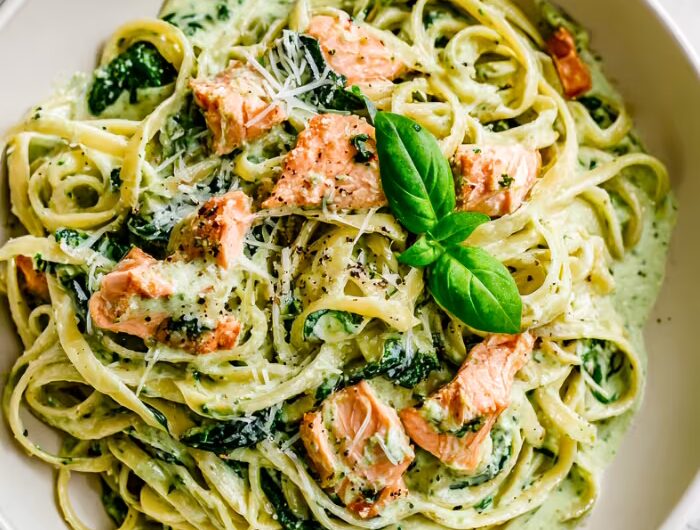
Salmon pesto pasta combines tender flakes of salmon with basil pesto, garlic, Parmesan, and a gentle cream sauce. Lemon and optional spinach finish this warm four-serving pasta dinner.
Salmon Pesto Pasta
Course: MainCuisine: Italian-InspiredDifficulty: Easy4
servings10
minutes20
minutes30
minutesThis Salmon Pesto Pasta is rich yet light, with the perfect balance of creamy sauce, fresh herbs, and flaky salmon. It’s quick enough for weeknights but elegant enough for date night.
Ingredients
12 oz pasta (fettuccine, penne, or spaghetti)
1 lb salmon fillet (skin removed)
2 tablespoons olive oil
Salt and black pepper, to taste
2 cups baby spinach (optional)
1/2 cup pesto sauce (store-bought or homemade)
1/2 cup heavy cream or half-and-half
1/4 cup grated Parmesan cheese
Juice of 1/2 lemon
2 cloves garlic, minced
1 tablespoon butter
Fresh basil or parsley, for garnish
Directions
- Cook pasta: Bring a large pot of salted water to a boil. Cook pasta according to package directions until al dente. Reserve 1/2 cup of pasta water before draining.
- Cook salmon: Season salmon with salt and pepper. Heat olive oil in a large skillet over medium heat. Cook salmon for 3–4 minutes per side until golden and flaky. Remove from the skillet and set aside.
- Make the sauce: In the same skillet, melt butter and sauté garlic for 30 seconds. Stir in pesto and heavy cream, cooking for 1–2 minutes until smooth. Add a little pasta water if the sauce feels too thick.
- Combine everything: Flake the cooked salmon into large pieces and return it to the pan. Add the cooked pasta, Parmesan, and spinach (if using). Toss gently to coat everything in the creamy pesto sauce.
- Finish and serve: Squeeze lemon juice over the pasta and garnish with fresh basil or parsley. Serve warm and enjoy this creamy, flavorful pasta dish.